Kamala Harris and Donald Trump. (Getty Images.)
How does a literature blog respond to this past week’s ultra-depressing election of far-right wild guy Donald Trump as 47th President of the United States? Liar, grifter, felon, dictator wannabe, sexual predator, misogynist, racist, homophobe, non-reader…yes, that Donald Trump.
Well, a literature blogger could suggest a fact-based novel about how it came to pass that the ghastly Trump will again occupy the White House when that repulsive Republican should instead be occupying a jail cell. I’m not the person to author that book — I prefer to write about a cat happily occupying my apartment and life — but I can discuss some of the book’s main characters. Starting with…
Donald Trump himself: Born into a filthy rich family, he takes that one family fortune and turns it into six…business bankruptcies. Improbably becomes President in 2016. Loses reelection in 2020 to Democratic opponent Joe Biden, but Trump falsely claims he won via a “Stop the Steal” campaign that doesn’t stop Shohei Ohtani from stealing 59 bases in 2024. The 1994-born Ohtani accomplishes this feat despite not being a character in Haruki Murakami’s 1979 debut novel.
Mike Pence: The also-far-right (and judgmental Christian evangelical) vice president during Trump’s first presidential term subserviently does everything Donald wants for four years until refusing Trump’s order to illegally overturn the results of the 2020 election. The mob Trump subsequently goaded to storm the U.S. Capitol on January 6, 2021, ghoulishly threatens to hang Pence — who doesn’t recite lines from A Tale of Two Cities because Charles Dickens’ novel features a different method of execution.
JD Vance: Trump’s 2024 vice-presidential running mate first becomes famous for his 2016 memoir Hillbilly Elegy. Vance around that time calls Trump “America’s Hitler,” but, seeing where the wind is blowing among Republicans, goes on to cravenly transform into a bootlicking toady for Trump. This pays off big time for Vance with Trump’s 2024 win, which also makes the grotesque JD an early favorite to become the 2028 Republican nominee for President…of The Bootlicking Toady Society. Not to be confused with Mary Ann Shaffer’s and Annie Barrows’ The Guernsey Literary and Potato Peel Pie Society.
Mitch McConnell: The scheming but spineless Republican U.S. Senate leader initially denounces Trump for the January 6 riot, but doesn’t support the subsequent impeachment effort — dooming it to failure. That gives Devil in a Blue Suit (Trump) a political lifeline that helps Donald’s eventual return to power. Democrats prefer Devil in a Blue Dress, the Walter Mosley novel.
Merrick Garland: Biden’s 2020-2024 attorney general is so wimpy and cautious that the dawdling Democrat waits too long to try to bring Trump up on criminal charges for “Stop the Steal,” January 6, and more. Garland’s cowardly slowness makes Marcel Proust’s 4,215-page In Search of Lost Time feel like a quick read.
Joe Biden: A pretty good President in the domestic-policy area, partly thanks to the work of such people as progressive U.S. Senator Bernie Sanders. But Biden’s continual arming of Israel’s brutally disproportionate assault on Gaza after Hamas’ brutal October 7, 2023, attack is a major blot on Joe’s record. Also, Biden had originally implied he’d be a one-term President but, despite advancing age and obvious cognitive decline, wrongly decides to seek reelection — short-circuiting a chance for a real 2024 Democratic primary that could have strengthened Kamala Harris or another candidate. The annual Jack Reacher novel is published anyway.
Kamala Harris: After Biden is finally forced from the 2024 race weeks after a disastrous debate performance against Trump, Vice President Harris becomes the nominee. She’s in tune with the majority of Americans on a number of issues such as reproductive rights, but being a woman and person of color doesn’t help in a country filled with so much sexism and racism. Harris runs a good, part-populist, part-anti-corporate campaign for a while — and makes the excellent choice of progressive Tim Walz as her vice-presidential running mate — but then tacks too right-center/Wall Street-friendly at a time when many Americans want change, are hurting economically, and distrust outsized corporate power. Of course, Trump is infinitely worse (including being even more corporate-captured) but still wins. So much for that — my could-be-wrong analysis, and the title of a novel by (Ms.) Lionel Shriver.
The Muse: Why did Trump win? Among the reasons: he’s perversely entertaining, doesn’t sound like a programmed politician, gives his supporters permission to be their worst selves, has a powerful right-wing political and media ecosystem behind him, and gets endless coverage from the mainstream media because that boosts their audiences and profits. Much of the media, and many Americans in general, are attracted to…the call of the wild — far-right wild guy Trump, and the title of the novel by Jack London.
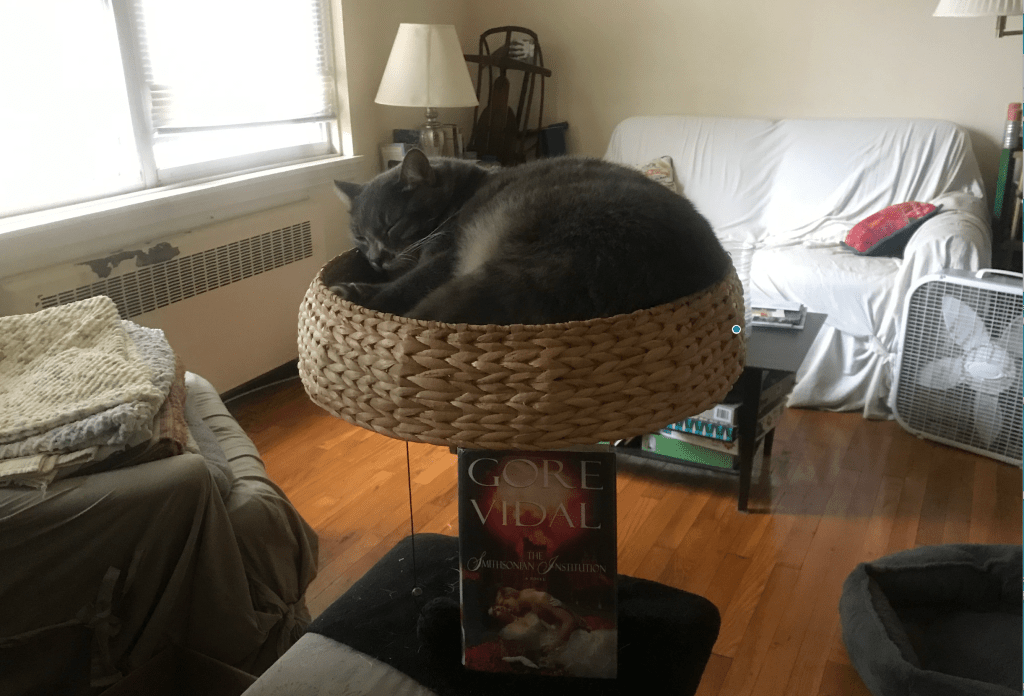
Misty the cat says: “I’m where O. Henry will soon write ‘The Last Leaf’ again.”
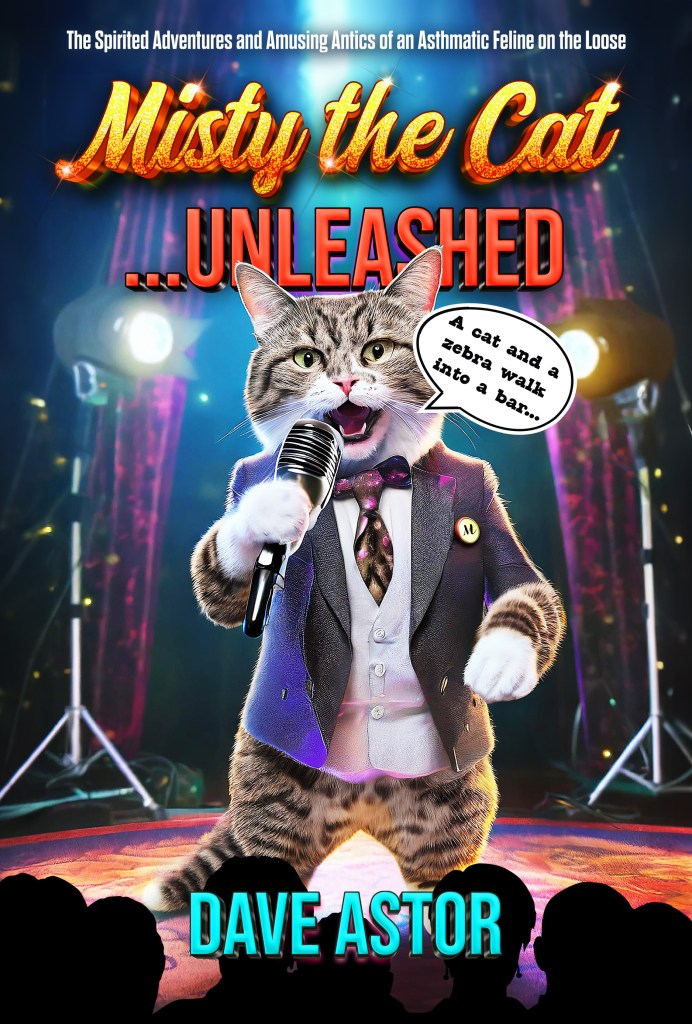
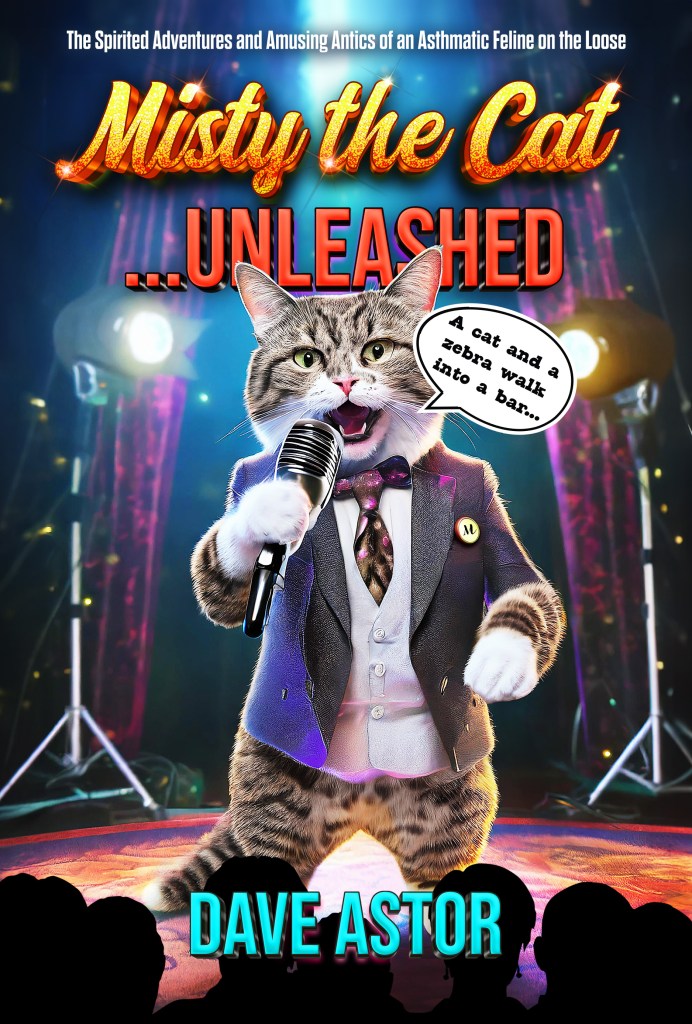
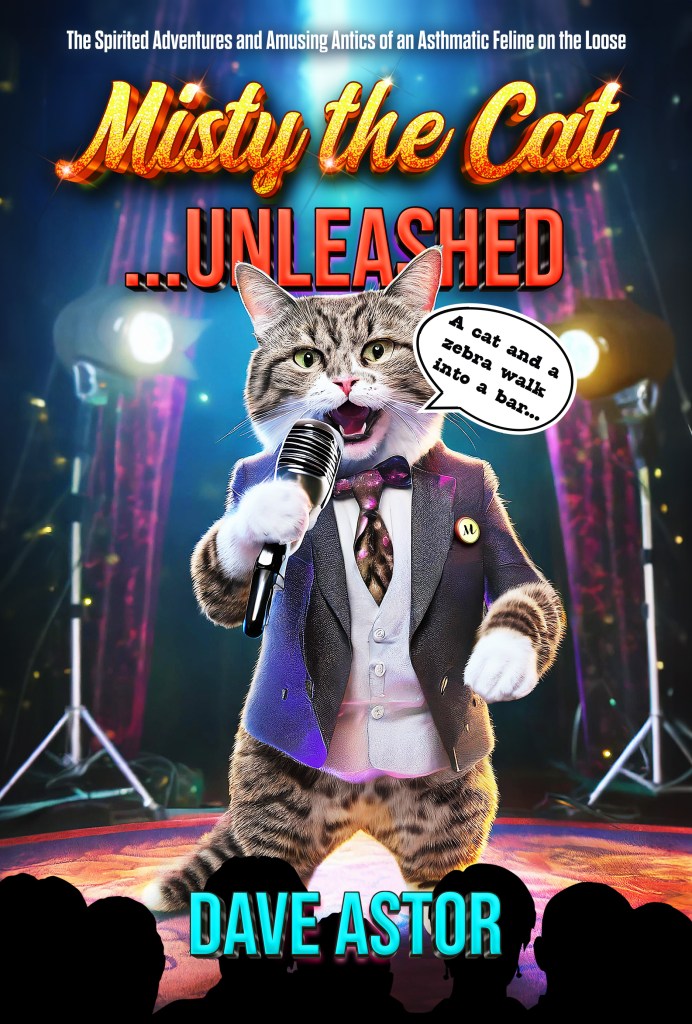
My comedic 2024 book — the part-factual/part-fictional/not-a-children’s-work Misty the Cat…Unleashed — is described and can be purchased on Amazon in paperback or on Kindle. It’s feline-narrated! (And Misty says Amazon reviews are welcome. 🙂 )
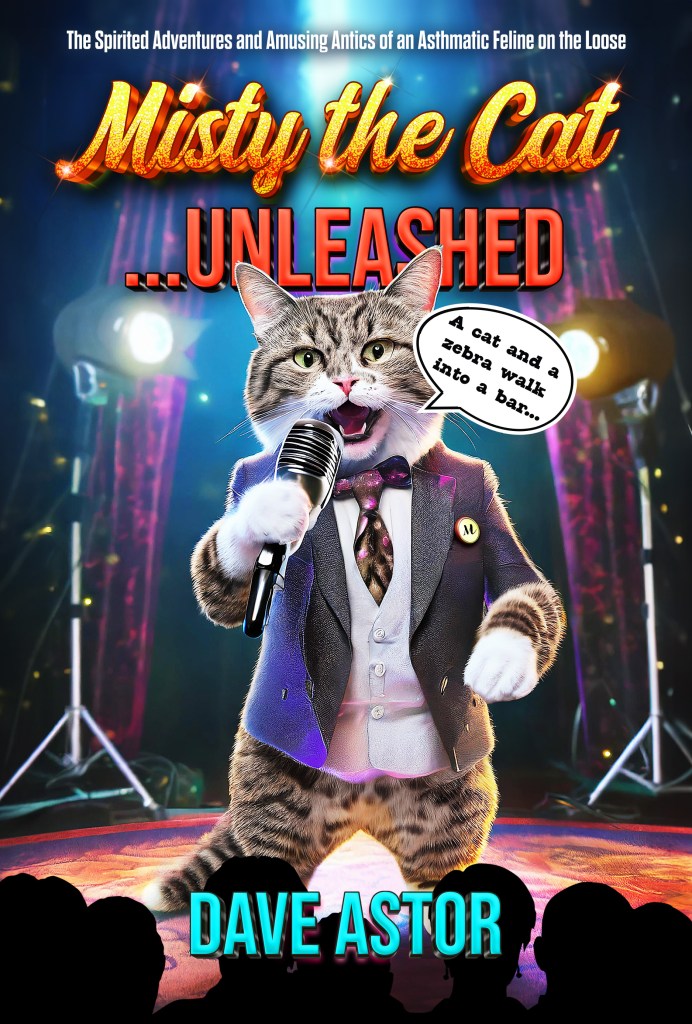
This 90-second promo video for my book features a talking cat: 🙂
In addition to this weekly blog, I write the 2003-started/award-winning “Montclairvoyant” topical-humor column every Thursday for Montclair Local. The latest piece — about Trump’s depressing win and more — is here.