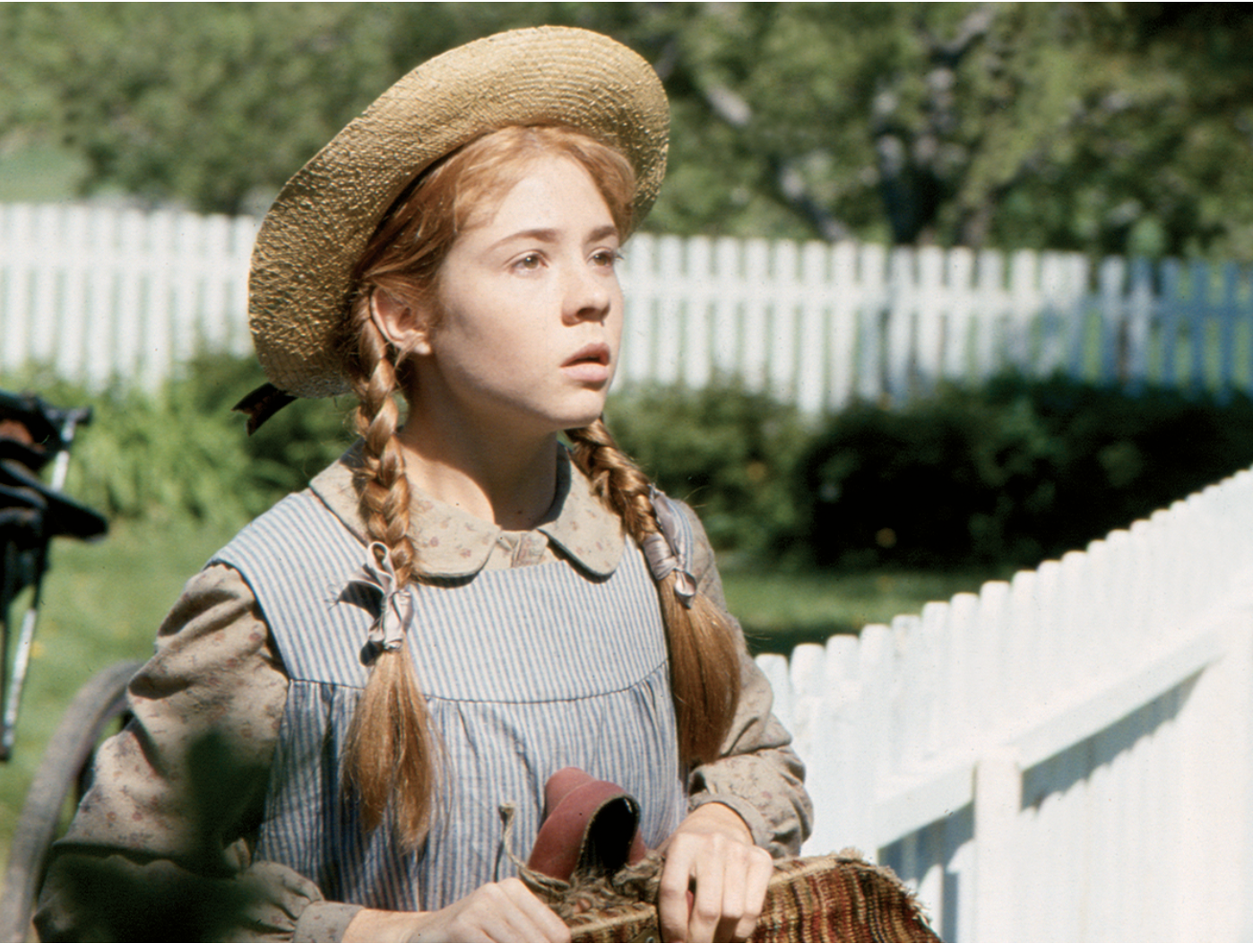
Megan Follows as Anne Shirley in the 1985 Anne of Green Gables miniseries.
Among literature’s memorable people are female characters who can be described as plucky, gutsy, clever, driven, strong-willed, determined, ambitious, etc. This can be especially interesting with female characters in novels written long ago — or set long ago if written more recently. Because women back then had an especially challenging task navigating a society usually much more patriarchal than today’s (admittedly still patriarchal) world.
This came to mind as I continued my recent Daphne du Maurier reading binge with her 1954 novel Mary Anne – whose semi-fictionalized title character was an actual great-great grandmother (I think) of the author. Mary Anne Thompson (1776-1852) grew up in a low-income/dysfunctional family, but rose quite a bit in life (at least during her 20s and 30s) via smarts, charm, humor, quick-wittedness, hard work, ruthlessness, strategic behavior, opportunism, and the compromising of some morals. Being good-looking didn’t hurt, either, as she “used” various men to climb society’s ladder.
Mary Anne reminded me a bit of some other fictional “heroines” – one of them being social climber Undine Spragg in Edith Wharton’s The Custom of the Country (1913). Undine is meaner and generally less-appealing than Mary Anne, but they both share a fierce intelligence and relentless ambition.
Another self-empowered woman is the title character in Daniel Defoe’s 1722 novel Moll Flanders. The basically good-hearted Moll lives a very checkered life but is confident enough to act outside of societal norms: she’s a con artist, a thief, makes alliances with other women, has sex outside of marriage, etc.
Moving to the 19th century, we have William Thackeray’s Vanity Fair. That 1848 novel’s Becky Sharp is a brainy, funny, talented, conniving, manipulative, amoral young woman seeking a better “station” in life.
Returning to 20th-century literature, Zora Neale Hurston’s 1937 novel Their Eyes Were Watching God stars the admirable, energetic, resilient Janie Crawford — though she does do some backsliding here and there in terms of partly deferring to some problematic men. Janie has the double challenge of being a woman in a patriarchal society and a Black woman in a racist society.
Isabel Allende’s 1998 novel Daughter of Fortune features the half-Chilean/half-English Eliza Sommers who boldly travels from Chile to Gold Rush-era California, disguising herself as a man for much of the trip. She also ignores the prejudices of the time by developing a close friendship with Chinese man Tao Chi’en.
In young-adult fiction (which of course can also be enjoyed by not-so-young adults), three characters immediately come to mind.
The cast of Louis Sachar’s also-1998-published Holes includes Katherine Barlow, who — in the novel’s 19th-century flashback scenes — becomes a vengeful outlaw named Kissin’ Kate Barlow after a tragic racist act I won’t specify to avoid more of a spoiler.
Preteen-then-teen Anne Shirley in L.M. Montgomery’s 1908 classic Anne of Green Gables is feisty, hilarious, imaginative, and precociously intelligent — though she “mellows” somewhat as an older character and parent in the later sequels.
Suzanne Collins’ The Hunger Games trilogy of 2008, 2009, and 2010 is set not in the past but rather in a future society that, while brutal, is not super-patriarchal. But courageous and rebellious (as well as compassionate) protagonist Katniss Everdeen is worth mentioning.
Your thoughts about, and examples of, this theme?
Misty the cat says: “That rabbit isn’t running, so it must not like John Updike’s ‘Rabbit, Run.'”
My comedic 2024 book — the part-factual/part-fictional/not-a-children’s-work Misty the Cat…Unleashed — is described and can be purchased on Amazon in paperback or on Kindle. It’s feline-narrated! (And Amazon reviews are welcome. 🙂 )
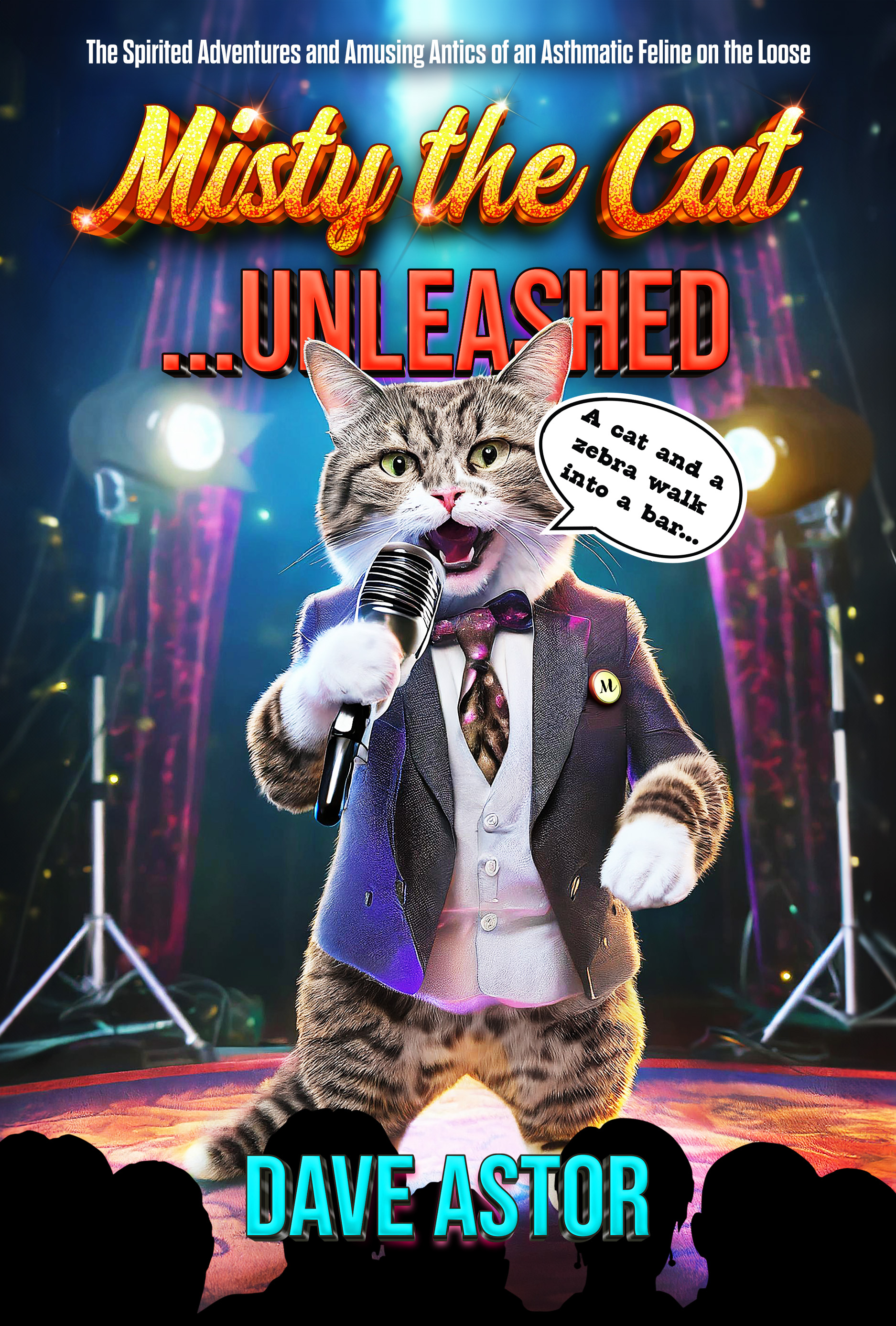
This 90-second promo video for the book features a talking cat: 🙂
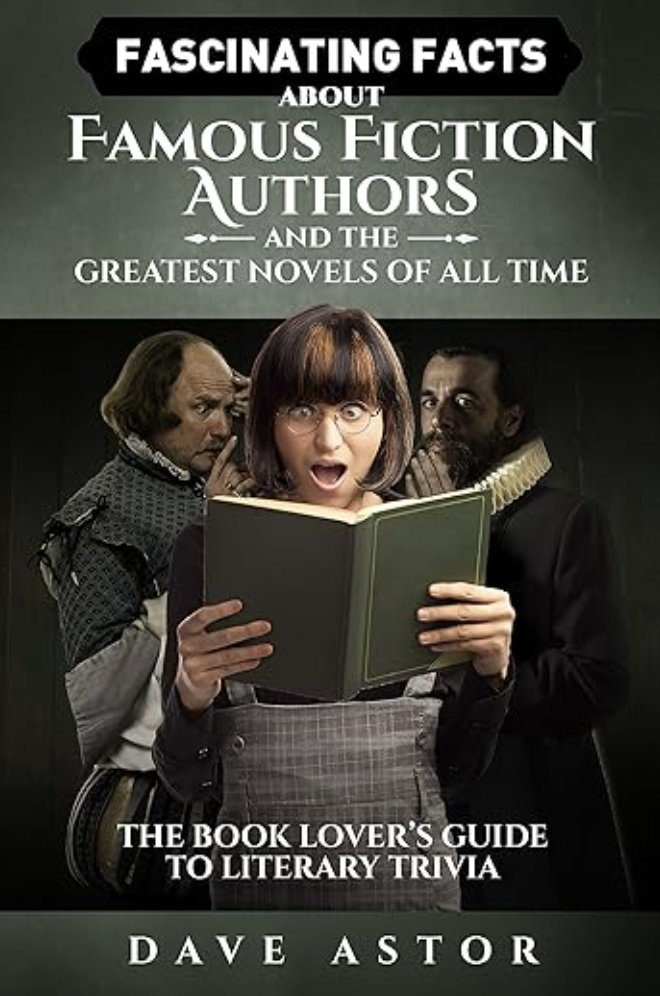
I’m also the author of a 2017 literary-trivia book…
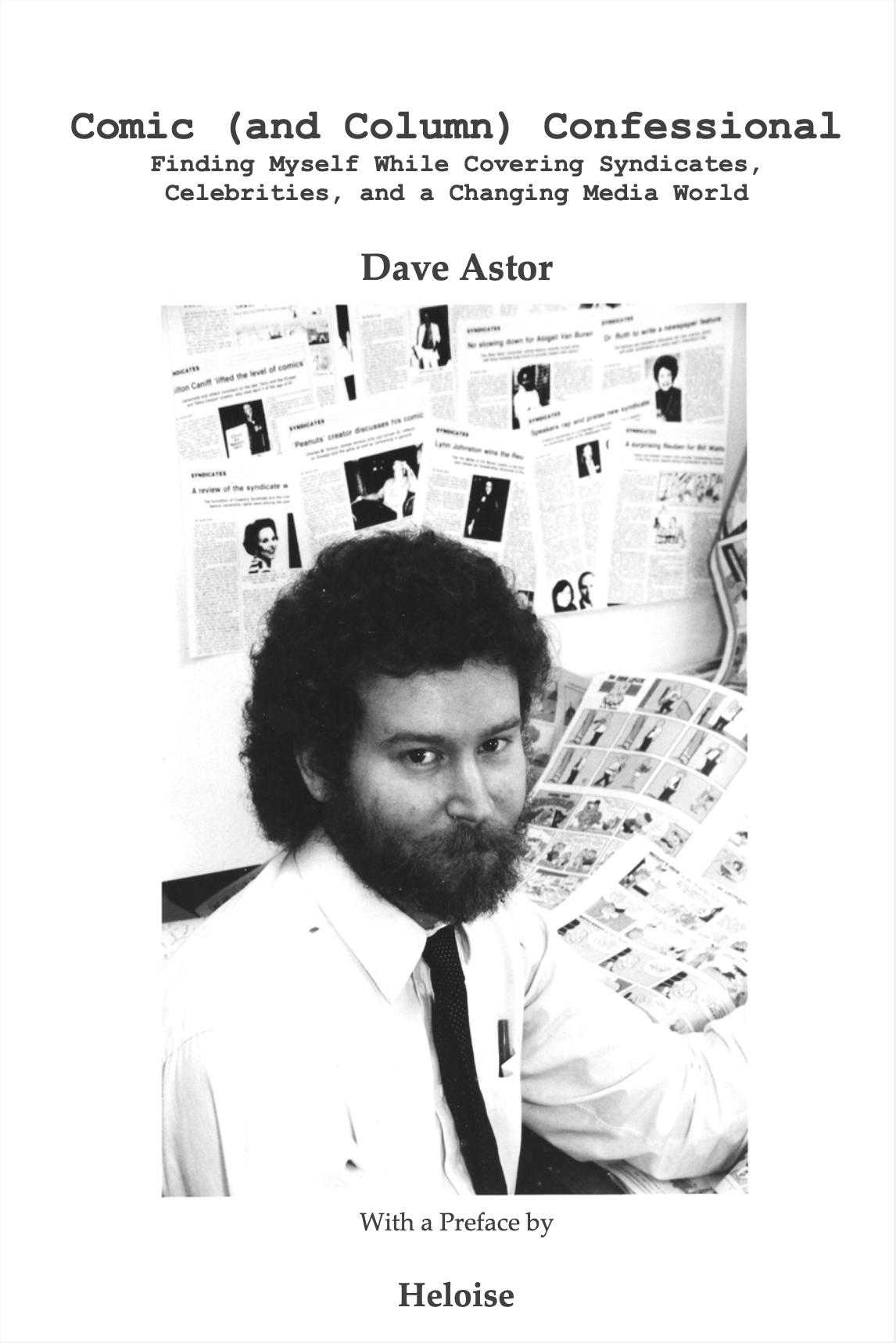
…and a 2012 memoir that focuses on cartooning and more, including many encounters with celebrities.
In addition to this weekly blog, I write the 2003-started/award-winning “Montclairvoyant” topical-humor column every Thursday for Montclair Local. The latest piece — which comedically commented on July 4th and more — is here.
 Dave Astor on Literature
Appreciated
LikeLiked by 1 person
Thank you, Swamigalkodi Astrology!
LikeLike
Hi Dave, I think Hester from The Scarlet Letter does a reasonable job of coping with her life as an outcast from society. She is not the one that folds under the mental pressure. Ayla from the Earth Child series by Jean Auel is very independent and enterprising, Wendy from The Shinning and Charlie from Firestarter both by Stephen king, do good jobs of holding their own in hostile and violent environments. Lastly, there is Scarlett from Gone With the Wind 💓
LikeLiked by 2 people
Thank you, Robbie! So true — Hester Prynne made the best of her situation; Arthur Dimmesdale, not so much. And I appreciate the other great mentions. Ayla is a VERY impressive character over those six Jean M. Auel books.
LikeLiked by 1 person
Yes, I read all the Earth Child books although it became a bit too much about the relationship for my taste. I was interested enough in the settings to go the course.
LikeLiked by 1 person
Yes, that relationship became a bit tedious after a while. And Ayla was much more interesting than Jondalar.
LikeLiked by 1 person
Yes, Jondala was a bit like a spoiled child
LikeLiked by 1 person
Indeed! A (very) big baby at times. 🙂
LikeLiked by 1 person
Written by a man with keen understanding of trade, specifically, England’s key imports and exports, wool and cloth, Chaucer’s Wife of Bath’s tale and Prologue introduces a 14th century woman as feisty outspoken and liberated as any more recent heroines. Alys, or Alison of Bath , flourished before the sixteenth century onwards puritanical patriarchy ‘ ‘reformed’ everything, ordering women back inside,
After the Black Death, with the population roughly halved, late mediaeval women like Alison could manage their own money, even take out a mortgage, in their own name, With her successful business in the cloth trade, and her five husbands at the church door, and , as Chaucer says, ‘ other company’ before the husbands , Alison ‘s outrageous, even dares to make up her own mind about sexual freedom
,I woot wel Abraham, Abraham was an holy man And Iacob, Jacob eek, as ferforth as I can And ech of hem hadde wyves mo than two And many another holy man also. Whan saugh ye ever, in any maner age That hye god defended mariage By expres word, word? I pray you, telleth me Or wher comanded he virginitee?
Living ‘beside Bath’ after university, I loved Alison.
LikeLiked by 2 people
Thank you, Esther! Great mention of Chaucer and his iconic Wife of Bath character! Interesting how the intensity of society’s sickening patriarchy ebbed and flowed over various centuries and in various places. I appreciate all those details you gave.
LikeLiked by 1 person
Misty! That’s a wascilly wabbit. Don’t fudd around with it!
Ouch on that joke!
Okay, Scarlet O’Hara from GWTW falls into this category.
I thought Moll Flanders was a cool example.
A quick shout out of praise to Martha Mann (rip), award winning costume designer of film, tv and operas, who designed the Anne of Green Gables you mention here, as well as other LMM stories.
She was pretty feisty, successful and witty, and taught me a lot including being clever with producers and directors. It was an honour working on her teams.
LikeLiked by 1 person
Thank you, Resa! Ha! 🙂 Elmer Fudd! The same initials as Excellent Feline…
Scarlett O’Hara was definitely a strong woman in a strange South.
Martha Mann did a spectacular job for that iconic “Anne” series! That’s a VERY nice tribute you gave her.
LikeLiked by 1 person
Yes, Excellent Feline, as ALL Felines are Excellent.
Also, Excellent Food.
As Mischa meowed to me this morning… “WHAT? Turkey? I was hoping for Trout! … and where’s that creamy topping stuff?
Ahh, Martha. She was unique. A Grand Dame, who grew up playing on the grounds of Casa Loma. https://casaloma.ca/
It wasn’t a tourist attraction back then. It was the best house in her hood. It is the closest architecture to a castle that we have in Canada.
LikeLiked by 1 person
Mischa, Misty, and other cats can certainly be particular about their food. 🙂 Trout with creamy topping — sounds like fine china on a white tablecloth is in order!
LikeLiked by 1 person
I hope Mischa didn’t hear you think that!
LikeLiked by 1 person
Excellent point, Resa! 🙂
LikeLiked by 1 person
Off to buy some fine china! 🏃♀️
LikeLiked by 1 person
😂 😂 😂
LikeLiked by 1 person
Cat love… “To boldly go where no man has gone before” when buying their dishes.
LikeLiked by 1 person
“Live long [nine lives] and prosper!”
LikeLiked by 1 person
🖖
LikeLiked by 1 person
Perfect emoji! 🙂
LikeLiked by 1 person
An excellent theme and interesting post, highlighting all the memorable female characters I’ve missed over the years. I’ve recently read the Brotherless Night by V.V. Ganeshananthan told through the eyes of a strong and self-determined Sashi who, then sixteen in 1981, wants to become a doctor. Over the next decade, a vicious civil war tears apart their Tamil minority community, seeking separation from Sri Lanka. The choices she makes put her in the midst of the fighting and atrocities.
LikeLiked by 2 people
Thank you, Rosaliene! Happy you liked the post! “Brotherless Night” sounds intense, compelling, and heartbreaking. I appreciate you mentioning it.
LikeLiked by 1 person
A blogger friend in Belgium brought the book to my attention.
LikeLiked by 1 person
We can definitely learn a lot from fellow bloggers. 🙂
LikeLiked by 1 person
Definitely! You’ve introduced me to lots of amazing authors and novels.
LikeLiked by 1 person
Thank you, Rosaliene! And I’ve learned a LOT from your blog — including about great poets from various countries. 🙂
LikeLiked by 1 person
🙂 ❤
LikeLiked by 1 person
🙂
LikeLiked by 1 person
Hi Dave!
Yet another fascinating post about women and the battles they face operating within a framework designed for men!
All very interesting yet also maddening when female characters have to adopt a wily or cunning personality in order to achieve their goals.
Makes for great reading through Dave. All the books you have kindly mentioned sound good!
Thought-provoking!
Thank you for the books, very much appreciated.
😊 📚
LikeLiked by 1 person
Thank you, Sharon! Happy you enjoyed the post, and your comment was very well said! So true that being wily and cunning is sometimes necessary when the odds are stacked against a person or a group of people.
LikeLiked by 1 person
Thank YOU Dave for the very interesting observations in fiction. I wouldn’t wonder Dave if there remains a kernel of truth in real life!
Great post!
😊
LikeLiked by 1 person
You’re very welcome, Sharon! 🙂 And you are absolutely right about that kernel of truth in real life.
LikeLiked by 1 person
Thanks Dave!
Wishing you a great week!
Sharon. 🤗
LikeLiked by 1 person
You’re welcome, Sharon, thank YOU, and have a great week, too! 🙂
LikeLiked by 1 person
Great post, Dave, which lengthened my “to-read” list. One of my favorite characters who defies the patriarchy is Precious Ramotswe in The No. 1 Ladies’ Detective Agency by Alexander McCall Smith.
LikeLiked by 2 people
Thank you, Madeline! Glad you liked the post, and I hear you about lengthened reading lists — which also happens to me when I see the comments under my posts. 🙂 I appreciate the mention of Precious Ramotswe, who I’ve heard great things about as a character!
LikeLike
Hi Dave, so pleased you’re busy reading a lot of books from Daphne du Maurier. Excellent! However, I’m a bit stumped with this week’s one. Apart from Miss Liz Bennett, of course, and rather later the wonderful V.I. Warshawski, oh and also some of Agatha Christie’s: Miss Marple and (Tommy and) Tuppence Beresford. I guess that’s not too bad.
LikeLiked by 1 person
Thank you, Chris! Yes, a Daphne du Maurier binge. 🙂
Not bad at all to name four strong, memorable female characters! Coincidentally, I just started reading a Miss Marple mystery (“A Murder Is Announced”). Published in 1950, so I guess latter mid-career for Agatha Christie.
LikeLiked by 1 person
After seeing the pic of Megan Follows as Anne of Green Gables, my mind went to Pollyanna. Must have been the braids. Nice theme Dave. Susi
LikeLiked by 1 person
Thank you, Susi! They must have both shopped at Braids R Us. 🙂
LikeLike
This was such an interesting post and I like all the little extras that you give us to chew on – like this “whose semi-fictionalized title character was an actual great-great grandmother ” – hmmm
LikeLiked by 2 people
Thank you, Yvette! Glad you enjoyed the post! I definitely found that ancestral connection to Daphne du Maurier interesting. 🙂 Daphne had quite a family history; her grandfather George created the character of Svengali in his 1890s novel “Trilby.”
LikeLiked by 1 person
♥
LikeLiked by 1 person
🙂
LikeLiked by 1 person
Lot’s a great examples here. I’d like to add Hester Prynne to the mix. I’ve always had a soft spot for her.
LikeLiked by 2 people
Great exampkw! I loved the way she embroidered the hell out of that ‘A’, making it stand out much more. Gutsy lady! 😊
LikeLiked by 3 people
Hers was a great response.
LikeLiked by 2 people
Thank you, Dan! Hester Prynne IS a strong and dignified character. Very likable and admirable. And yes, Laura, Hester made the “A” more a badge of honor than a badge of shame as she lived among those judgmental, hypocritical Puritans.
LikeLiked by 3 people
Brilliant topic, Dave. I haven’t read ‘Mary Anne’, but I’ve loved Moll Flanders for many years. I’m not so keen on Becky Sharpe – I felt sorry for Rawdon and how she treated him – and although Katniss is wonderful in many ways I wanted her to end with Gayle, rather than Pieter. I’ll add Ruth, from ‘The Life and Loves of a She-Devil’, although ultimately I find her ‘success’ pretty worthless. Lesser prominent is Paulina, from Shakespeare’s ‘The Winter’s Tale’, who stands up to the mad Leontes, even against his threat of burning her. She stage-manages the situation, and I’ve always loved her. Okay, I shall have think on this and find a few more, but I’m sure I will. Many thanks! 🙂
LikeLiked by 1 person
Thank you, Laura! I appreciate all the character mentions — including one of Shakespeare’s interesting woman. Yes, Becky Sharp is not particularly likable, but she’s kind of impressive in her striving way.
LikeLiked by 1 person
Indeed she is! 😂
LikeLiked by 1 person
Here we go, how could I forget Balzac’s Cousin Bette? The poor relation, revenging herself on the wrll-off relatives who she hates. She’s not likeable, and doesn’t have it all her own way, but does plenty of damage. And how about Zola’s Nana? Horrendous! Prosper Merimee’s Carmen, and on the kinder side Dumas’s Marguerite Gautier, who finds love with Armand but nobly gives him up and dies. I knew there were more! 🙂
LikeLiked by 2 people
Excellent examples, Laura! Balzac and Zola definitely created some strong (at least at times) women. Balzac: Eugenie Grandet, Delphine and Anastasie, etc. Zola: Therese Raquin, Denise Baudu, Gervaise Macquart (Nana’s mom) before Gervaise’s downfall, etc.
LikeLiked by 1 person
All magnificent examples! 🙂
LikeLiked by 2 people
Thank you, Laura! 🙂
LikeLiked by 1 person
And let’s not forget Daphne Manners, of Paul Scott’s ‘Raj Quartet’. She refuses to abort her child conceived on the night she’s horrifically assaulted, because she was with Hari beforehand and believes the child to be his. When she dies in childbirth her aunt, Lady Manners, keeps and raises the baby despite the scandal and gossip. Strong women both – as is Edwina Crane, the English missionary of that book, who ‘commits suttee like a good Indian widow’ when she sees India broken. Okay, Dave; I’ll shut up now! 😂😂
LikeLiked by 1 person
Interesting, Laura! I haven’t read “The Raj Quartet,” but it sounds compelling (and at times horrifying).
LikeLiked by 1 person
It’s a great story, Dave, made popular back in the 80s by a TV series called ‘The Jewel in the Crown’ after the first book of the series. There’s a lot cut, as such a complex book would be difficult to follow to the letter, but it does good justice to Scott’s work. There are also some stellar performances from a magnificent cadt, including the late, great Peggy Ashcroft and Tim Piggott-Smith, and it was shown in the USA because a woman there freaked out after running into Tim P-S, who she was convinced was his character, who was evil. Worth a watch, if you can find it, and the book so great. 🙂
LikeLiked by 1 person
It does sound like quite a literary work and quite a screen adaptation, Laura! Funny (or perhaps not so funny) when an actor or actress inhabits a role so completely that the public thinks they’re the character.
LikeLike
Tim Piggott-Smith was a good but under-rated actor, Dave, and I believe it was the part of Ronald Merrick in this dramatisation which raised his status. There are some other wonderful actors there too – I checked the cast list online last night and I’d forgotten many. It’s on ITV over here and I shall be watching it again soon. The books are a story of the last days of the British Raj in India, towards the end of WWII. Heartbreaking, but so well-written by Paul Scott and adapted well for the screen.
LikeLiked by 1 person
Laura, you have convinced me to look for first-book-in-quartet “The Jewel in the Crown” at my local library. 🙂
LikeLiked by 1 person
That woudl be a good idea, Dave. I’ll be interested to see how you get on. 🙂
LikeLiked by 1 person
Fingers crossed that it’s there. 🙂 If so, I’ll write about it. 🙂
LikeLiked by 1 person
Excellent. Best of luck. 🙂
LikeLiked by 1 person
Thanks, Laura! 🙂
LikeLiked by 1 person
Great post Dave. I’ll throw in Larsson’s Lisbeth Salander. I quite thought she was something else. And of coursea certain Scarlett.
LikeLiked by 3 people
Thank you, Shehanne! Two great examples! The brilliant/abused/brave Lisbeth Salander is indeed an absolute powerhouse and Scarlett O’Hara is, well, Scarlett O’Hara (minus any dragon tattoos 🙂 ).
LikeLiked by 1 person
She had ‘fiddle de dee’ — she didn’t need no tattoos….
LikeLiked by 1 person
Ha ha, Shehanne! 😂 But “tomorrow is another day” for tattoos. 🙂
LikeLiked by 1 person
Lol… ‘Tattoos, tattoos, tatttoos. Everyone is always talking about tattoos…. ‘
LikeLiked by 1 person
LOL, Shehanne! 😂 I may have to reread Ray Bradbury’s “The Illustrated Man.” 🙂
LikeLiked by 1 person
M’on then as we say here. Stop slacking!!!!!!
LikeLiked by 1 person
Ha! 😂 Okay, I’ll skip dinner. 🙂
LikeLiked by 1 person
Eh… That’s ‘denner’ here.
LikeLiked by 1 person
🙂
Is denner dinner in a den? 🤔
LikeLiked by 1 person
In Dundee you never know…
LikeLiked by 1 person
🙂
LikeLiked by 1 person
I love this theme! And good timing, nudge-wise! I need to read Sara Paretsky’s first V.I. Warshawski novel “Indemnity Only” so I can sit in on a book club discussion soon. Paretsky was a featured speaker at an event I attended and was fascinating to listen to, but I think I was the only person in the room unfamiliar with her books and her tough-talking private eye, Warshawski! So many books, so little time! 😜❤️😜
LikeLiked by 3 people
Thank you, Vicki! Good timing indeed. 🙂 I hope you like “Indemnity Only,” and great that you got to hear Sara Paretsky speak! I’ve been wanting to try her V.I. Warshawski series myself, but I like to read series in order and “Indemnity Only” is always taken out of my local library.
LikeLiked by 2 people
I cannot believe I’ve run across something you haven’t yet read, my extremely well-read friend! If only I could loan you my copy! Maybe Misty could go on an adventure and fetch it? LOL. 😜❤️😜
LikeLiked by 1 person
Thanks, Vicki! I’ll get to “Indemnity Only” eventually. 🙂 But until then, I am V.I. Warshawski bereft. 🙂 (I hesitate to buy novels because my modest-sized apartment is already packed with books and other things — including Misty’s bed, box, scratch pole, etc. 🙂 If he can find “Indemnity Only,” there’s another scratch pole in his future. 🙂 )
LikeLiked by 1 person
Haha! I hear you. I’ll read and report back – how’s that?
xo! 💝😊💝
LikeLiked by 1 person
Would definitely like to hear what you and the book club think about it! 🙂
LikeLiked by 1 person
Will do! 😉😉😉
LikeLiked by 1 person
🙂
LikeLike
Dave, another great topic of discussion! I thought about the women created by Mary Roberts Rinehart and Agatha Christie. For example Miss Marple immediately came to mind. On the surface she seems like a gentle village spinster, yet her powers of observation, understanding of human nature, and quiet confidence allow her to solve mysteries that leave others baffled.
Both Christie and Rinehart gave us intelligent, resourceful women who succeeded not through physical strength but through curiosity, insight, and persistence. It’s interesting that these memorable female characters were themselves imagined by women. Thanks for another thought-provoking discussion. I always come away from your posts with a longer reading list! And you know how high my TBR list is! YIKES!!!
I had to add this quote:
“I like living. I have sometimes been wildly despairing, acutely miserable, racked with sorrow, but through it all I still know quite certainly that just to be alive is a grand thing.” Agatha Christie, Agatha Christie: An Autobiography
LikeLiked by 3 people
Thank you, Rebecca! Miss Marple is definitely a great Agatha Christie creation, and you described her VERY well. I hadn’t heard of Mary Roberts Rinehart until seeing your comment, but, after reading what you said and also taking a peek at Wikipedia, I’m intrigued! Yes, many MANY strong female characters were thought up by women authors.
I hear you about overflowing reading lists. 🙂 😦
Words to…live by…from Agatha Christie!
LikeLiked by 1 person
Thank you, Dave! I think you’d enjoy Mary Roberts Rinehart. I’ve been reading both her and Agatha Christie lately, and one of the things I find so fascinating is that I’m learning not only about their writing styles, but also about the societies in which they lived. There are comments, attitudes, and assumptions in those novels that would almost certainly be written differently today. They become little time capsules, reminding us how much has changed, but also how much human nature has remained the same. I had coffee with Sarah yesterday and we somehow ended up talking about the Complete Beau Geste Trilogy by P.C. Wren. I read it years ago and now had decided to read it again. Have you ever noticed that books have a stickiness to them? Once you pick up a book, it is difficult to put it down. It seems that books have glue on their covers.
LikeLiked by 1 person
I appreciate the follow-up comment, Rebecca! I’ll see if my local library has Mary Roberts Rinehart’s “The Circular Staircase,” which apparently was her first big success. 🙂
Older novels can definitely give readers a glimpse of earlier times — whether that’s depicted overtly, or more subtly in the background.
“It seems that books have glue on their covers” — love that take of yours on the stickiness of certain novels!
LikeLiked by 1 person
📚📚📚
LikeLiked by 1 person
🙂
LikeLiked by 1 person
Maggie Tulliver in George Eliot’s Mill on the Floss, obviously.
LikeLiked by 3 people
Thank you, Dingenom! Maggie was definitely a brainy, admirable, wonderful character living in a challenging patriarchal time as her much-less-impressive brother was treated better by family and society in general. 😦
George Eliot of course created a number of other memorable female characters with a lot of overt or quiet strength — including Dinah Morris (“Adam Bede”), Eppie (“Silas Marner”), Dorothea Brooke (“Middlemarch”), and Gwendolen Harleth and Mirah Lapidoth (“Daniel Deronda”).
LikeLiked by 2 people
Thank you! You’re so well-read. Dorothea in Middlemarch is a singular example. Her religious beliefs led her to accept a position that was far beneath her intellectual prowess and perspicacity. I felt it hard to sympathize with that proposition. I forgot to mention Alma Whittaker in Elizabeth Gilbert’s novel The Signature of All Things.
LikeLiked by 1 person
Thank you, Dingenom. 🙂 You’re very well-read, too!
Dorothea did make some bad choices (during a not good time for strong women) before learning some things. Definitely was capable of growth, and it was nice to see that as the novel went on. And, yes, organized religion — then and now — too often puts pressure on women to be second-class citizens.
LikeLike
How could I have forgotten her? A heroine of mine, although she didn’t spring to mind immediately because of her tragic ending. 😦
LikeLiked by 2 people
Brave, smart, and likable girls and women appear in so many of the books I read that I feel overwhelmed when it comes to coming up with titles. I’ll mention one. I recently read ATMOSPHERE, by Taylor Jenkins Reid, which is about women training to be astronauts in the early 1980s. The heroine, Joan Goodwin, and her fellow trainees are as smart and brave as they come, and this is an exciting and moving book that I highly recommend. Harriet Vane, who appears in some of Dorothy L. Sayers’s Lord Peter Wimsey mysteries, is also an intelligent and courageous character and a favorite of mine.
LikeLiked by 3 people
Thank you, Kim! Excellent mentions! I thought Harriet Vane was a great character when I read two of those Dorothy L. Sayers mysteries: “Strong Poison” and “Gaudy Night.” And “Atmosphere” sounds terrific. Reminds me a bit of Mary Robinette Kowal’s very good “The Calculating Stars,” about a woman astronaut.
LikeLiked by 2 people
Such a fantastic list! When
I think of courageous women in literature, Lucia Mondella from Alessandro Manzoni’s “The Betrothed” (1827) immediately comes to mind. Although she is often considered a meek woman, her quiet moral resilience and unwavering determination to survive and defy a powerful and tyrannical nobleman make her incredibly strong-willed.
LikeLiked by 2 people
Thank you, Luisa! Glad you liked the titles mentioned! Lucia Mondella sounds like an admirable, intriguing character. Sometimes quieter people are the strongest.
LikeLiked by 2 people
Yes, exactly!
In Italian, we often use a proverb for this: ‘Still waters run deep’ : people who are quiet and calm often possess great depth, hidden strength, and a powerful determination
LikeLiked by 1 person
SO true, Luisa, and very well said. “Still waters run deep” indeed.
LikeLiked by 1 person
🙏💙🙏
LikeLiked by 1 person
🙂
LikeLiked by 1 person
I have always been drawn to strong, gutsy, female characters. One I would like to mention is Jo March from Little Women. She was determined to follow her dreams and not cave in to convention.
LikeLiked by 3 people
Thank you, Darlene! Excellent mention of Jo March! A very strong, unconventional-for-her-time character. (Although she got a bit more conventional near the end of the novel (if I’m remembering correctly; it’s been years since I read “Little Women”).
LikeLiked by 2 people
Let’s not forget a certain Amanda 🙂 You know her fairly well. I think.
LikeLiked by 2 people
Very glad you mentioned Darlene’s young sleuth character, Dan!
LikeLiked by 2 people
Awe thanks for the mention of Amanda, Dan! She is patterned after some of my favourite strong female characters.
LikeLiked by 2 people
You’re welcome, Darlene.
LikeLiked by 1 person
Excellent post, as always! One of the best feisty female characters I’ve read lately is Louisa in My Friends by Fredrik Backman. She’s an aspiring artist who grew up in the foster care system.
LikeLiked by 2 people
Thank you, Marie! Glad you liked the post! Sounds like a very compelling character in “My Friends.” I loved Fredrik Backman’s “A Man Called Ove,” which had a couple of great female characters in addition to Ove.
LikeLiked by 2 people
One of the reasons why Pride and Prejudice is considered one of the greatest novels of all time is that it has a Bennet daughter and mother than run the gambit of “female characters who can be described as plucky, gutsy, clever, driven, strong-willed, determined, ambitious, etc.”
My favorite line in literature is the last sentence of Chapter 1: The business of her life was to get her daughters married; its solace was visiting and news. Now that’s a great sentence!
Eric
LikeLiked by 4 people
Am I still anonymous after all of these years?
Eric
LikeLiked by 2 people
Nice to hear from you again, Eric! I still haven’t figured out why some comments end up under the Anonymous “name.”
LikeLiked by 1 person
Thank you, Eric! Yes, “Pride and Prejudice” and other Jane Austen novels have some strong female characters (as well as some not as strong). And Austen definitely penned some very memorable lines.
LikeLiked by 1 person
I’m currently reading Edna Ferber’s Giant. The female protagonist Leslie Lynnton is a very strong character questioning the status quo and questioning the treatment of the Mexican farmhands. I’m only a quarter finished
LikeLiked by 2 people
Thank you, Kathy! I’ve heard of “Giant” (the novel and its movie version) but didn’t know much about it. Sounds like a great book!
LikeLiked by 1 person
Ada and Ruby from Cold Mountain come to mind. Also Mattie from True Grit.
LikeLiked by 3 people
Thank you, Liz! Three excellent character examples! I read and liked both novels, though “Cold Mountain” was SO depressing.
LikeLiked by 2 people
You’re welcome, Dave! I was so upset by the ending of Cold Mountain–and I’d already seen the movie, so I knew what the ending would be.
LikeLiked by 2 people
Yes, Liz that “Cold Mountain” ending — 😢. I don’t think I could bear to see the movie.
LikeLiked by 2 people
It was a painful watch.
LikeLiked by 1 person
I can imagine…
LikeLiked by 1 person
I love books with courageous, free-spirited female characters. I’ve seen the tv program of Moll Flanders, but your post makes me wonder if I should give the book a go!
LikeLiked by 2 people
Thank you, Ada! I love those books, too!
Like many 18th-century novels, “Moll Flanders” can be a bit challenging to read at times but I liked it overall. I’ve never seen a screen adaptation of it; glad you did!
LikeLiked by 2 people