The Patriarchy Wasn’t Quite Ready for Them

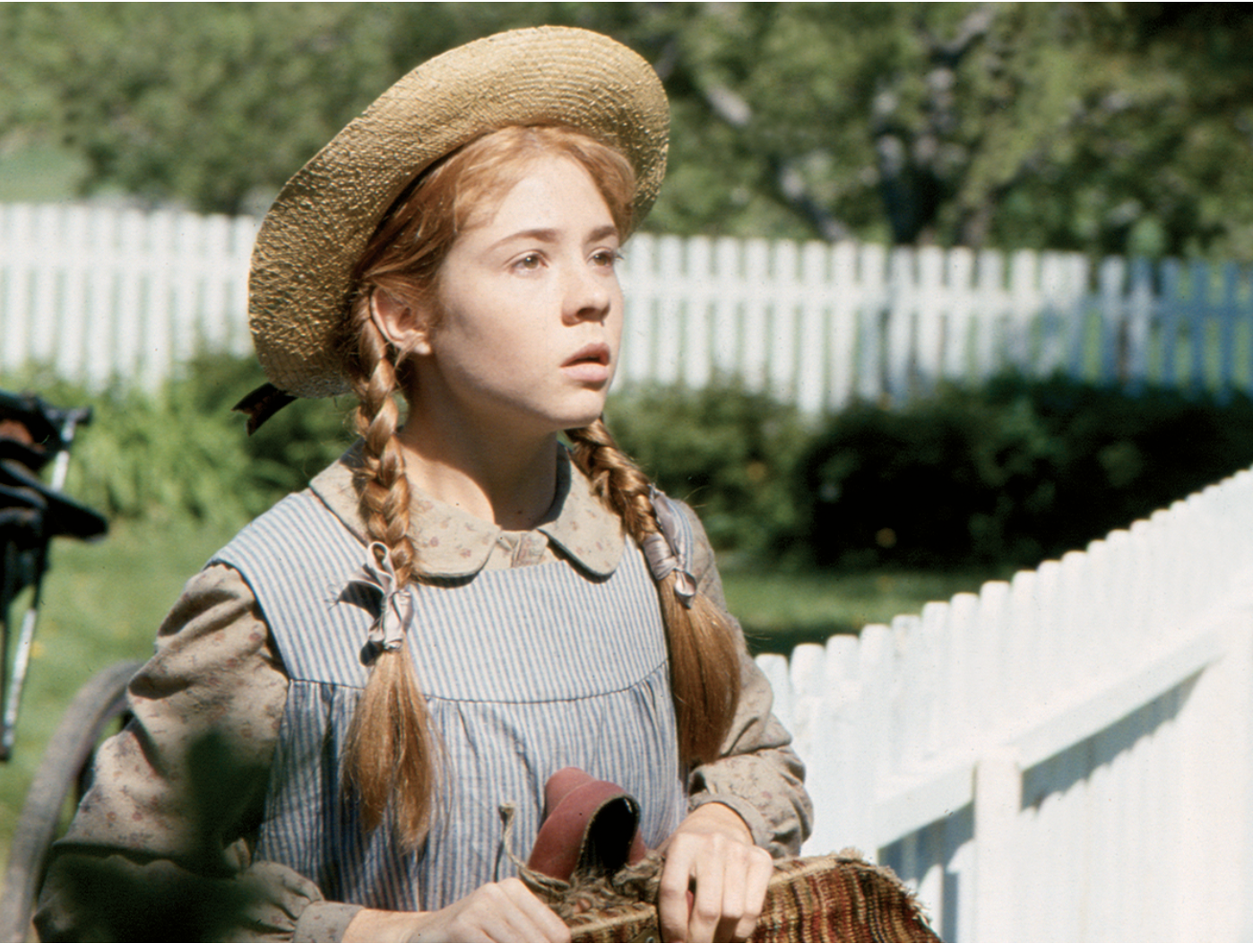
Megan Follows as Anne Shirley in the 1985 Anne of Green Gables miniseries.

Among literature’s memorable people are female characters who can be described as plucky, gutsy, clever, driven, strong-willed, determined, ambitious, etc. This can be especially interesting with female characters in novels written long ago — or set long ago if written more recently. Because women back then had an especially challenging task navigating a society usually much more patriarchal than today’s (admittedly still patriarchal) world.

This came to mind as I continued my recent Daphne du Maurier reading binge with her 1954 novel Mary Anne – whose semi-fictionalized title character was an actual great-great grandmother (I think) of the author. Mary Anne Thompson (1776-1852) grew up in a low-income/dysfunctional family, but rose quite a bit in life (at least during her 20s and 30s) via smarts, charm, humor, quick-wittedness, hard work, ruthlessness, strategic behavior, opportunism, and the compromising of some morals. Being good-looking didn’t hurt, either, as she “used” various men to climb society’s ladder.

Mary Anne reminded me a bit of some other fictional “heroines” – one of them being social climber Undine Spragg in Edith Wharton’s The Custom of the Country (1913). Undine is meaner and generally less-appealing than Mary Anne, but they both share a fierce intelligence and relentless ambition. 

Another self-empowered woman is the title character in Daniel Defoe’s 1722 novel Moll Flanders. The basically good-hearted Moll lives a very checkered life but is confident enough to act outside of societal norms: she’s a con artist, a thief, makes alliances with other women, has sex outside of marriage, etc.

Moving to the 19th century, we have William Thackeray’s Vanity Fair. That 1848 novel’s Becky Sharp is a brainy, funny, talented, conniving, manipulative, amoral young woman seeking a better “station” in life.

Returning to 20th-century literature, Zora Neale Hurston’s 1937 novel Their Eyes Were Watching God stars the admirable, energetic, resilient Janie Crawford — though she does do some backsliding here and there in terms of partly deferring to some problematic men. Janie has the double challenge of being a woman in a patriarchal society and a Black woman in a racist society.

Isabel Allende’s 1998 novel Daughter of Fortune features the half-Chilean/half-English Eliza Sommers who boldly travels from Chile to Gold Rush-era California, disguising herself as a man for much of the trip. She also ignores the prejudices of the time by developing a close friendship with Chinese man Tao Chi’en.

In young-adult fiction (which of course can also be enjoyed by not-so-young adults), three characters immediately come to mind.

The cast of Louis Sachar’s also-1998-published Holes includes Katherine Barlow, who — in the novel’s 19th-century flashback scenes — becomes a vengeful outlaw named Kissin’ Kate Barlow after a tragic racist act I won’t specify to avoid more of a spoiler.

Preteen-then-teen Anne Shirley in L.M. Montgomery’s 1908 classic Anne of Green Gables is feisty, hilarious, imaginative, and precociously intelligent — though she “mellows” somewhat as an older character and parent in the later sequels. 

Suzanne Collins’ The Hunger Games trilogy of 2008, 2009, and 2010 is set not in the past but rather in a future society that, while brutal, is not super-patriarchal. But courageous and rebellious (as well as compassionate) protagonist Katniss Everdeen is worth mentioning.

Your thoughts about, and examples of, this theme?

Misty the cat says: “That rabbit isn’t running, so it must not like John Updike’s ‘Rabbit, Run.'”

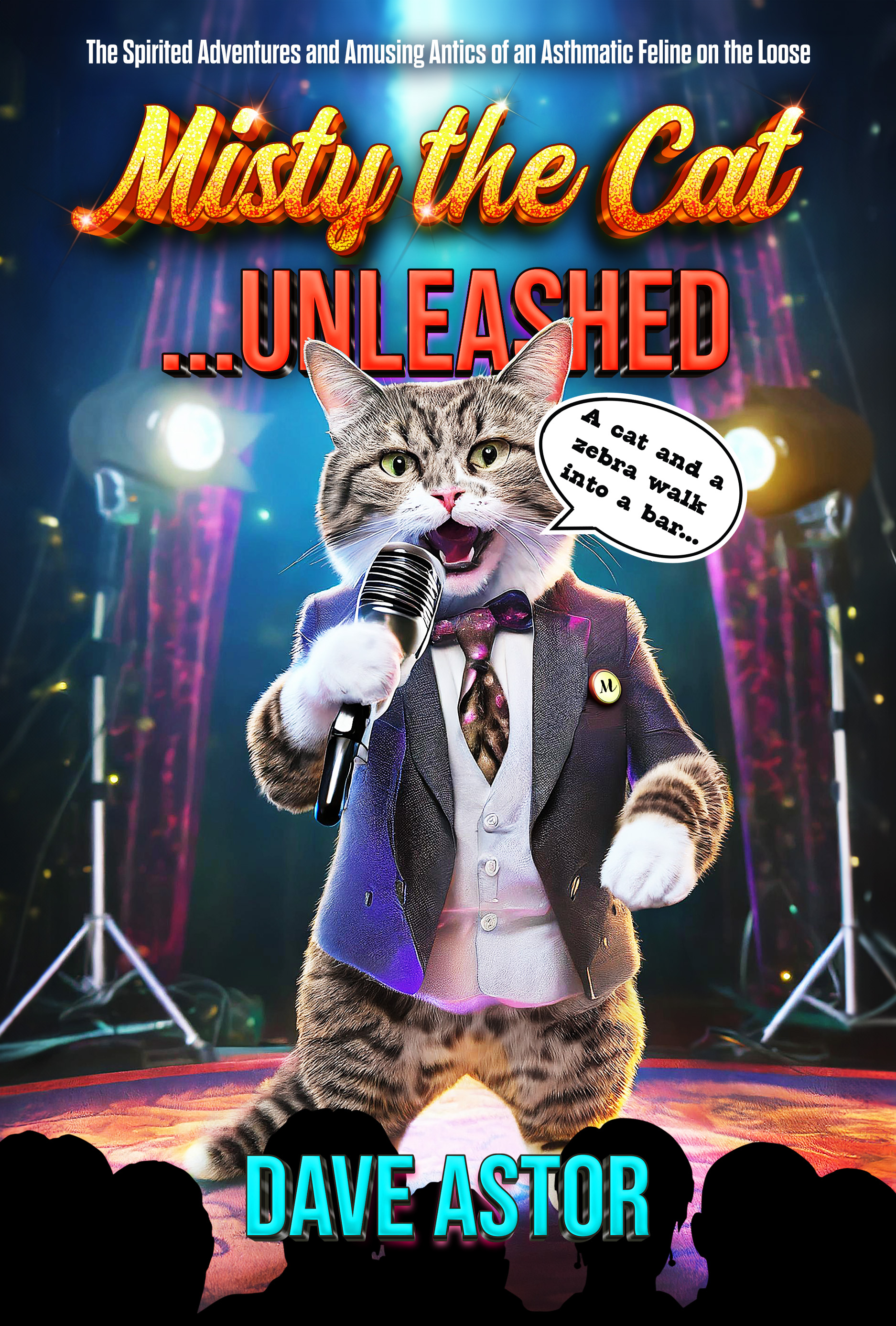
My comedic 2024 book — the part-factual/part-fictional/not-a-children’s-work Misty the Cat…Unleashed — is described and can be purchased on Amazon in paperback or on Kindle. It’s feline-narrated! (And Amazon reviews are welcome. 🙂 )
This 90-second promo video for the book features a talking cat: 🙂

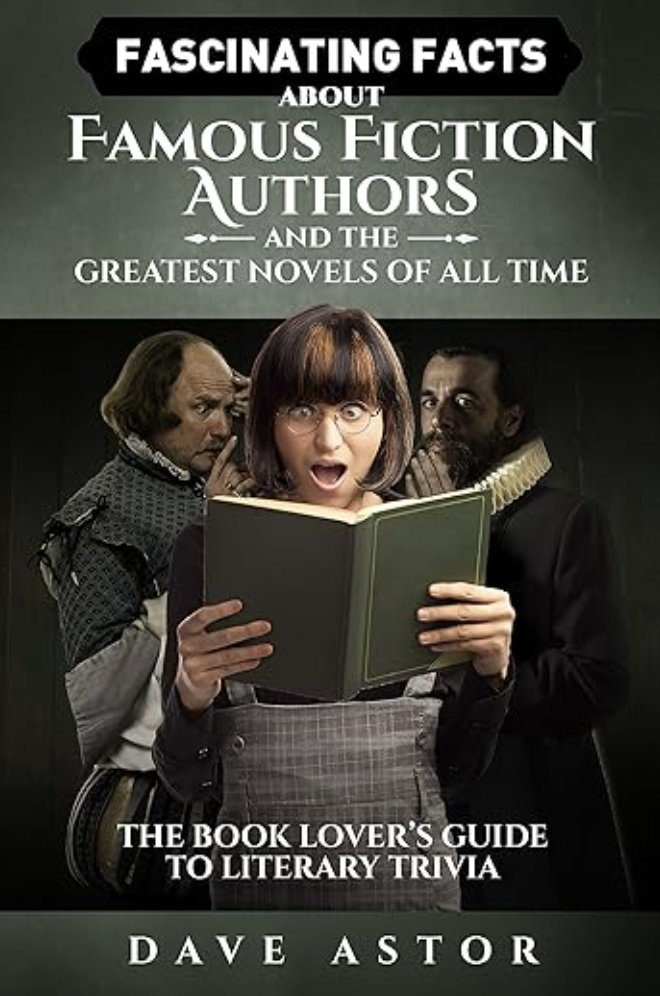
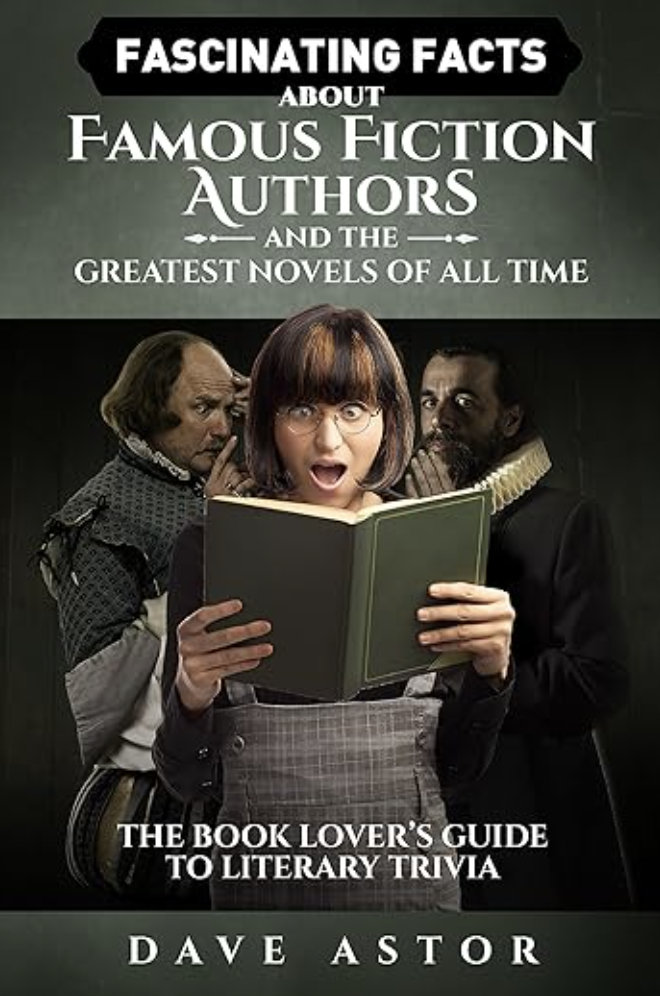
I’m also the author of a 2017 literary-trivia book

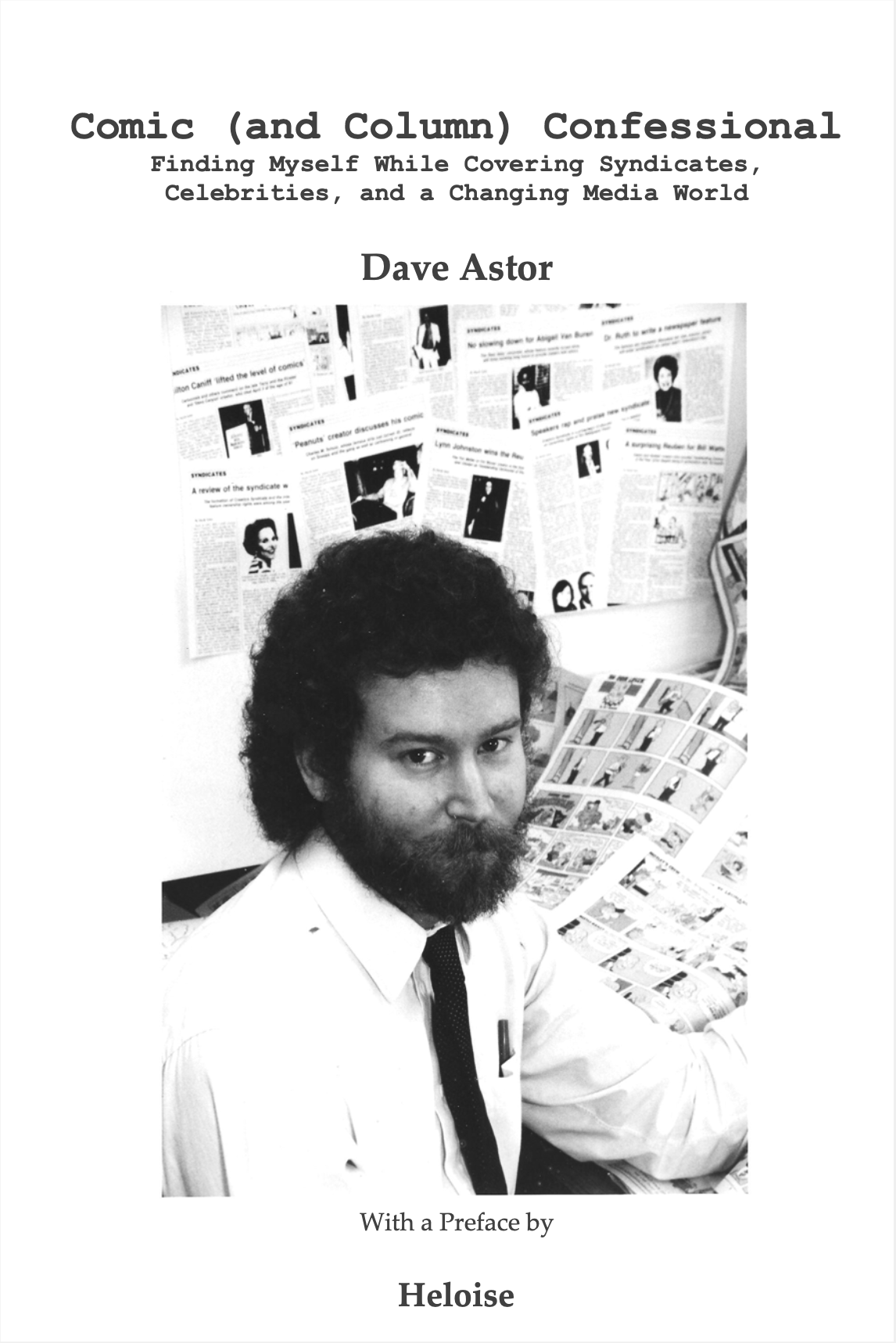
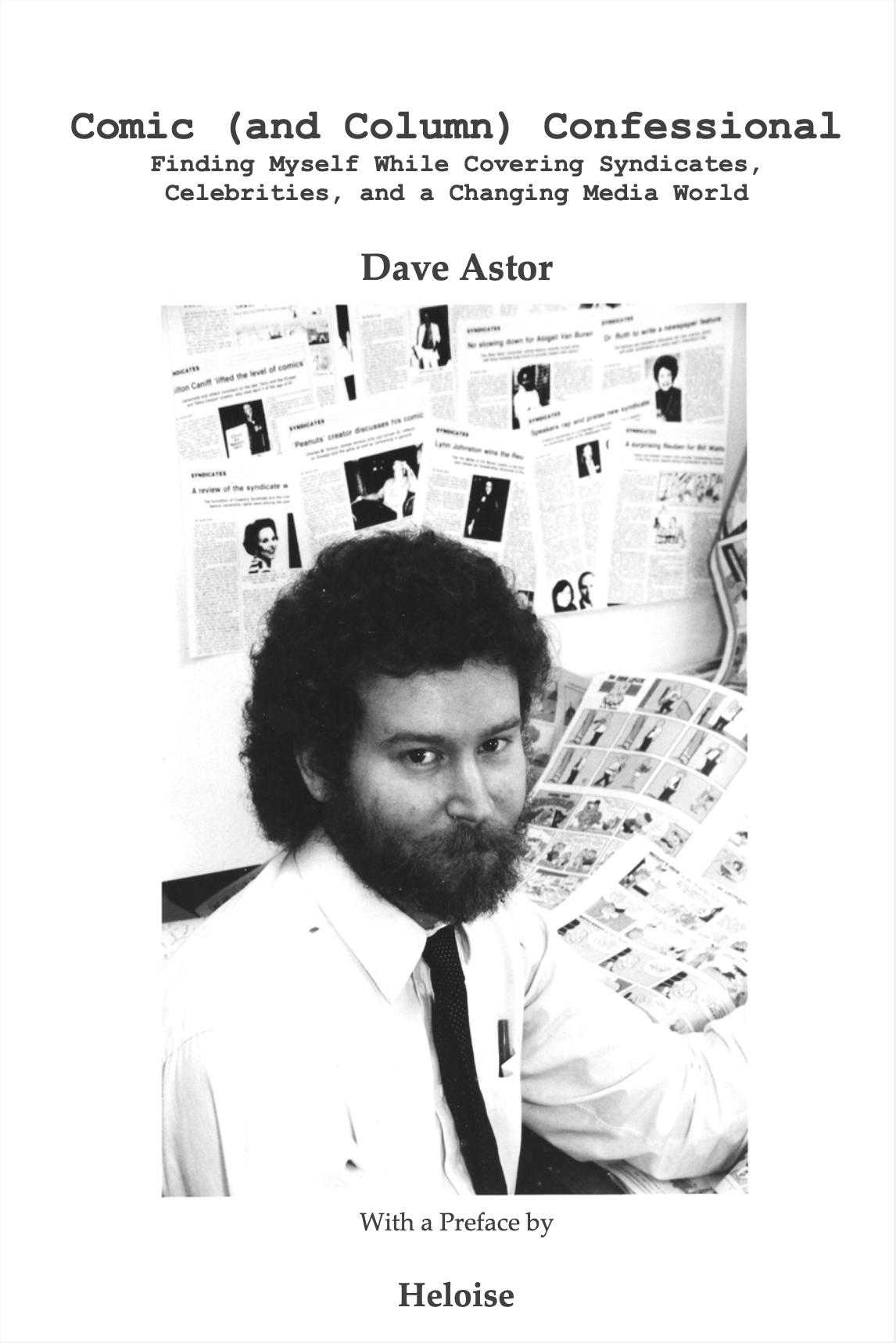
…and a 2012 memoir that focuses on cartooning and more, including many encounters with celebrities.
In addition to this weekly blog, I write the 2003-started/award-winning “Montclairvoyant” topical-humor column every Thursday for Montclair Local. The latest piece — which comedically commented on July 4th and more — is here.
What Is So Rare as a Cat Post in June?

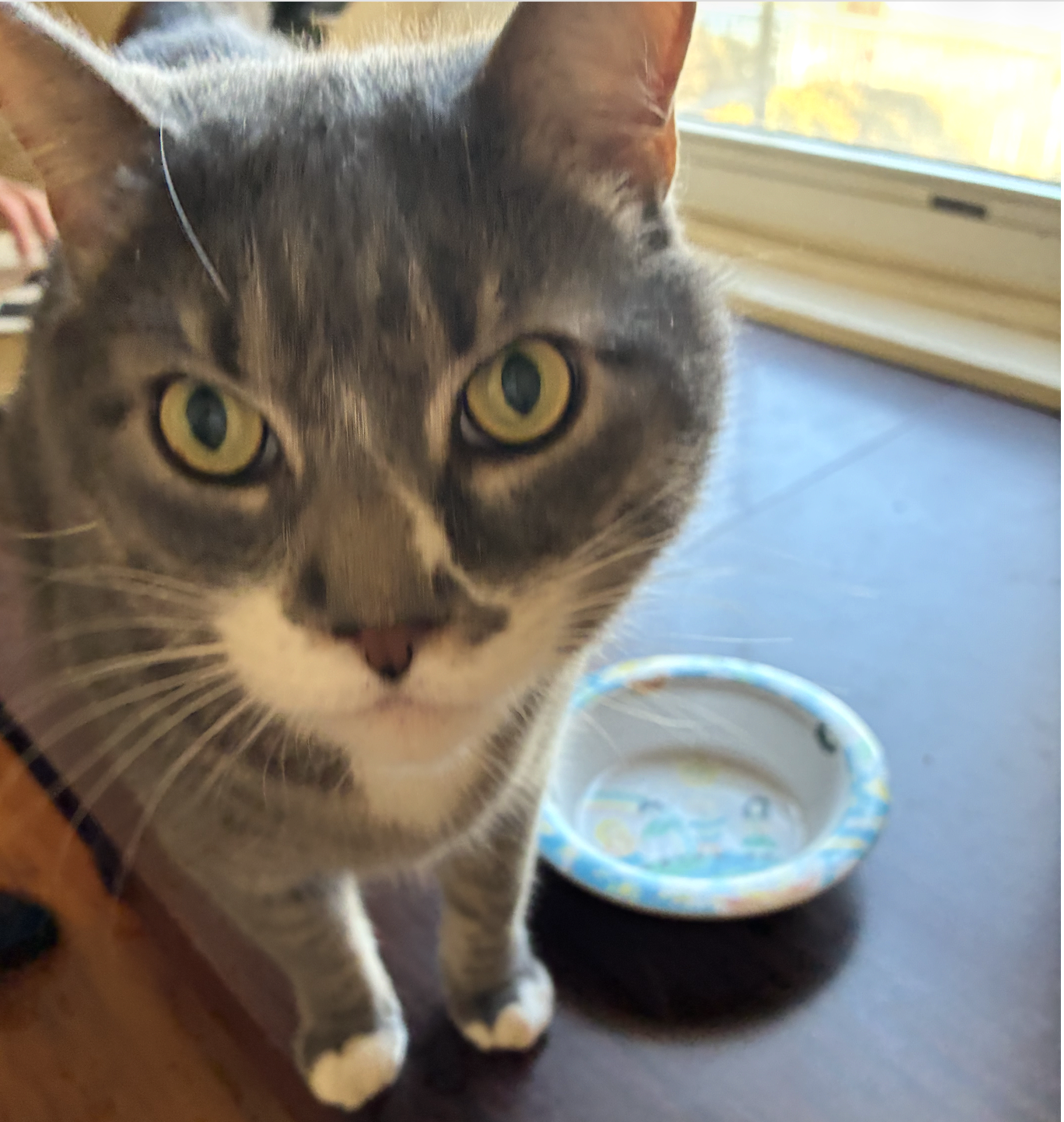
SO ready for my close-up. (Photo by some human.)

I, Misty the cat, am back for my every-two-month guest blog post — this time starting with a book-related complaint. Is my beef the fact that few males in literature are as handsome as my feline self? Well, that’s an issue, but my complaint actually involves libraries not always having every book in a series — causing me to slap photos of not-there novels on milk cartons under the word MISSING.

Sure, I realize some of those novels are being borrowed by library users, but my cat intuition suspects that in other cases the whole series were not ordered by acquisitions departments. If Amnesty International didn’t have infinitely more important things to do, they’d investigate.

I most recently wrestled with missing-book syndrome after looking several times for Y Is for Yesterday, the 25th and final installment of Sue Grafton’s wonderful series of alphabet mysteries (the author unfortunately died before authoring Z). I decided not to write 25 strongly worded…letters.

Then, after reading Peter May’s riveting thriller The Blackhouse and its equally intense sequel The Lewis Man (unexpectedly not about Jerry Lewis in The Nutty Professor), I returned to the library several times with hopeful tail in air looking for the third installment: The Chessmen. But it was never there. Not even a single cheap plastic pawn, rook, or bishop. Sure, I could try to get on a waiting list (if my local library had those books) or do the interlibrary loan thing, but I have so many books on my to-read list that I just ended up borrowing other novels. After briefly sobbing for multiple days.

During my last library visit vainly seeking The Chessmen, I randomly chose a different Peter May novel called Lockdown. Didn’t like it at all; I abandoned the book after struggling through nearly 100 pages — though I kindly gave the library some clues about where I had abandoned said book. (Hint: it’s buried near where labor leader Jimmy Hoffa disappeared in 1975.) Even the best authors can write the occasional clunker, and their prison terms for doing so tend to be only several years.

More clunkers by otherwise excellent authors who are not cats like me? Stephen King’s Cell, Kristin Hannah’s Fly Away, Willa Cather’s Sapphira and the Slave Girl, and Jack London’s A Daughter of the Snows, to name four. I’d love to see what’s in the parent-name boxes on that snow daughter’s birth certificate.

Nary a clunker among George Eliot’s big-five novels published in this chronological order: Adam Bede, The Mill on the Floss, Silas Marner, Middlemarch, and Daniel Deronda. Oddly, Mary Ann Evans wrote the same five novels — meaning she and Eliot may have been smoking noms de plume.

Daniel Deronda reminds me — the intermittently meowing Misty — that many fictional works have alliterative titles: Black Beauty (Anna Sewell), Captains Courageous (Rudyard Kipling), Cat’s Cradle (Kurt Vonnegut), Golden Girl (Elin Hilderbrand), Gone Girl (Gillian Flynn), Make Me (Lee Child), Marjorie Morningstar (Herman Wouk), Nicholas Nickleby (Charles Dickens), Perestroika in Paris (Jane Smiley), Peter Pan (J.M. Barrie), Rob Roy (Walter Scott), The Cuckoo’s Calling (J.K. Rowling), The Custom of the Country (Edith Wharton), The Great Gatsby (F. Scott Fitzgerald), The Master and Margarita (Mikhail Bulgakov), The Boys from Biloxi (John Grisham), The Plains of Passage (Jean M. Auel), etc. Oh, and Crime and Crunishment.

What does “crunishment” mean? I think it has something to do with being bombarded by croutons.

It’s June and the sun is often out, so I would like to conclude this post with some novels that have “Sun” in their titles. The Sun Also Rises, of course, which I feel is overrated Hemingway — although he was a big fan of never-overrated cats. Half of a Yellow Sun by Chimamanda Ngozi Adichie. Klara and the Sun by Kazuo Ishiguro. A Thousand Splendid Suns by Khaled Hosseini. And so on. I, Misty the cat, do not live in “The House of the Rising Sun” but instead dwell in “The Apartment of the Rising Sun” — from which I emerge every morning for my daily leashed walk to do more reading: STOP signs, street signs, graffiti, license plates, T-shirt logos, and the occasional plane skywriting “Where’s the final alphabet mystery?”

My human Dave will reply to all comments because “crunishment” is not a word.

Misty the cat says: “I’m inches from garden-bag greatness.”

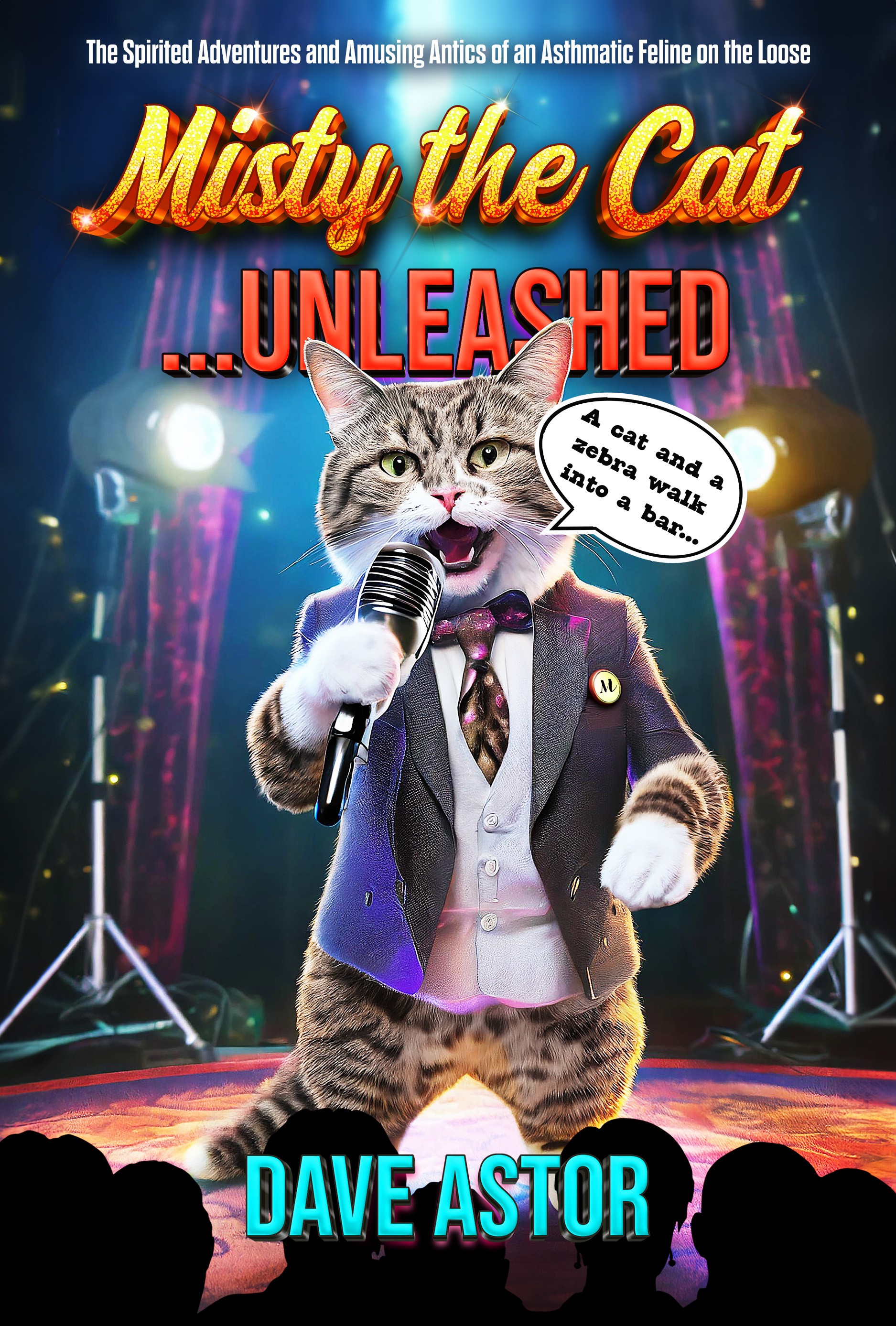
My (and Dave’s) comedic 2024 book — the part-factual/part-fictional/not-a-children’s-work Misty the Cat…Unleashed — is described and can be purchased on Amazon in paperback or on Kindle. It’s feline-narrated! (And Amazon reviews are welcome. 🙂 )


This 90-second promo video for the book features a talking cat: 🙂

Dave is also the author of a 2017 literary-trivia book

…and a 2012 memoir that focuses on cartooning and more, including many encounters with celebrities.

In addition to this weekly blog, Dave writes the 2003-started/award-winning “Montclairvoyant” topical-humor column every Thursday for Montclair Local. The latest piece — with primary election results, a governor’s mixed reaction to protests against an awful immigrant detention center, and more — is here.