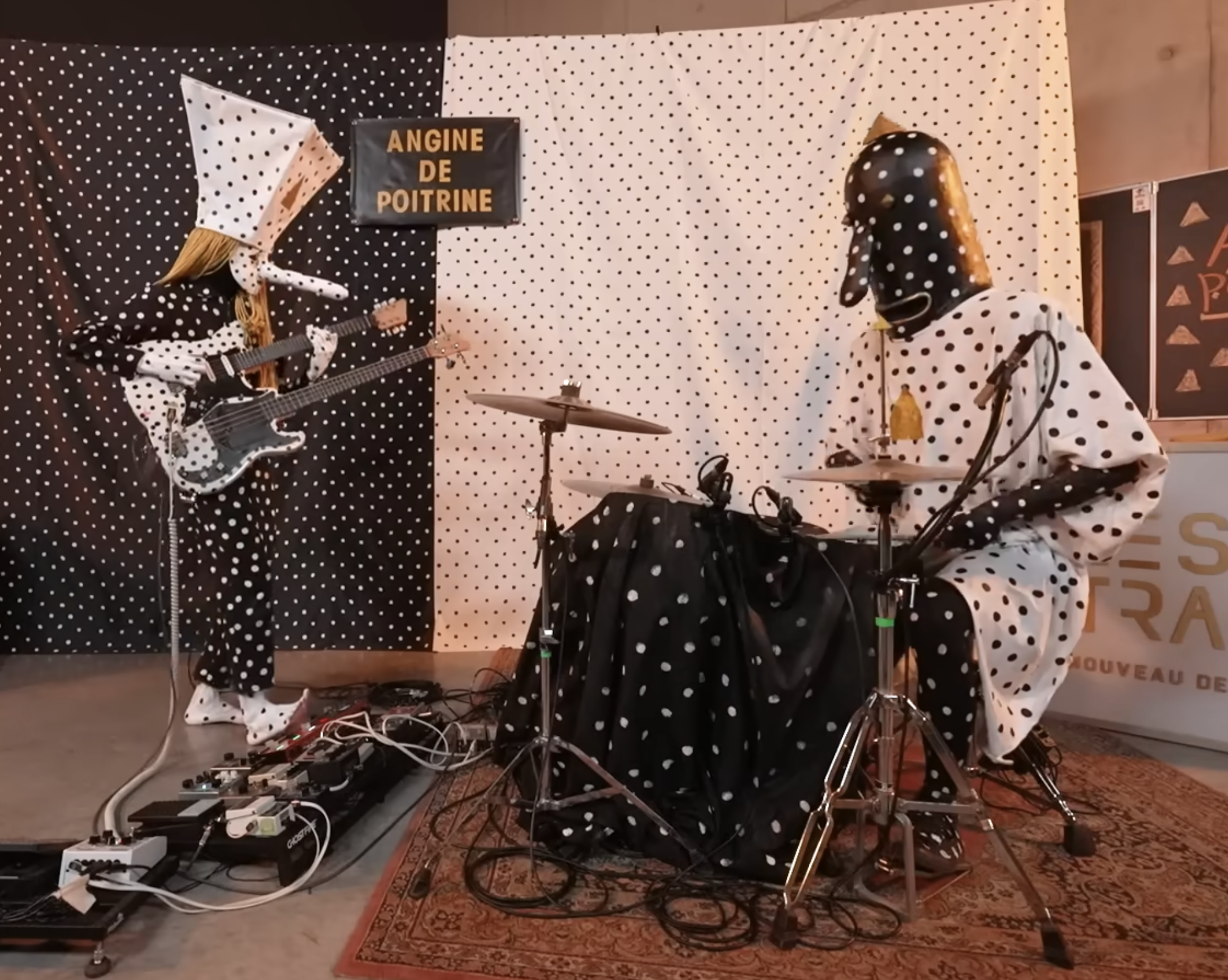
Angine de Poitrine! The video I took this screenshot from is at the end of today’s post.
I recently heard about a French-Canadian musical duo named Angine de Poitrine, and I must say that getting-very-popular group is delightfully quirky in its goofy appearance and mesmerizing songs.
The “q” word reminds me of some of the quirkiest authors and novels I’ve read over the years. Sometimes that quirkiness can be too much, but it’s often a nice change of pace…entertaining, compelling, and original.
One of the first authors to come to mind is John Irving. He frequently deals with quite serious matters – war, abortion, LGBTQ+ rights, etc., but mixes in all kinds of weird things. Bear appearances, wrestling situations, a deadly foul ball during a baseball game, and more. Life is unpredictable…
There’s also Franz Kafka’s writing, which is…Kafkaesque. 🙂 One obvious example is the human Gregor Samsa becoming a giant insect in that author’s The Metamorphosis.
Herman Melville got quirky in his rare 100%-land-based novel Pierre, which includes strong hints of incest as well as the author using his title character as a vehicle to obliquely reference Melville’s real-life dismay over the poor reception for his previous year’s Moby-Dick.
Margaret Atwood’s The Edible Woman? The title alone telegraphs just how oddly the author uses food in her debut novel.
Anthony Burgess’ dystopian A Clockwork Orange is also very offbeat with its slangy different language and more.
Or how about Kurt Vonnegut’s Slaughterhouse-Five? It mixes horror, black humor, time travel, and more as it makes its antiwar points.
Shirley Jackson’s We Have Always Lived in the Castle features an isolated ultra-eccentric family, strange murders, and other eyebrow-raising content.
Mikhail Bulgakov’s The Master and Margarita includes the devil in its cast as well as a flying human (no airplane involved) and other fantastical elements.
Which reminds me that magic-realism novels, such as Gabriel Garcia Marquez’s One Hundred Years of Solitude, can also feature flying humans and other peculiar things.
Flann O’Brien’s The Third Policeman includes absurd content such as cops who speak mostly in non sequiturs and are obsessed with bicycles.
And we can’t forget Alice’s Adventures in Wonderland and Through the Looking-Glass by Lewis Carroll, who offers readers all kinds of surreal stuff: Alice’s body changing sizes, bizarre chess goings-on, the fading-away Cheshire Cat…
I’ll end by noting that there are novels that are mostly not weird but have at least one weird element. For instance, the tragic-yet-delightful ghost in Elin Hilderbrand’s The Hotel Nantucket.
Your thoughts about, and examples of, this topic?
An Angine de Poitrine song:
Misty the cat says: “Before the rain the birds get noisy/That doesn’t mean I live in Boise.”
My comedic 2024 book — the part-factual/part-fictional/not-a-children’s-work Misty the Cat…Unleashed — is described and can be purchased on Amazon in paperback or on Kindle. It’s feline-narrated! (And Amazon reviews are welcome. 🙂 )
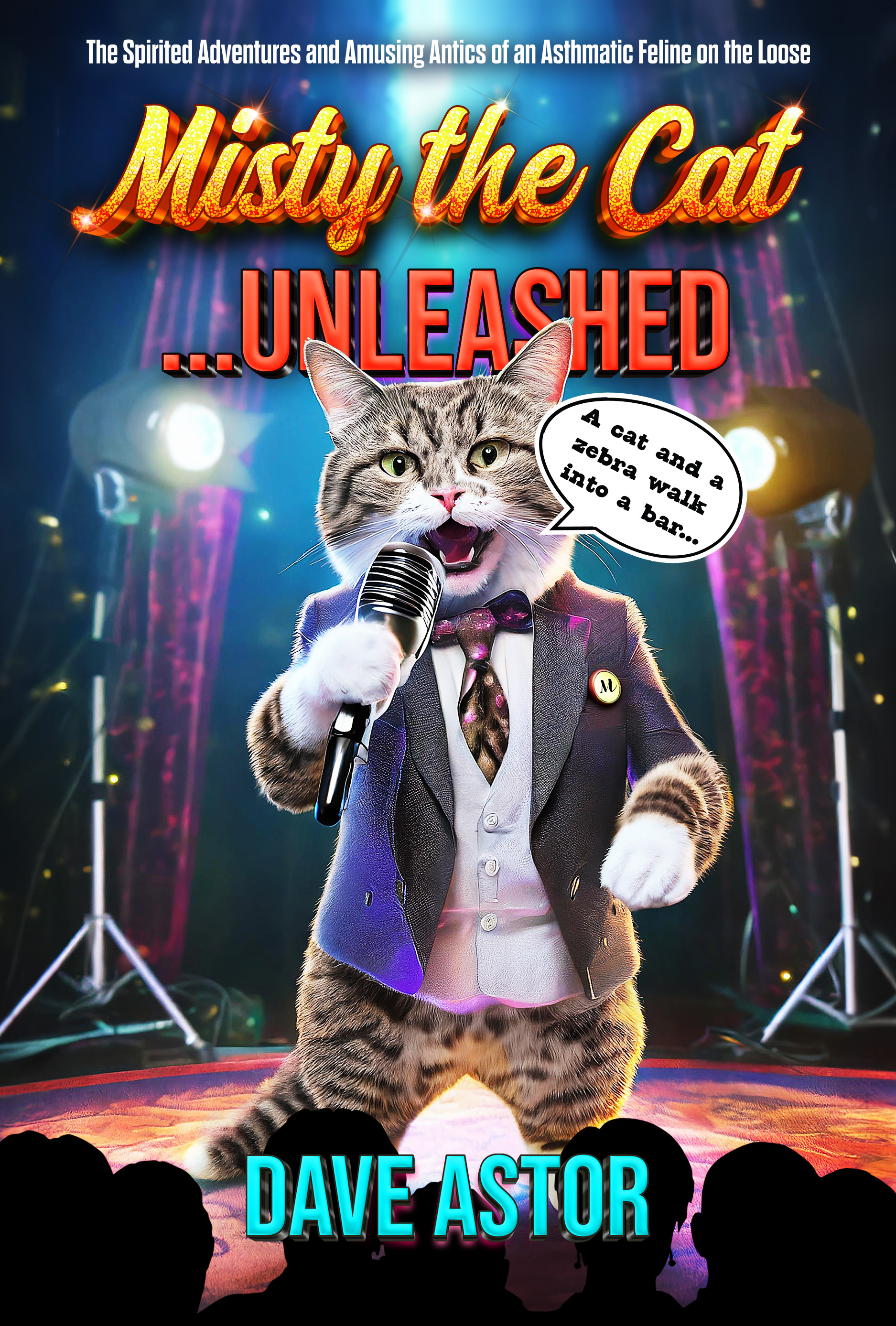
This 90-second promo video for the book features a talking cat: 🙂 Not my voice. 🙂
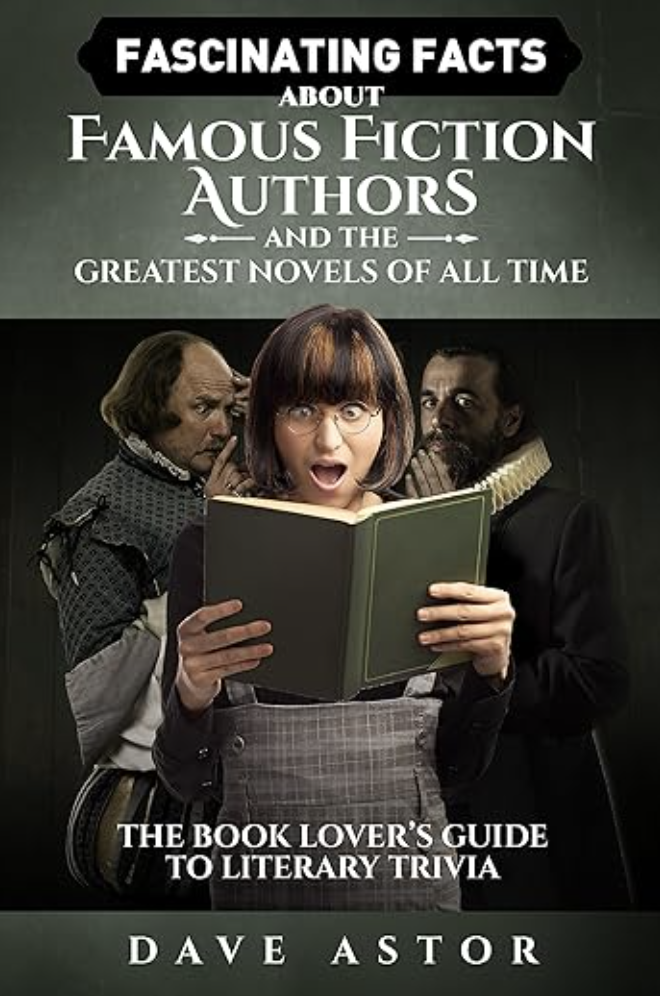
I’m also the author of a 2017 literary-trivia book…
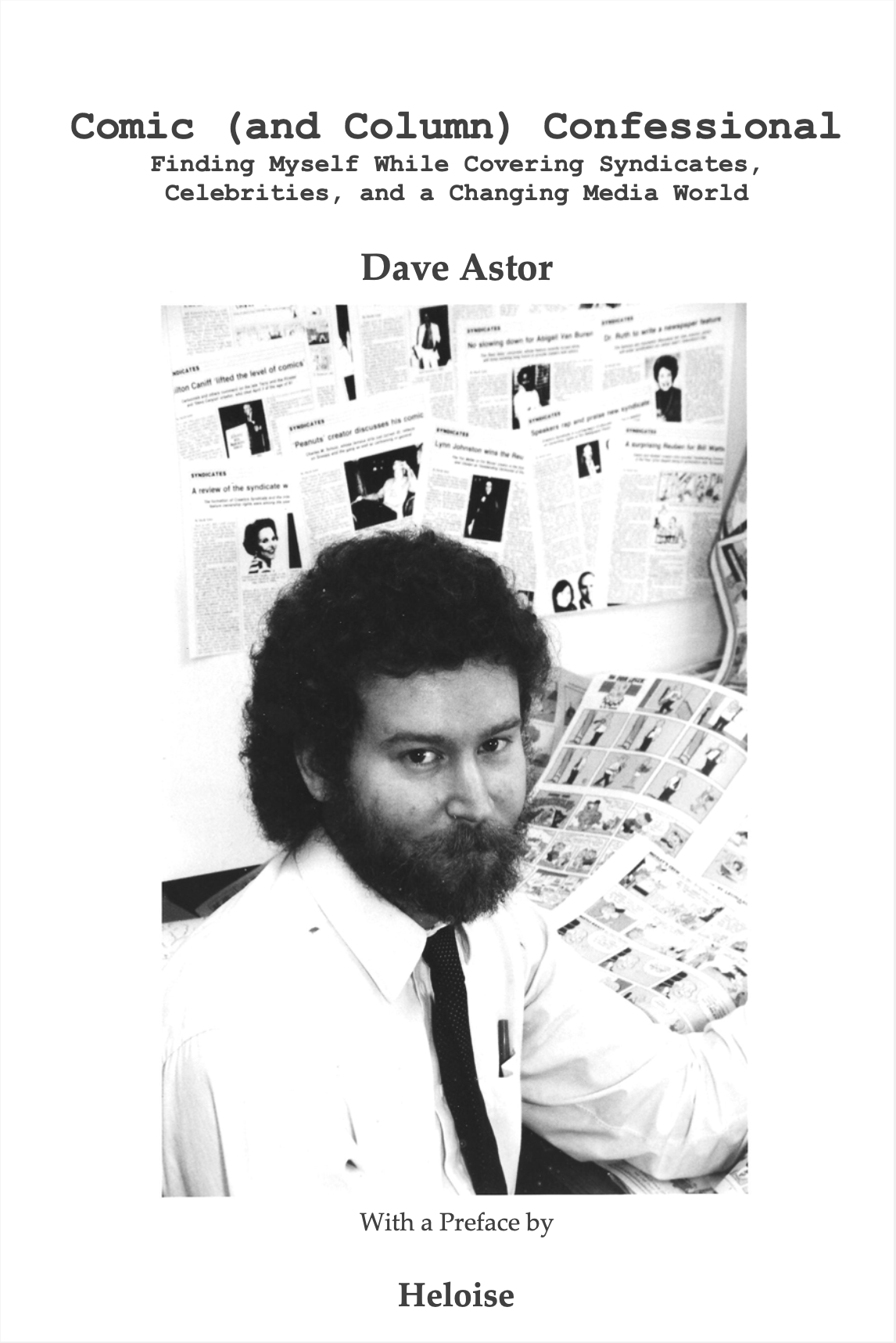
…and a 2012 memoir that focuses on cartooning and more, including many encounters with celebrities.
In addition to this weekly blog, I write the 2003-started/award-winning “Montclairvoyant” topical-humor column every Thursday for Montclair Local. The latest piece – about ICE agents again menacing my town and more — is here.
 Dave Astor on Literature
“We Have Always Lived in the Castle” is still on my reading list! Several friends have recommended Jackson’s book for the quirk factor! I’ll take your post as another friendly nudge, Dave. (And I love the title of this post!) ❤️😉❤️
LikeLiked by 1 person
Thank you, Vicki! Glad you enjoyed the post and its title. 🙂 “We Have Always Lived in the Castle” has a large quirk quotient indeed! Shirley Jackson had a very interesting sensibility in that novel as well as in “The Haunting of Hill House” novel and “The Lottery” short story.
LikeLiked by 1 person
“Quirk quotient” — I love it!!! ❤️😉❤️
LikeLiked by 1 person
When all else fails…alliteration. 🙂
LikeLiked by 1 person
You have skills…no doubt!!! ❤️😉❤️
LikeLiked by 1 person
Thank you, Vicki! 🙂
LikeLiked by 1 person
Thank you, Dave! ❤️😉❤️
LikeLiked by 1 person
🙂
LikeLike
Dave, I rarely remember books as quirky. I remember the characters and the experience of entering their worlds. But looking at your examples, I can see how often the unexpected becomes the very thing that makes a story memorable. I immediately thought of Tove Jansson’s The Summer Book, which I am currently reading. I am going slowly through the chapters because there is depth that is easy to overlook. The conversations between Sophia and her grandmother have a wonderful eccentricity about them. They are not extraordinary in the way Kafka’s giant insect is extraordinary, but they constantly surprise me. Some writers turn the world upside down, while others simply give us characters who see the ordinary world from a slightly different angle. This is a quote from the chapter I just read:
“It’s funny about love,” Sophia said. “The more you love someone, the less he likes you back.”
“That’s very true,” Grandmother observed. “And so what do you do?”
“You go on loving,” said Sophia threateningly. “You love harder and harder.”
LikeLiked by 1 person
Thank you, Rebecca! Unexpected and eccentric are two excellent adjectives to describe the content of of very quirky or partly quirky novels.
“Some writers turn the world upside down, while others simply give us characters who see the ordinary world from a slightly different angle” — yes! There is definitely a range in and a variety of quirkiness.
I appreciate your mention of “The Summer Book,” and that conversation you cited from it is fascinating. Not sure the love referenced there will end well. 🙂 😦
LikeLiked by 1 person
It did, with a surprise. That is what I love about The Summer Book. It is all about a love for a cat. Misty would love this chapter.
LikeLiked by 1 person
Ah, a cat! 🙂 I thought a relationship between humans was being referenced by Sophia. If Misty reads “The Summer Book,” that novel will be “The Autumn Book” by then, but it still sounds good. 🙂
LikeLiked by 1 person
😂😂😂
LikeLiked by 1 person
🙂
LikeLike
Ray Bradbury’s Fahrenheit 451 about burning of books. Not quite as dystopian in today’s insane political climate with this horrid administration wanting to ban books,stories,history of LGBTQ, diversity, equity,inclusion. DJT probably never read a real book in his life,just newspapers and magazines.
Michele
E & P way back
LikeLiked by 3 people
Thank you, Michele! What Ray Bradbury scarily depicted in “Fahrenheit 451” was morally weird yet not unrealistically weird given what various dictators and wannabe dictators have done. Trump, as you note, is certainly one horrid example. I wonder if he even read the books ghostwritten for him?
LikeLike
A brilliant and fun reflection, dear Dave
It is so true that a touch of the unpredictable or bizarre is what makes these authors truly unforgettable.
Thank you for this lovely post!
LikeLiked by 2 people
Thank you, Luisa! Happy you enjoyed the post! “A touch of the unpredictable or bizarre” (nice phrasing 🙂 ) can definitely add to a novel.
LikeLike
One morning, as Gregor Samsa woke from troubled dreams, he found himself transformed in his bed into a horrible verminous bug.
I should be so lucky.
Thus begins my own take on Kafka’s The Metamorphosis. It’s about a guy who’s always on fire. Just go with it. My high school English teacher said I wrote like Kafka, which I found interesting because I was trying my best to rip off Dostoevsky. Well, 30 or 40 years later, I embraced my inner Kafka and… well, probably failed, but I’m proud of it anyway.
LikeLiked by 2 people
Thank you, Michael! I enjoyed your comment. Being told one writes like Kafka or Dostoevsky is a compliment either way. 🙂
LikeLiked by 1 person
I often mention Mervyn Peake’s Gormenghast books. They certainly have quirky characters, and the setting is bizarre.
That band certainly has adopted weirdness. Both the costumes and their name.
LikeLiked by 3 people
Thank you, Audrey! Worth mentioning Mervyn Peake’s Gormenghast books again. 🙂 One of these days I might try the first one, “Titus Groan.”
Yes, that band is weird, weird, weird. 🙂
LikeLiked by 1 person
Speaking of John Irving, I’d say Owen Meany is quirky. Thank goodness his creator didn’t bring in those irritating (and boring) bears!
LikeLiked by 3 people
Thank you, Liz! “A Prayer for Owen Meany” — the novel and its title character — are extremely quirky! Not my favorite Irving book (that’s “The Cider House Rules”), but it’s memorable. And, yes, no bears in “Owen Meany” that I can recall. 😂
By the way, I borrowed “Breakfast at Tiffany’s” from the library after you recommended it, and am liking it so far. (About halfway through that Capote novella.) It will be part of my blog post next Sunday. 🙂
LikeLiked by 2 people
Well, Angine de Poitrine are quirky! I remembered that you also like Rush. A documentary about Neil Peart is coming out on CBC soon, you can probably see it on their app GEM. Maggie
LikeLiked by 3 people
Thank you, Maggie! Angine de Poitrine is quirky indeed. 🙂 And you have an excellent memory about my love of Rush. 🙂 I heard about that Neil Peart documentary (saw a trailer) and hope I can watch the whole thing at some point. The late/great Peart’s drumming successor — Anika Nilles — is doing an amazing job on the current tour.
LikeLiked by 2 people