Feline Post Includes Mentions of Jane Austen and ‘The Host’

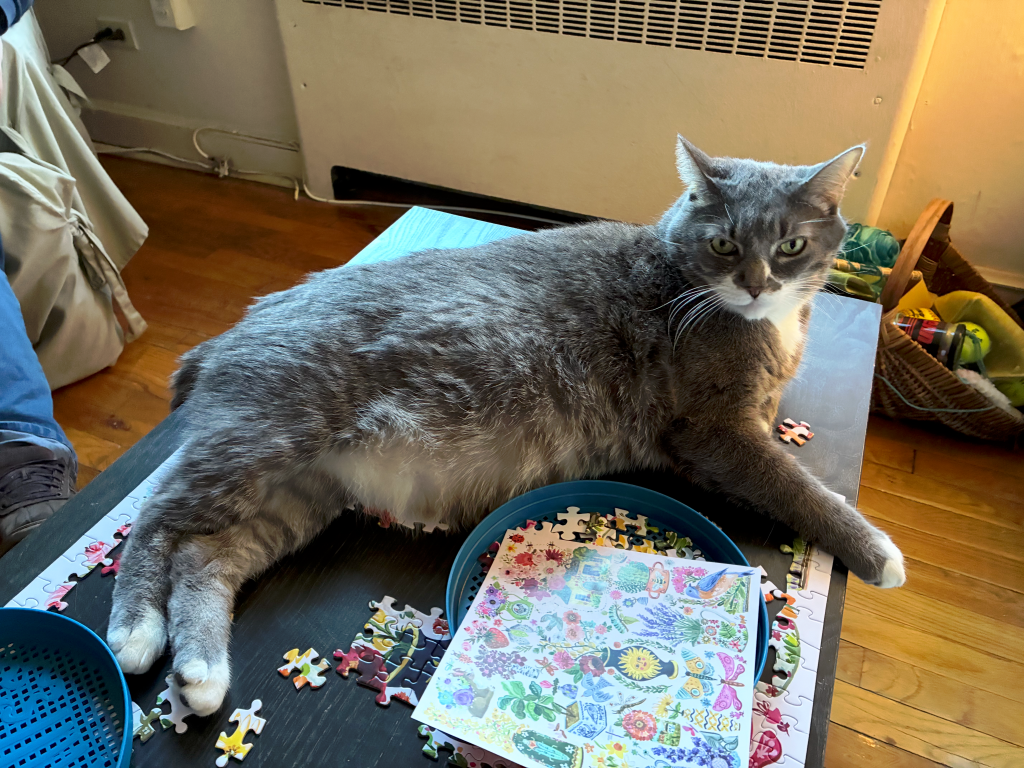
I, Misty the cat, say: “Putting together a guest blog post is like putting together a puzzle.” (Photo of my kitty self taken by my adult female human Laurel.)

Misty the cat here, returning for my every-two-month takeover of Dave’s blog — which I do by gunpoint, minus the gun. This is a particularly memorable time for me to post because tomorrow is the 8th anniversary of my adoption into my forever family, from whom I’ve received everything I could desire except a bed the size and shape of Buckingham Palace. King Chuck III has some ‘splaining to do.

And in nine days — December 16 — there’ll be a milestone moment for literature: the 250th anniversary of Jane Austen’s 1775 birth! Rebecca Budd, who comments here every week, has already posted about that anniversary in one of her great blogs. The year 1775 was also significant for being the start of the American Revolutionary War and for Apple’s rollout of the iMusket 9.

Back to Austen. I’m often (well, never) asked how I rank her six novels, and here’s my kitty answer: 1, 2, 3, 4, 5, 6. Oh, you want titles, too? 1) Persuasion. 2) Pride and Prejudice. 3) Sense and Sensibility. 4) Mansfield Park. 5) Emma. 6) Northanger Abbey. This is also Dave’s order of faves (rhyme alert!), which means we were both bribed by the same literary scholars. Austen’s early 19th-century books have aged well…partly because I keep them in my wine cellar. Actually, I don’t have a wine cellar. No cat does.

And today, December 7, is the 84th anniversary of the 1941 attack on Pearl Harbor, an event vividly depicted near the end of Herman Wouk’s compelling novel The Winds of War. If those winds had become strong enough, Wouk’s book would’ve been titled The Hurricanes of War — storms that fall alphabetically between Hurricane Violin and Hurricane Xylophone.

The Winds of War was followed by Wouk’s epic War and Remembrance — the title of which has the initials “WAR.” Coincidence? Well, Hurricane Coincidence falls alphabetically between Hurricane Bassoon and Hurricane Didgeridoo.

My current reading? I, Misty the cat, recently finished Twilight author Stephenie Meyer’s The Host, an excellent work of sci-fi that stars a being who lives inside a human body. So, no, the book is not a historical novel about Johnny Carson, who was not related to The Heart Is a Lonely Hunter author Carson McCullers, who was a top-notch writer but apparently didn’t know that a heart can’t hunt animals without a permit and that vegans prefer Fannie Flagg’s novel Fried Green Tomatoes at the Whistle Stop Cafe. Also, American frontiersman Kit Carson was not a feline like me.

Natty Bumppo did the frontiersman thing, too, in James Fenimore Cooper’s five “Leatherstocking” novels that included The Last of the Mohicans. Cooper was an American contemporary of aforementioned Englishwoman Jane Austen, and there are even rumors that they collaborated on a novel called The Last of the Emmas. So I’m puzzled (see photo) that we later had people such as actresses Emma Thompson and Emma Watson.

The latter of course played Hermione Granger in the Harry Potter movies based on the J.K. Rowling novels. Seven books, eight movies, and nine lives (experienced by cats like me). Plus there are 10 characters in Agatha Christie’s famed mystery novel And Then There Were None, whose plot focuses on the number of dry-food pellets left in my bowl after I finish eating. No mystery where those pellets went.

Which books do I want for Christmas? Charles Dickens’ A Christmas Carol, Fannie Flagg’s A Redbird Christmas, John Grisham’s Skipping Christmas, Betty Smith’s A Christmas Tree Grows in Brooklyn, Anthony Burgess’ A Christmas Orange, Fyodor Dostoevsky’s Christmas and Punishment, Aldous Huxley’s Brave New Christmas, Barbara Kingsolver’s Demon Christmashead, E.M. Forster’s A Passage to Christmas, Chinua Achebe’s Christmas Falls Apart

Dave will reply to comments as I either finish the puzzle I’m photographed with or swat every piece of that puzzle into January 2026.

I, Misty the cat, say: “There’s gotta be a sidewalk sale around here somewhere.”

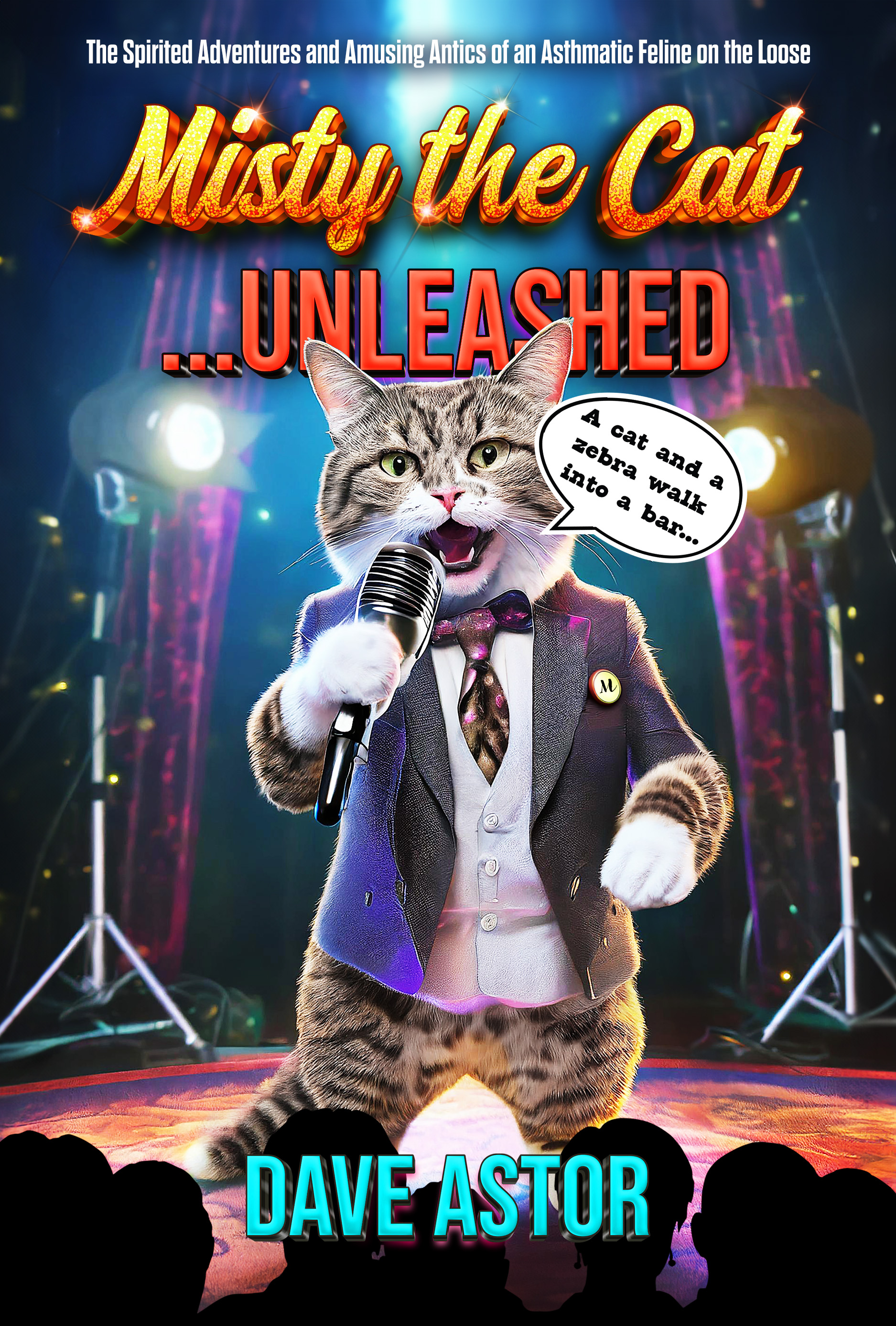
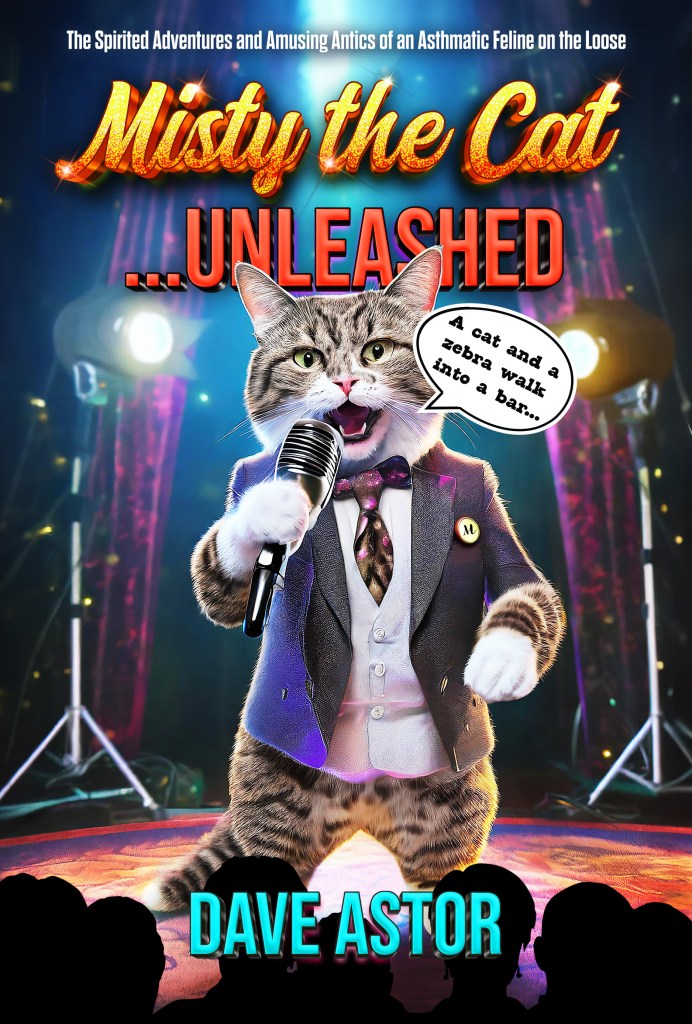
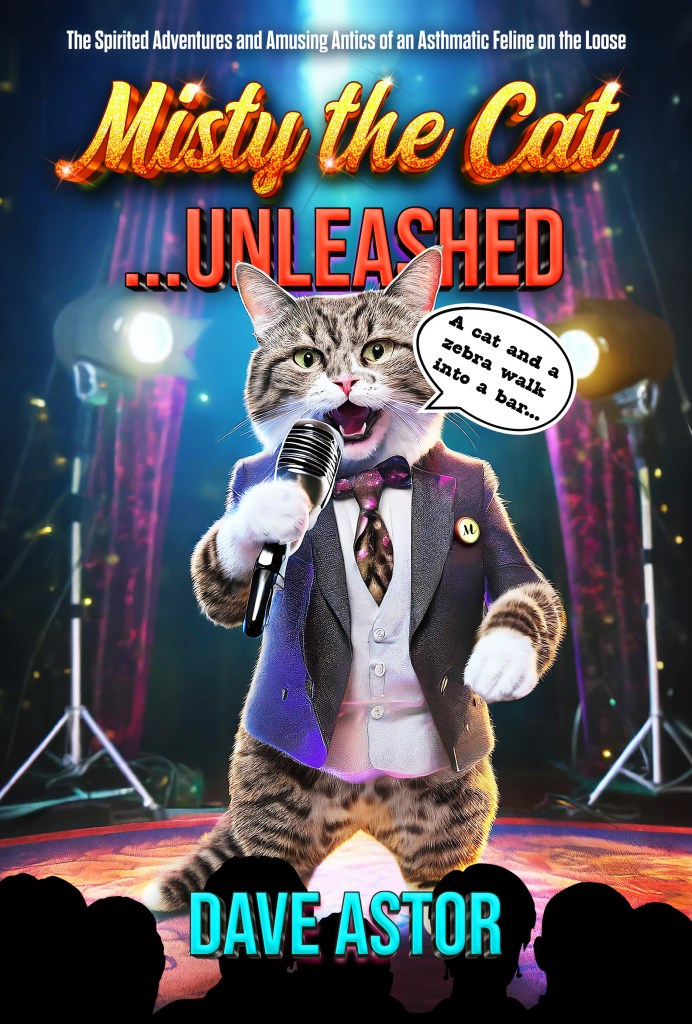
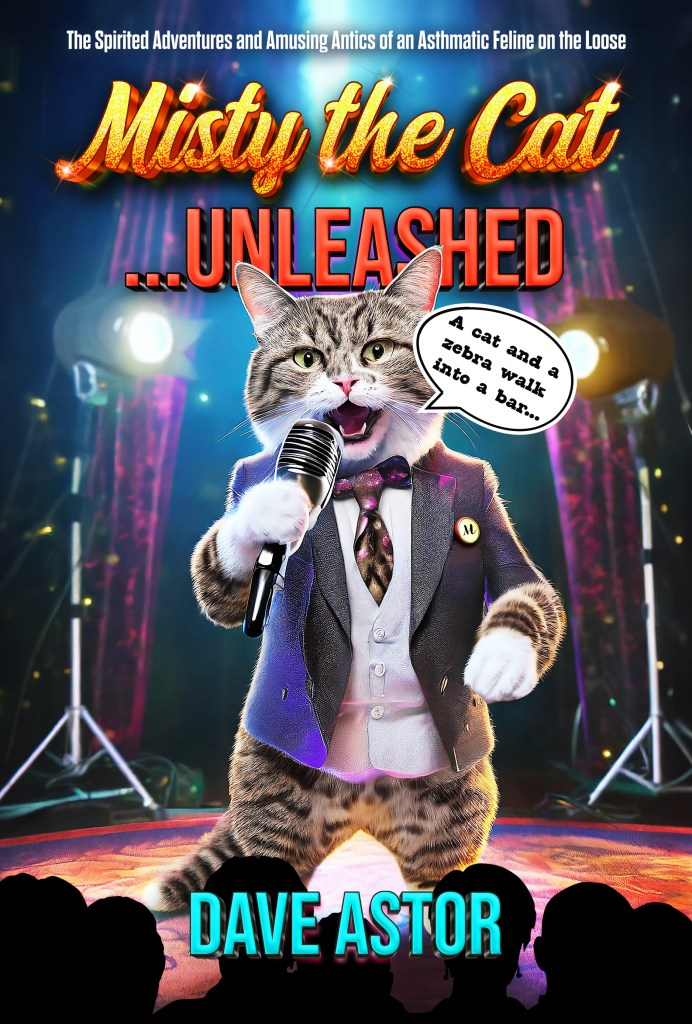
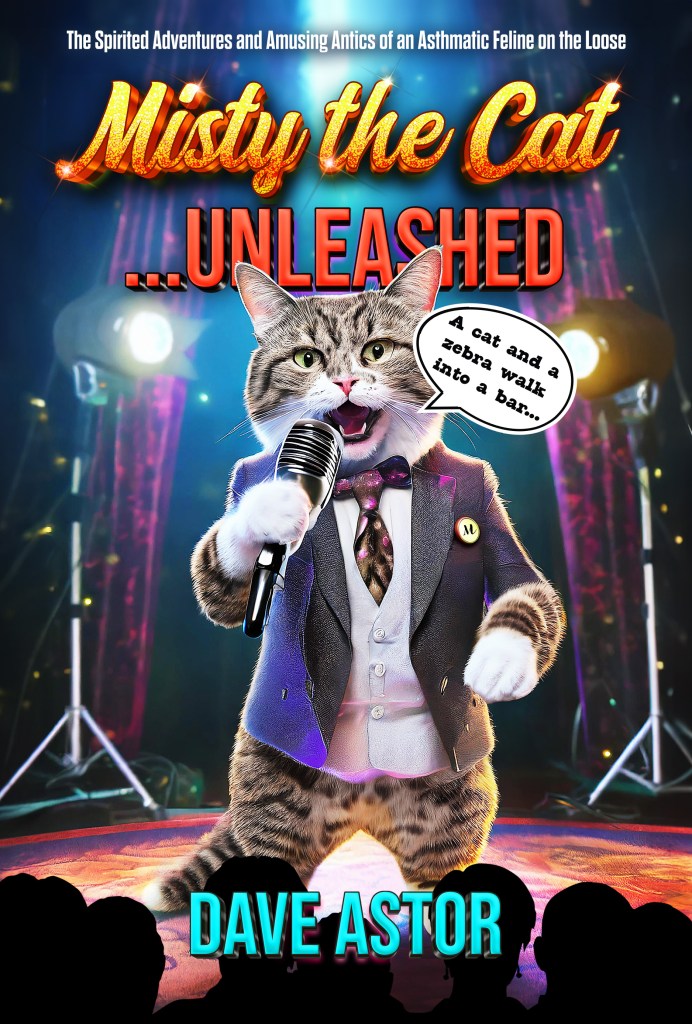
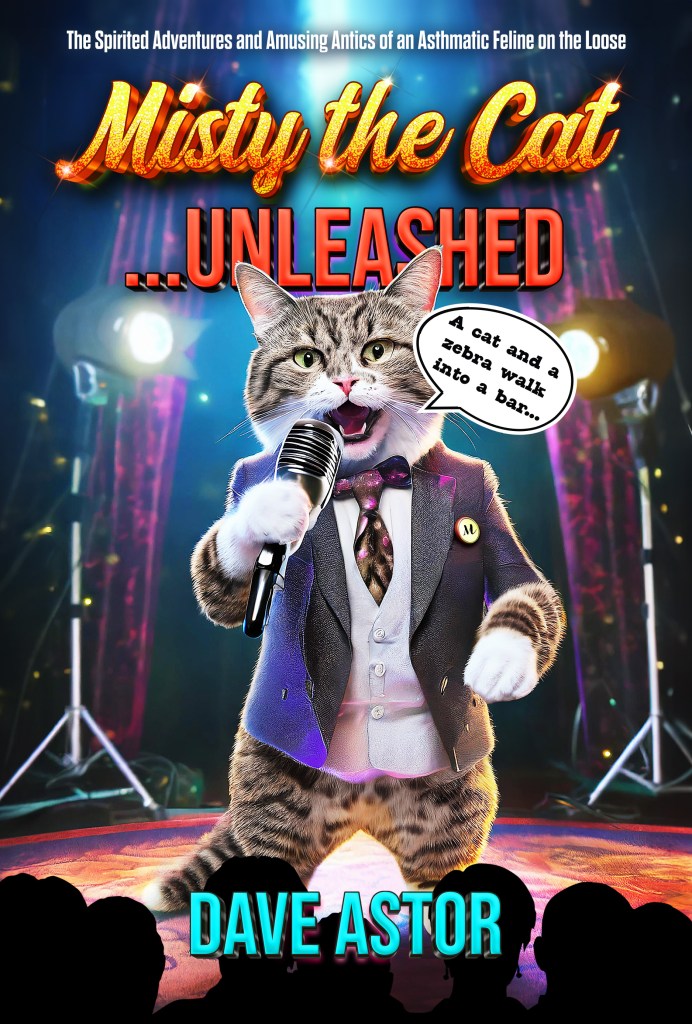
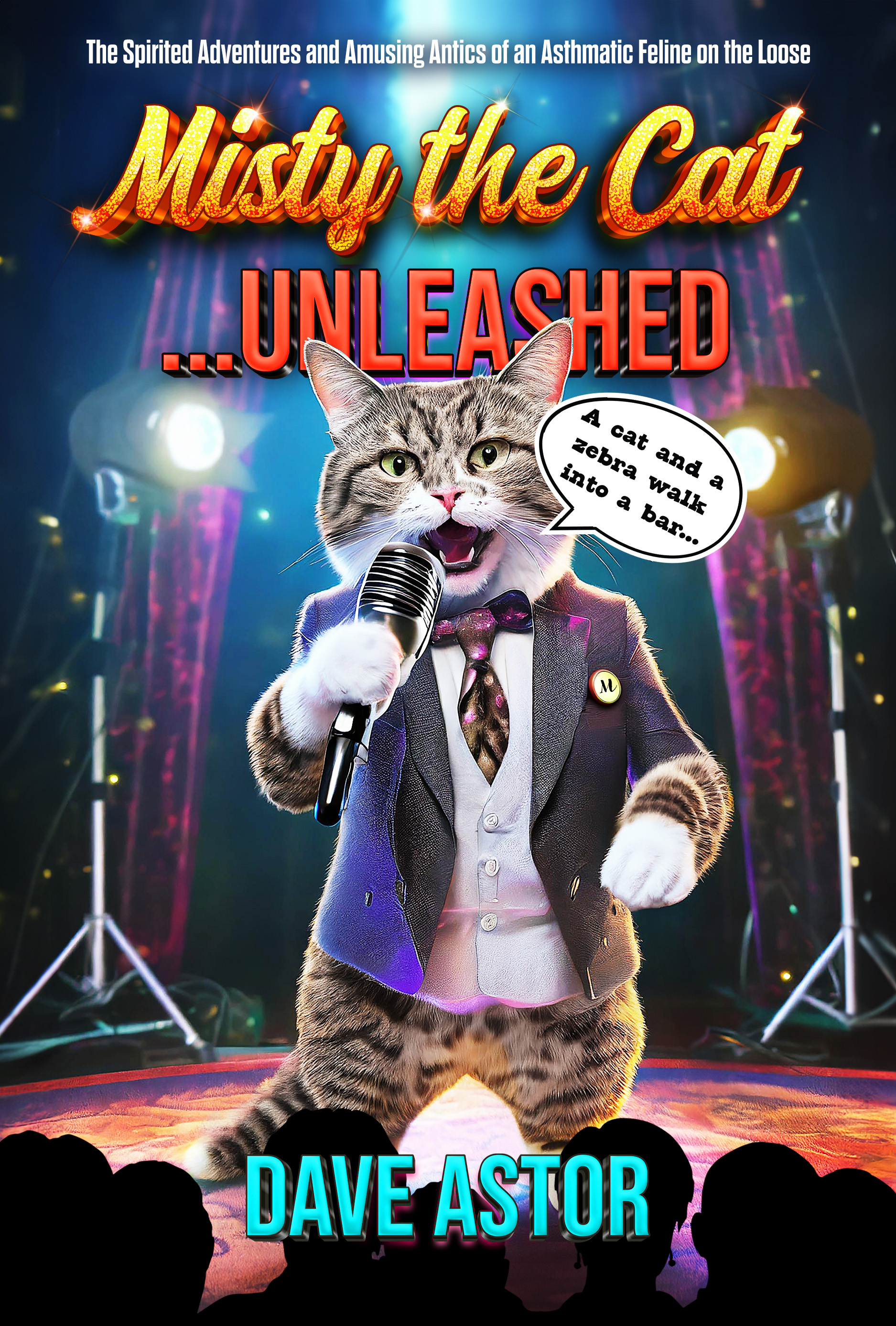
Dave and my comedic 2024 book — the part-factual/part-fictional/not-a-children’s-work Misty the Cat…Unleashed — is described and can be purchased on Amazon in paperback or on Kindle. It’s feline-narrated! (And Amazon reviews are welcome. 🙂 )
This 90-second promo video for the book features a talking cat: 🙂

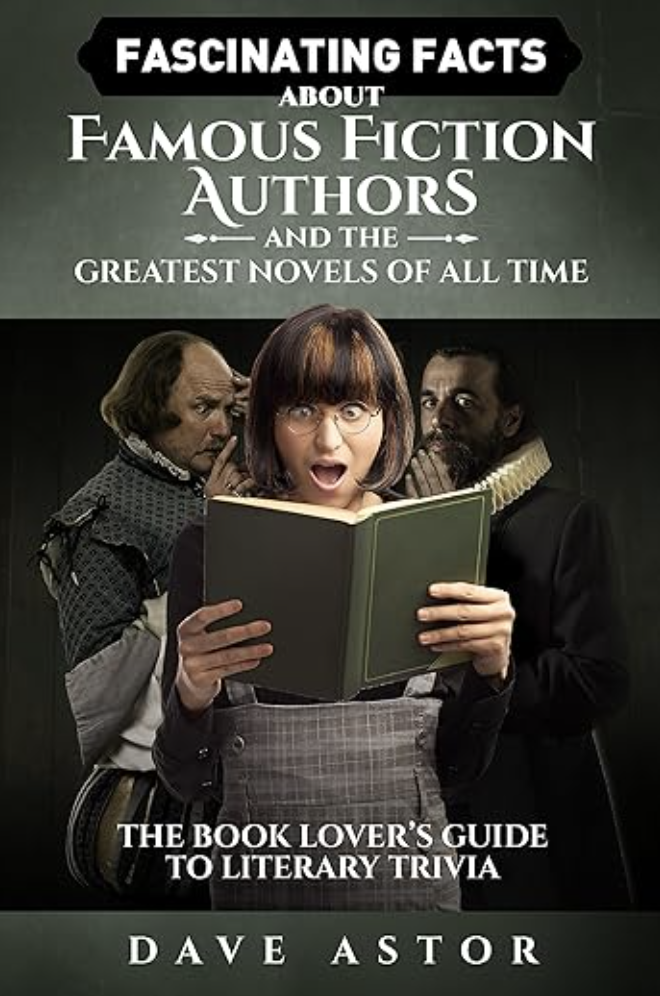
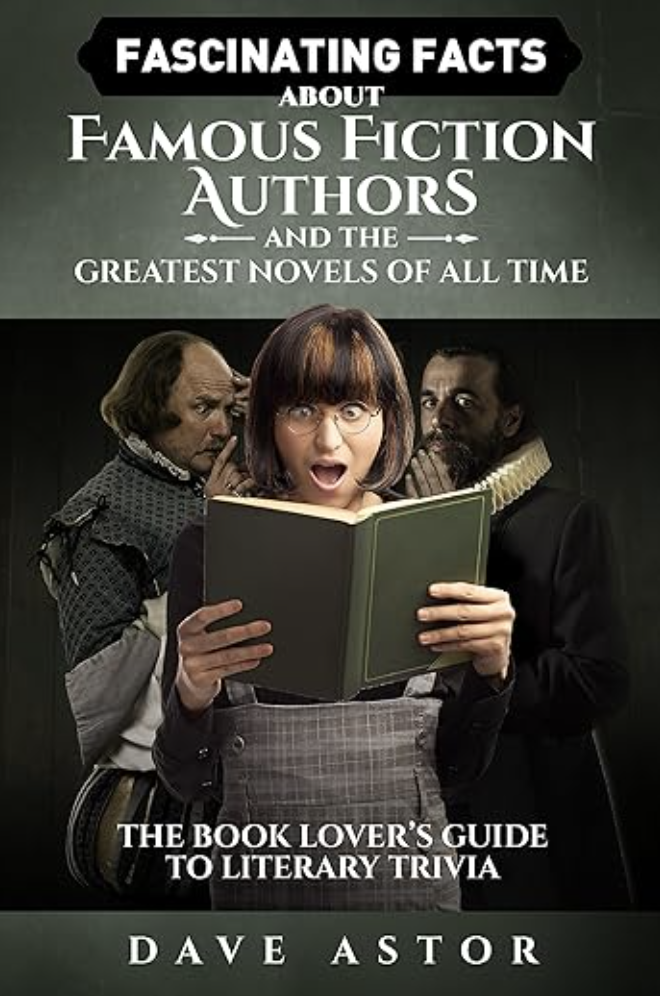
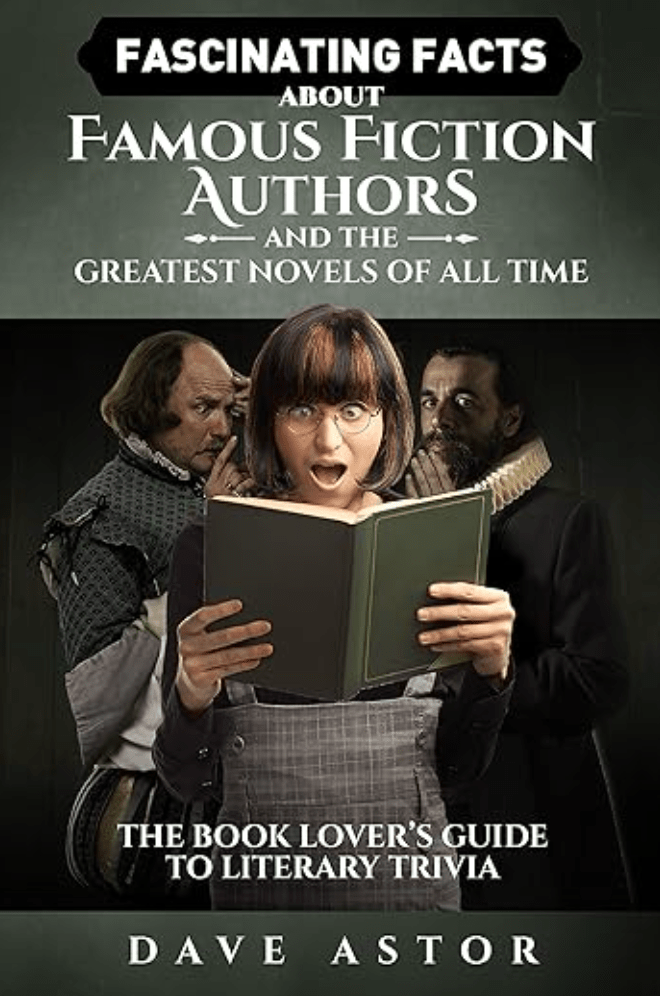
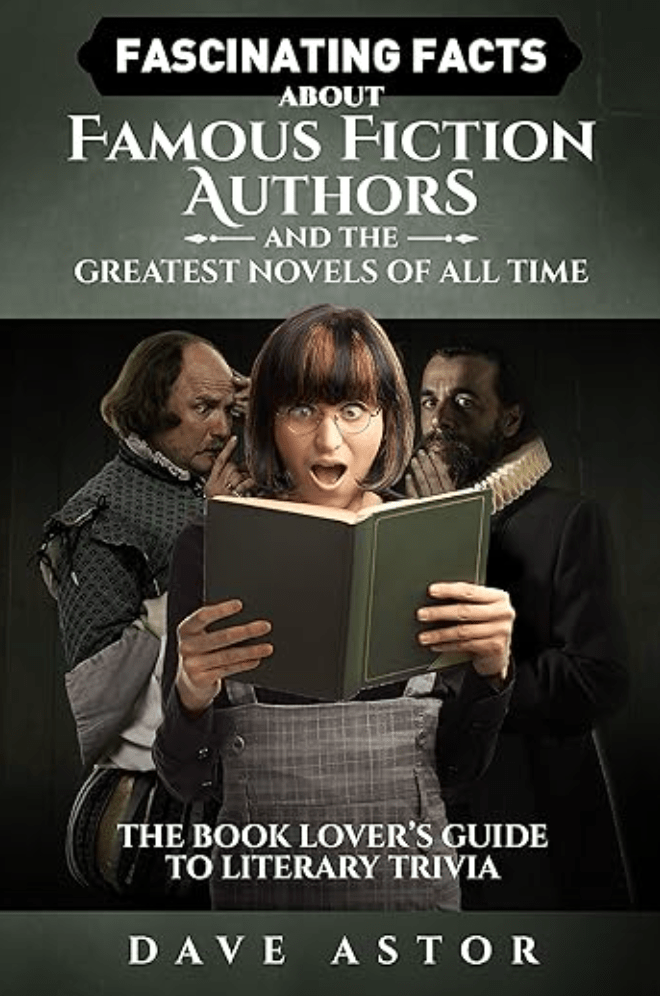
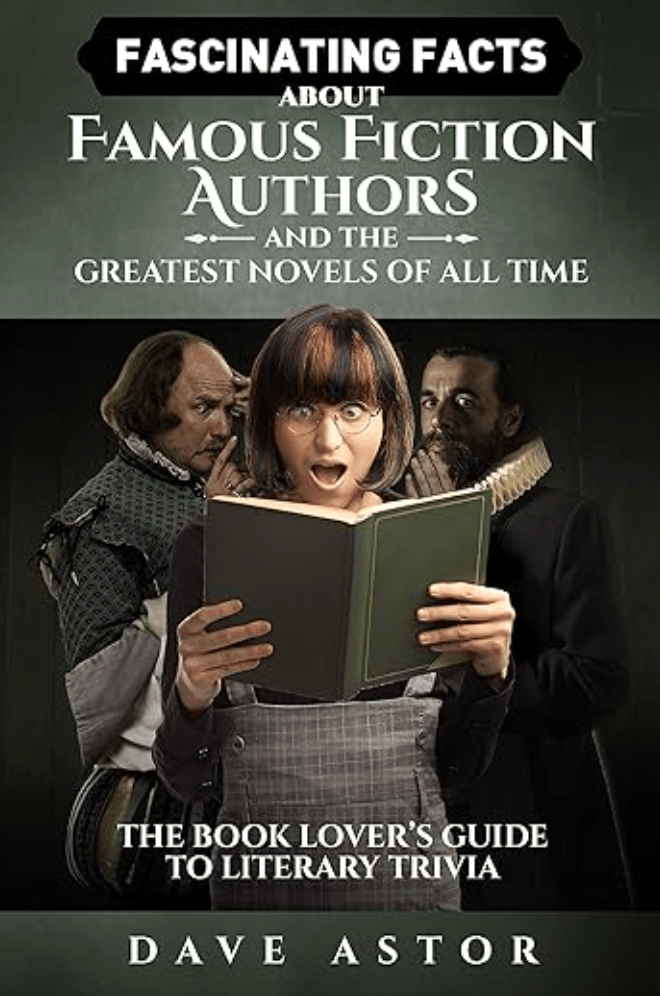
Dave is also the author of a 2017 literary-trivia book

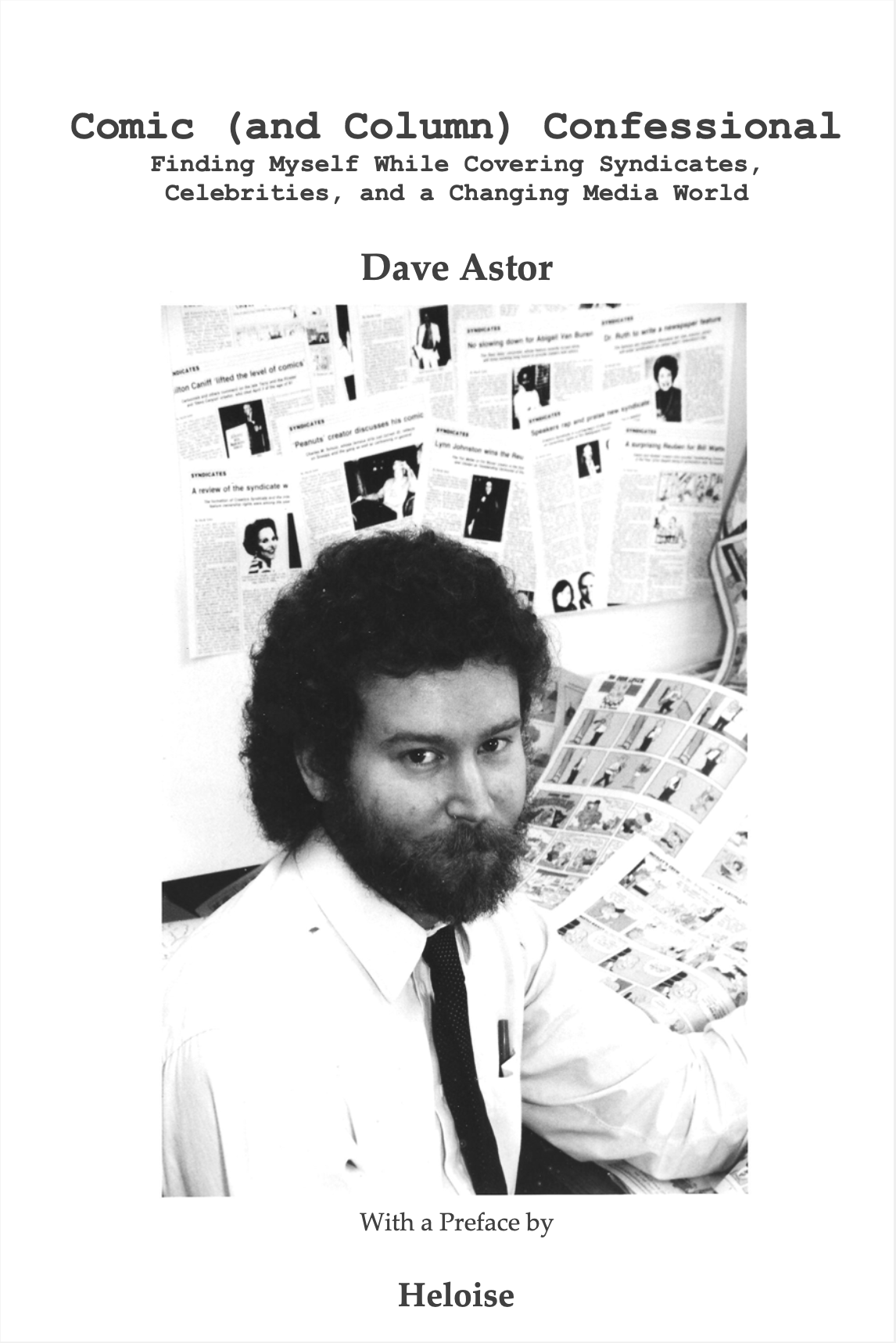
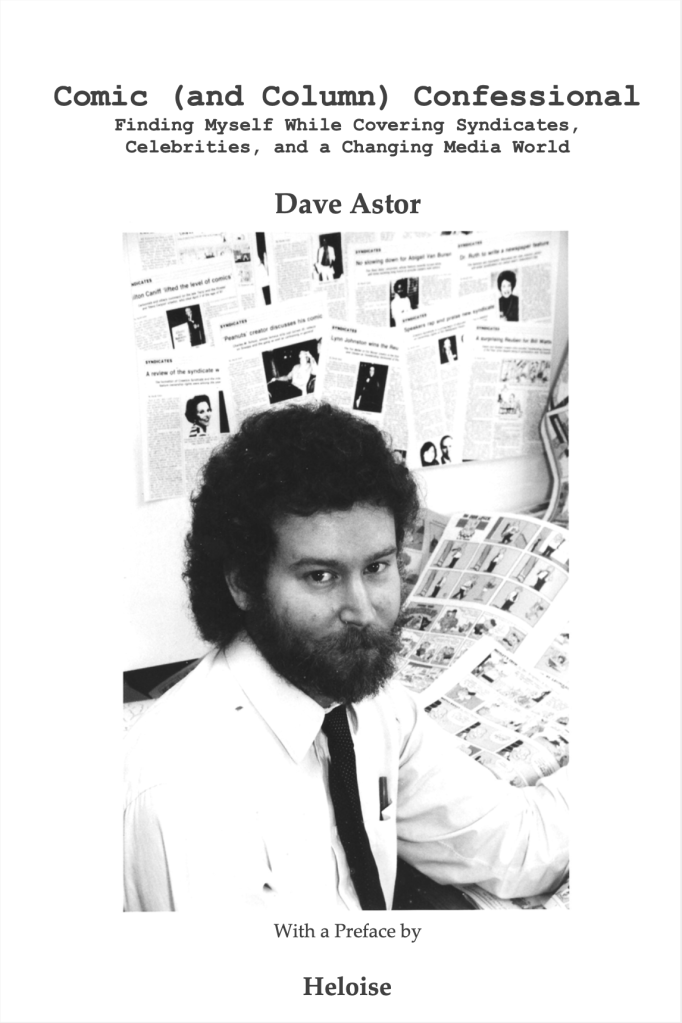
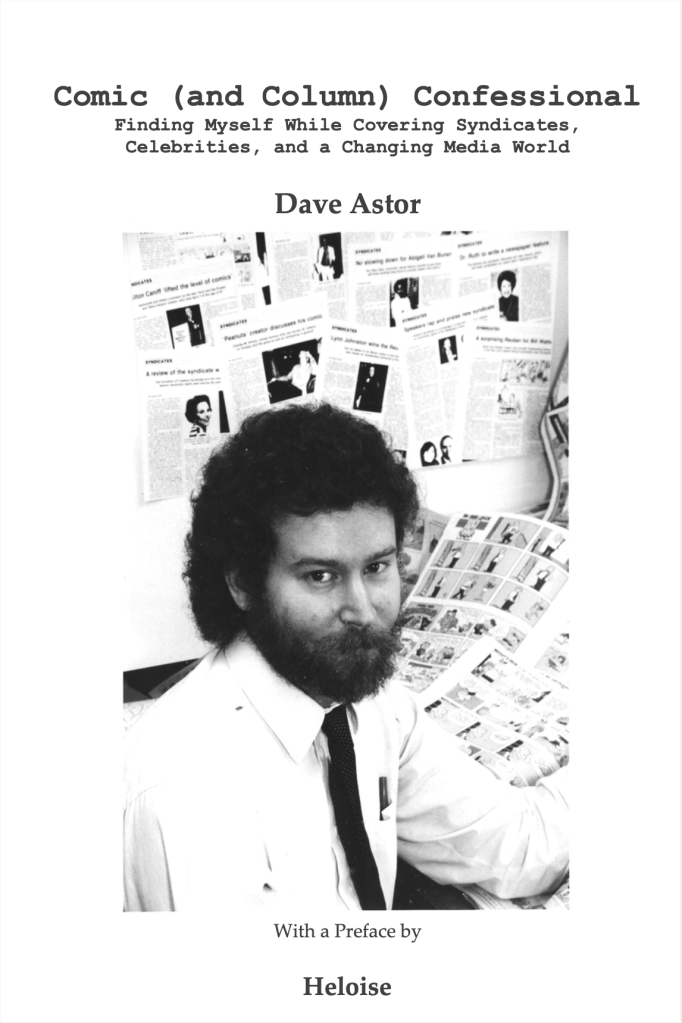
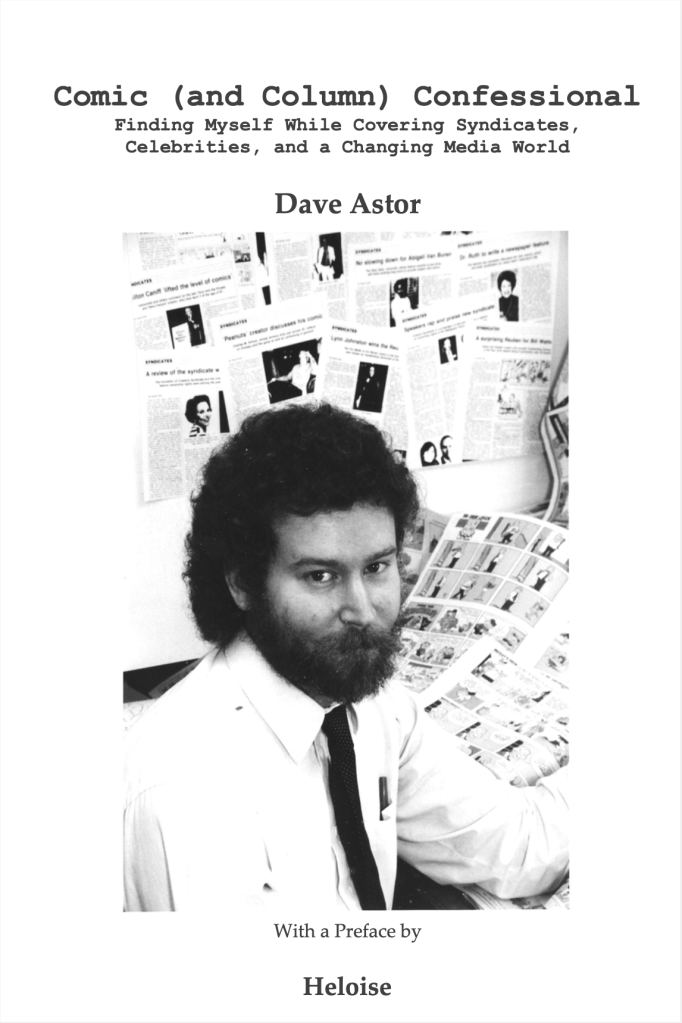
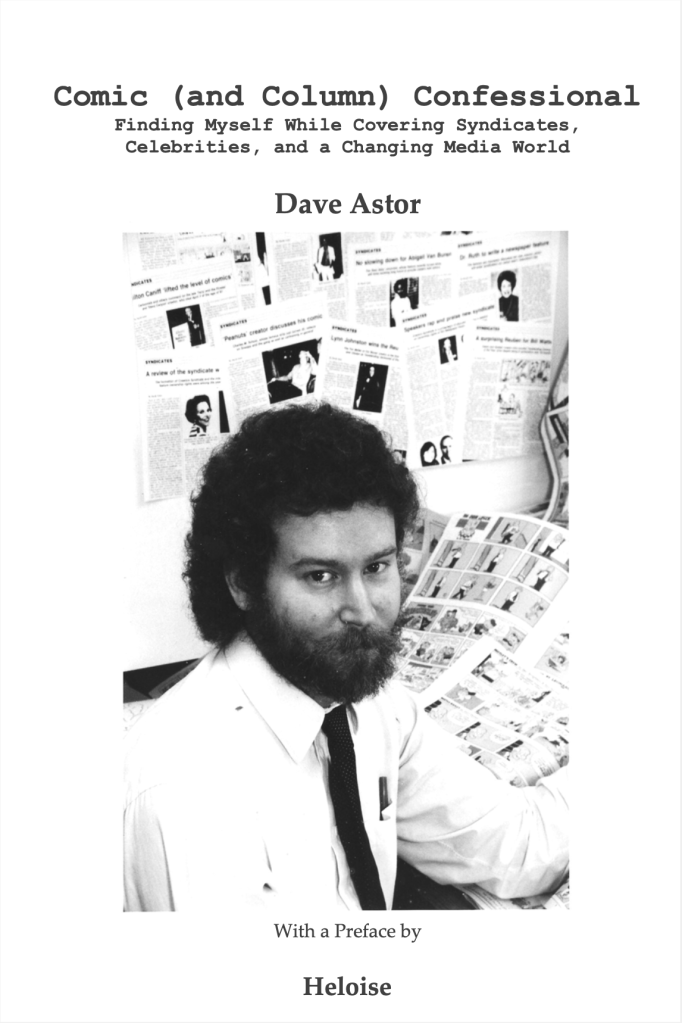
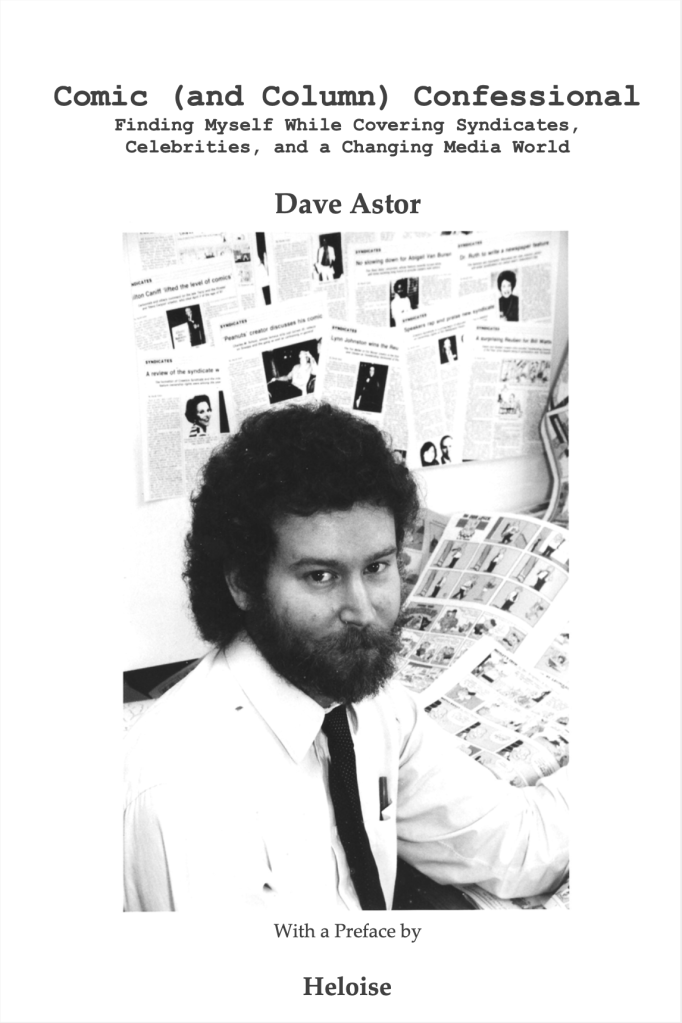
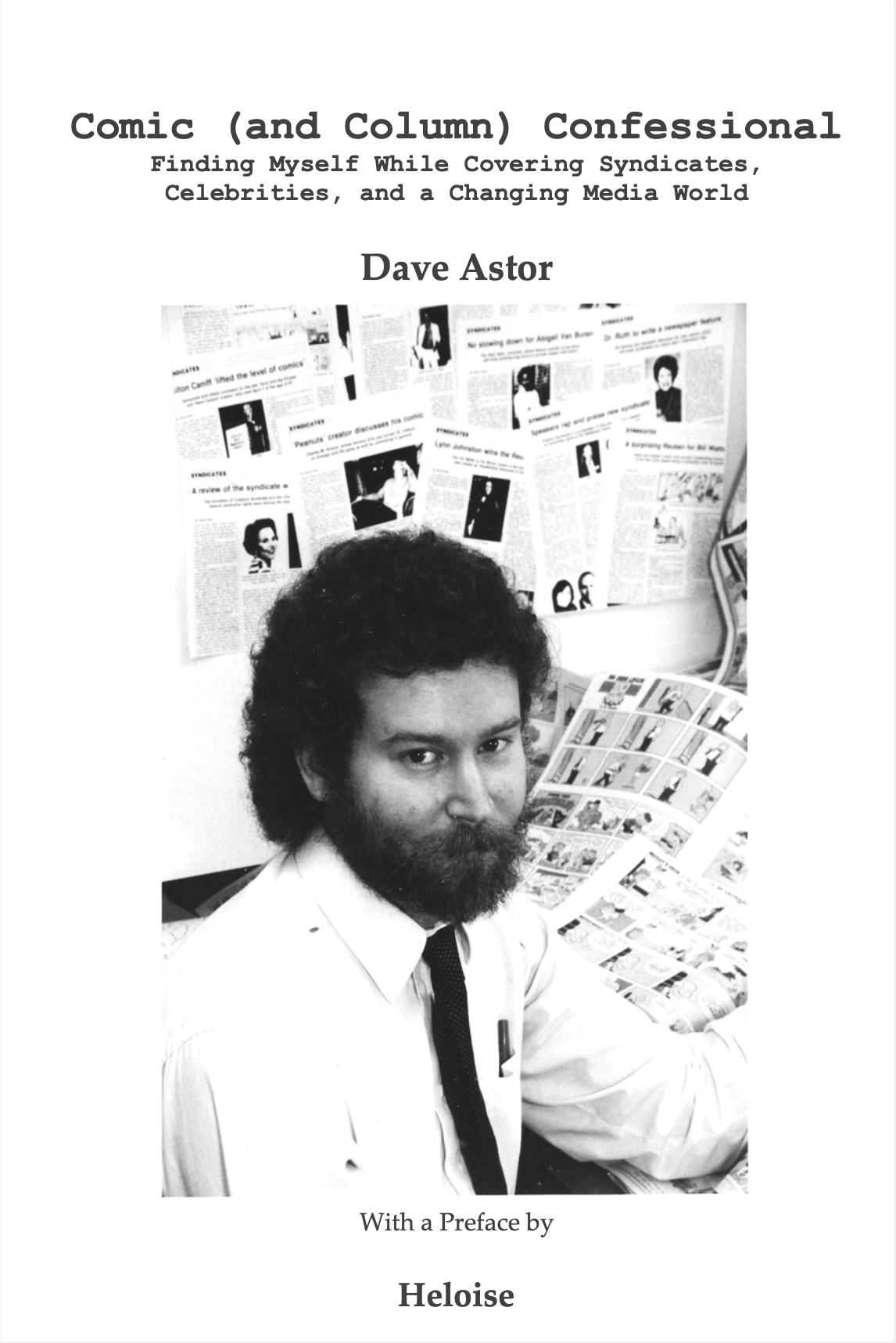
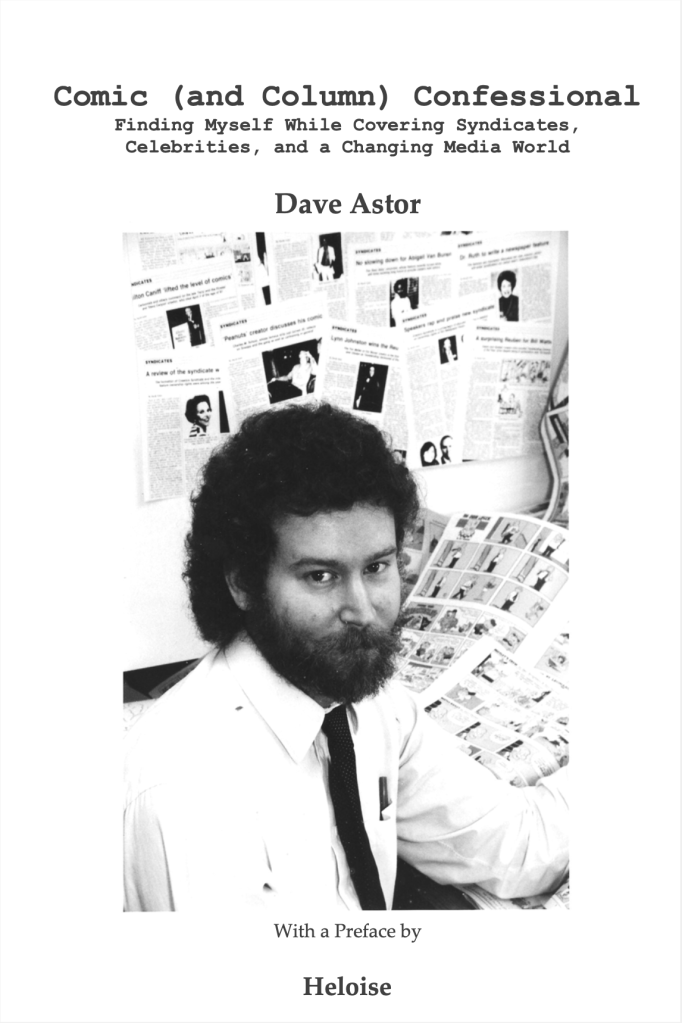
…and a 2012 memoir that focuses on cartooning and more, including many encounters with celebrities.
In addition to this weekly blog, Dave writes the 2003-started/award-winning “Montclairvoyant” topical-humor column every Thursday for Montclair Local. The latest piece — from which Sir Walter Scott should remove himself from discussion of a referendum-halting court decision — is here.
Memorable Book Titles

Time to talk titles of novels again! The names of books are very important, of course, and can be good in a utilitarian sort of way or very memorable. Today, I’m going to focus on the latter.

This topic occurred to me last week as I read The Late Show by Michael Connelly. It’s a page-turning start of a series featuring Renee Ballard, a Los Angeles police officer of Polynesian descent who deals with crime on her beat and sexism within her department. The novel’s title is perfectly fine — Ballard works the night shift in the 2017 book — but not one for the ages.

What are some titles for the ages? Looking at my list of novels I’ve read since starting this blog in 2014, here are a number of those that stood out:

Colorless Tsukuru Tazaki and His Years of Pilgrimage, Haruki Murakami’s 2013 novel starring a Japanese railroad engineer. A many-worded title that’s almost guaranteed to spark a reader’s curiosity.

There’s also Hotel on the Corner of Bitter and Sweet (2009), Jamie Ford’s poetically named historical novel that hinges on the U.S. government’s disgraceful internment of Japanese-Americans during World War II.

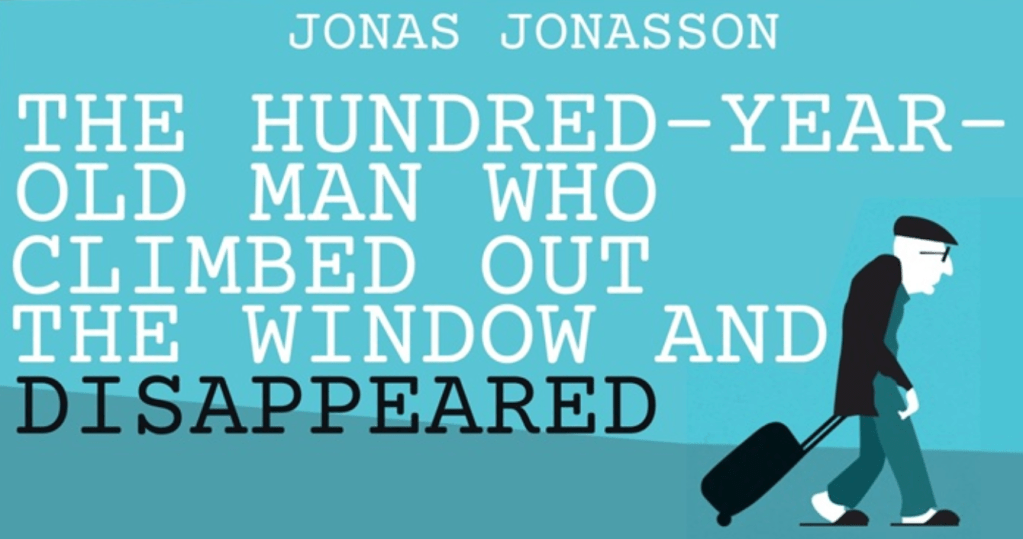
The 100-Year-Old Man Who Climbed Out the Window and Disappeared! That title of Jonas Jonasson’s 2009 novel is unusually long, and descriptively grabs one’s interest. A bit clunky, too, but…

Then there’s The Case of the Deadly Butter Chicken (2012), one of the India-set novels in Tarquin Hall’s series featuring private investigator Vish Puri.

The title of Jesse Walter’s The Financial Lives of Poets (2009) gets readers’ attention as they contemplate the left-brain/right-brain thing.

How about My Grandmother Asked Me to Tell You She’s Sorry (2013)? Fredrik Backman, who is most famous for authoring A Man Called Ove, doesn’t need to apologize for his intriguing nine-word title.

Also in 2013, Fannie Flagg created quite a title with The All-Girl Filling Station’s Last Reunion — whose characters include a woman who was a World War II aviator.

The alluring and alliterative title of Jane Smiley’s Perestroika in Paris (2020) throws readers a curve because it’s not about political reform a la late-1980s Soviet Union but about an interesting horse.

Barbara Kingsolver’s Demon Copperhead takes the oft-used route of naming a novel after its title character, but what an unusual name that character has! A name that riffs on David Copperfield, star of the 1850 Charles Dickens classic that served as a quasi-template for Kingsolver’s 2022 book.

And lest we focus only on 21st-century novels with noteworthy names, there’s Janet Frame’s Yellow Flowers in the Antipodean Room (1969), about a supposedly dead man who turns out to be very much alive.

Some of the more memorably titled novels you’ve read?

Misty the cat says: “My college human is home for Thanksgiving weekend and majoring in Walking Me.”

My comedic 2024 book — the part-factual/part-fictional/not-a-children’s-work Misty the Cat…Unleashed — is described and can be purchased on Amazon in paperback or on Kindle. It’s feline-narrated! (And Amazon reviews are welcome. 🙂 )

This 90-second promo video for the book features a talking cat: 🙂

I’m also the author of a 2017 literary-trivia book

…and a 2012 memoir that focuses on cartooning and more, including many encounters with celebrities.

In addition to this weekly blog, I write the 2003-started/award-winning “Montclairvoyant” topical-humor column every Thursday for Montclair Local. The latest piece — containing more news about my school district’s huge deficit amid pizza-for-Thanksgiving comedic content 🙂 — is here.

When Authors Place Their Bet on Debt

A current major issue in my town of Montclair, New Jersey, is a massive school-budget deficit. As I continued to write about that each week in my “Montclairvoyant” topical-humor column, thoughts came to mind about fictional people facing debt and related financial troubles — a situation that provides much dramatic fodder while often evoking sympathy for those money-challenged characters.

Not knowing in advance that it would fit this topic, I happened last week to read a Richard Paul Evans novel called The Walk in which Seattle ad executive Alan Christoffersen loses his home, his car, and most of his other possessions because of huge medical bills for his paralyzed-in-an-accident wife McKale, being cheated by his work partner, and other reasons.

When reading about any character in fiscal peril, we wonder how they will react and what the ultimate outcome for them will be. In Evans’ 2009 novel, a despairing Alan ends up starting a long walk to Key West, Florida…nearly 3,500 miles away!

The pricey and problematic health-care system in the U.S. — the world’s only “developed” country without some form of government-run national insurance for all — also takes a huge financial toll on Shep Knacker when his wife Glynis becomes ill in (Ms.) Lionel Shriver’s compelling part-satirical novel So Much for That (2010).

Moving from the 21st-century United States to 19th-century France, we have Honore de Balzac’s 1837 novel Cesar Birotteau — whose Parisian title character is a successful shop owner and deputy mayor who becomes bankrupt after getting manipulated into property speculation. He spends the rest of the book on a mission to restore his honor by trying to pay off his debt.

A later French novel, Emile Zola’s The Drinking Den (1877), features another initially successful businessperson: Gervaise Macquart, who manages to open her own laundry through very hard work. She is happily married until her husband’s life spirals downward after he falls from a roof. Coupeau’s descent drags the family into poverty and alcoholism.

In-between those books came Gustave Flaubert’s 1857 novel Madame Bovary, in which the adulterous title character gets into serious debt spending on luxuries. When the debt is called in and can’t be paid, Emma Bovary decides to…

Over in 19th-century England, there was Charles Dickens’ also-published-in-1857 novel Little Dorrit — whose title character (first name Amy) was born and grows up in a debtors’ prison where her father William has been incarcerated. Partly inspired by Dickens’ childhood.

Back in France, Guy de Maupassant’s classic 1884 short story “The Necklace” is about a woman who loses a glittery borrowed necklace and goes into years of life-ruining debt after paying for a replacement. The tale has one of the most famous surprise endings in literature.

Authors themselves have of course also experienced money troubles. For instance, Sir Walter Scott in later life tried to frantically write his way out of debt after a banking crisis caused the collapse of a printing business in which the Scottish author had a large financial stake.

Also later in life, Mark Twain filed for bankruptcy after years of investing heavily in a mechanical typesetter that didn’t catch on. He survived financially and paid off debt by giving up his ornate Hartford, Connecticut, mansion and later embarking on a worldwide speaking tour.

Your thoughts about, and examples of, this theme?

Misty the cat says: “I didn’t know my apartment complex was zoned for a car dealership.”

My comedic 2024 book — the part-factual/part-fictional/not-a-children’s-work Misty the Cat…Unleashed — is described and can be purchased on Amazon in paperback or on Kindle. It’s feline-narrated! (And Amazon reviews are welcome. 🙂 )

This 90-second promo video for the book features a talking cat: 🙂

I’m also the author of a 2017 literary-trivia book

…as well as a 2012 memoir that focuses on cartooning and more, and includes many encounters with celebrities.

In addition to this weekly blog, I write the 2003-started/award-winning “Montclairvoyant” topical-humor column every Thursday for Montclair Local. The latest piece — about my local Township Council’s welcome vote to support a proposed state bill to protect immigrants from the Trump regime — is here.

Optimistic Fiction Can Be Optimal

Election Day on November 4 brought some good news during a very dark year for American politics. Various progressive and centrist candidates decisively won state and local races that were in part votes against the cruel, far-right Trump regime — providing some hope for people who want kinder and gentler government.

The highlight for me was the resounding victory of Zohran Mamdani over Andrew Cuomo for mayor of New York City, where I used to live and work — and just 12 miles east of my current apartment in New Jersey. Mamdani ran a masterful campaign focusing on affordability, enabling the 34-year-old Democrat/democratic socialist to become NYC’s youngest mayor in over a century and its first Muslim mayor when he’s sworn in on January 1. Cuomo — who ran as an independent after losing the Democratic primary to Mamdani in June — is a mean-spirited, Trump-like figure (even endorsed by the Republican president!) who resigned in disgrace as New York governor in 2021 after being credibly accused of sexual misconduct by 13 women, after causing many deaths by allowing nursing homes to readmit hospital patients with Covid, etc.

Being in a good mood, I thought I’d write a post about novels that are utopian — or at least contain a lot of hope, feature extraordinarily nice characters, etc. I’ve written before about dystopian novels, so it’s a pleasure to go the opposite route today. 🙂

One utopian novel I thought of is Edward Bellamy’s Looking Backward (1888), in which Boston-based protagonist Julian West travels forward in time from 1887 to 2000 and finds that society is doing pretty well in a democratic socialist sort of way. (Reminded me a bit of the Star Trek franchise’s often sunny view of the future.) We get the added bonus in Looking Backward of the debit card being invented by the author — who, incidentally, was a cousin of “Pledge of Allegiance” writer Francis Bellamy.

I also thought of Island (1962), Aldous Huxley’s final novel. As utopian as the author’s Brave New World was dystopian, Island features a cynical journalist who lands on an…island…and finds himself observing a very appealing society. Not one of Huxley’s best novels, but it was interesting to get a feel-good story from him.

There’s also Lost Horizon, James Hilton’s 1933 novel about a visit to an idyllic place called Shangri-La. The part-utopian tale is mesmerizing.

Both utopian and cautionary is Nathaniel Hawthorne’s A Blithedale Romance (1852), set in a commune that’s not as wonderful as it ideally could be. In fact, the semi-autobiographical novel kind of satirizes would-be utopian life.

Not-utopian novels that are mostly upbeat and/or heartwarming are semi-utopian in a way, as can be books that offer happy endings after the protagonist faces challenges. I’m looking at you, L.M. Montgomery; her novel The Blue Castle (1926) and its Valancy Stirling star are real mood-lifters. There are of course many other nice, kind characters — such as Tiny Tim of Charles Dickens’ A Christmas Carol (1843) — with positive outlooks on life even if life, in some cases, has dealt them a bad hand.

The novel I read most recently, The Chemist (2016) by Stephenie Meyer of Twilight fame, is a page-turning thriller that focuses on the tough, brainy, loner, brave-but-often-insecure female title character who goes by different names. As this small-in-physical-stature former government agent tries to fend off multiple murder attempts, she meets a teacher (Daniel) who is about as sweet and amiable as it gets.

Thoughts about and/or examples of this theme?

My next post will appear either later than usual on Sunday, November 16, or on Monday the 17th.

Misty the cat says: “As leaves turn brown, it’s either autumn or Snickers bars have a new look.”

My comedic 2024 book — the part-factual/part-fictional/not-a-children’s-work Misty the Cat…Unleashed — is described and can be purchased on Amazon in paperback or on Kindle. It’s feline-narrated! (And Amazon reviews are welcome. 🙂 )

This 90-second promo video for the book features a talking cat: 🙂

I’m also the author of a 2017 literary-trivia book

…and a 2012 memoir that focuses on cartooning and more, including many encounters with celebrities.

In addition to this weekly blog, I write the 2003-started/award-winning “Montclairvoyant” topical-humor column every Thursday for Montclair Local. The latest piece — commenting on election results in my town, New Jersey, and New York City — is here.

Novelists Have the Facility to Depict Nobility

Yesterday, a massive total of nearly seven million people attended the 2,700-plus “No Kings” rallies in the United States and abroad to protest Trump’s fascist/authoritarian regime as that Republican administration ignores Congress, enriches itself, cracks down on peaceful dissent, arrests innocent people of color, invades American cities for no good reason, meddles in other countries’ affairs, starts or supports wrongful military actions around the world, etc. Which, as a literature blogger, reminded me of kings and other royalty in fiction — including historical fiction.

Of course, some royalty can be partly benevolent, but in many cases all that power heightens a ruler’s nasty instincts, makes a corrupt person even more corrupt, and increases the entitlement of the already entitled. Also, being a member of royalty doesn’t exactly involve the merit system.

I’ve never deliberately sought out novels containing royal characters, much preferring to read about the lives of “everyday” people. But privileged aristocrats have popped up here and there in my reading.

For instance, when long ago working through many a great book by Mark Twain, I polished off The Prince and the Pauper (two boys changing places) and A Connecticut Yankee in King Arthur’s Court (in which a certain king appears).

Another 19th-century novel, Alexandre Dumas’ 17th-century-set The Three Musketeers, includes King Louis XIII and Queen Anne as secondary characters.

In Charles Dickens’ A Tale of Two Cities, King Louis XVI and King George III are referenced.

Some novels written in the 20th and 21st centuries also include royal characters. Hilary Mantel’s Wolf Hall has Henry VIII and other monarchical personages, Josephine Tey’s The Daughter of Time harkens back to King Richard III, Robert Graves’ I, Claudius features the Roman emperor of the book’s title, J.R.R. Tolkien’s The Lord of the Rings has the would-be king Aragorn, and Philippa Gregory’s Earthly Joys has the Duke of Buckingham.

There’s also William Goldman’s The Princess Bride, Meg Cabot’s The Princess Diaries, Antoine de Saint-Exupery’s The Little Prince, Lewis Carroll’s Alice’s Adventures in Wonderland and its Queen of Hearts, C.S. Lewis’ The Chronicles of Narnia and its King Tirian, Diana Gabaldon’s Outlander and its King Louis XV appearance, Margaret Landon’s Anna and the King of Siam that inspired The King and I musical, and so on.

Of course there’s royalty, too, in various Shakespeare plays and in other stage creations such as Eugene O’Neill’s The Emperor Jones, Lin-Manuel Miranda’s Hamilton (King George III), etc.

I’m sure I’ve only touched the surface here. Any additional examples of, or thoughts about, this topic?

Misty the cat asks: “What’s the new White House ballroom doing here?”

My comedic 2024 book — the part-factual/part-fictional/not-a-children’s-work Misty the Cat…Unleashed — is described and can be purchased on Amazon in paperback or on Kindle. It’s feline-narrated! (And Amazon reviews are welcome. 🙂 )

This 90-second promo video for the book features a talking cat: 🙂

I’m also the author of a 2017 literary-trivia book

…and a 2012 memoir that focuses on cartooning and more, and includes many encounters with celebrities.

In addition to this weekly blog, I write the 2003-started/award-winning “Montclairvoyant” topical-humor column every Thursday for Montclair Local. The latest piece — about wondering how to vote in a controversial local tax referendum that will be held this December because of a huge school district deficit — is here.

Can Escapist Fiction Be Completely Escapist?

Barbara Taylor Bradford. (Credit: Bradford Enterprises.)

As I’ve mentioned here and there in recent months, I’ve been mixing my more-serious novel reading with a larger percentage of mass-audience and/or escapist fiction these days as I seek diversion from the distressing words and actions of America’s repulsive Trump regime. But of course those categories of literature are not always mostly upbeat.

Take Barbara Taylor Bradford, who was known for best-selling novels starring impressive, plucky women. Those characters are inspiring, yes, but some of them go through some really depressing things. I just read Bradford’s Everything to Gain, and while I enjoyed rooting for its protagonist Mallory Keswick, what happens to her family would not help the mood of any reader appalled at the latest Trump-related news.

Meanwhile, I continued this year to read many novels by Elin Hilderbrand. She is known for what have been called summer “beach reads” — most of them set on the beautiful Massachusetts island of Nantucket — but Hilderbrand is actually a much more complex and nuanced author than that. So, while I first tried her novels with escapist intent on my part, I’ve seen plenty of illness, death, and other sad developments in those books. But plenty of lighter content and entertainment, too, and I always eagerly went back for more even as I don’t get 100% relief from Trump and what he says and supports.

Detective fiction, to which I devoted a separate blog post earlier this month, can also make one temporarily forget the real world — one reason why I’ve read quite a few books in that genre this year. Then again, any novel with crime as a major element can make a reader not only sadly think about the victims but also think about one of America’s biggest criminals, who happens to currently live in the White House rather than in a jail cell where he belongs.

It can also be a refreshing interlude to read very funny fiction. The Pickwick Papers, anyone? But even that Charles Dickens book and most other comedic novels by various authors have some downbeat sections amid the humor.

One of these days I’m going to give a third reread to L.M. Montgomery’s Anne of Green Gables. That iconic novel always brings a smile to my face, yet it contains some fraught moments and a heartbreaking death.

All this makes me wonder if I’ve ever read a completely upbeat novel. Not sure that even exists, and, if it did, I suppose such a book would lack adequate drama. But it would give readers a complete mental break. 🙂

Any thoughts on this post, and on novels that might be relevant to its theme?

Misty the cat says: “Pumpkins but no spice? I turn my back.”

My comedic 2024 book — the part-factual/part-fictional/not-a-children’s-work Misty the Cat…Unleashed — is described and can be purchased on Amazon in paperback or on Kindle. It’s feline-narrated! (And Misty says Amazon reviews are welcome. 🙂 )

This 90-second promo video for the book features a talking cat: 🙂

I’m also the author of a 2017 literary-trivia book

…and a 2012 memoir that focuses on cartooning and more, and includes many encounters with celebrities.

In addition to this weekly blog, I write the 2003-started/award-winning “Montclairvoyant” topical-humor column every Thursday for Montclair Local. The latest piece — about topics such as a local Charlie Kirk flag controversy and a local bookstore canceling the appearance of a Palestinian-American children’s book author — is here.

Reimagination Actualization

Four years ago, I blogged about fiction that uses previous fiction as a jumping-off point — and perhaps reimagines well-known characters. This post is sort of a sequel to that post, taking a somewhat different angle and including several novels I’ve read since 2021.

In general, I’m not a huge fan of fiction that’s heavily inspired by a famous work; I’d rather writers be more original than that. Still, there have been some excellent novels that offer insights into the previous work and might be great in their own right.

My latest encounter with this reimagining phenomenon was Queen Macbeth, Val McDermid’s 2024 novella that takes a fascinating approach to characters in Shakespeare’s iconic Macbeth play. The book is excellent, giving Lady Macbeth a more positive (and more historically accurate) persona as a compelling plot unfolds in two different timelines.

McDermid’s book reminded me a bit of Margaret Atwood’s 2005 novella The Penelopiad (mentioned in my 2021 post) that gives Penelope a bigger and more feminist role than she had in Homer’s ancient Odyssey poem.

There’s also Demon Copperhead, Barbara Kingsolver’s 2022 tour de force that gives Charles Dickens’ 1850 classic David Copperfield a modern spin in America’s Appalachian region during the opioid epidemic.

Kristin Hannah’s gripping 2021 novel The Four Winds was obviously inspired by John Steinbeck’s The Grapes of Wrath (1939), but it’s still plenty original and differs in featuring a female protagonist. (The title character in Demon Copperhead is male.)

Zadie Smith has described the structure/focus of her novel On Beauty (2005) as an homage to E.M. Forster’s Howards End (1910).

In her also-published-in-2005 novel March, Geraldine Brooks takes the father from Louisa May Alcott’s 1868-released Little Women and gives him his own story.

I haven’t read it yet, but Percival Everett’s acclaimed James (2024) reimagines Mark Twain’s Adventures of Huckleberry Finn (1884) from the perspective of the escaped slave Jim.

In my 2021 post, I mentioned the 1966 novel Wide Sargasso Sea, in which Jean Rhys gives three-dimensionality to the “madwoman in the attic” of Charlotte Bronte’s novel Jane Eyre; Rhys’ creation is in effect a prequel to Bronte’s 1847 book. I also discussed the novel (by Gregory Maguire) and the play Wicked, which sympathetically portray the Wicked Witch from L. Frank Baum’s The Wonderful Wizard of Oz novel (1900) and The Wizard of Oz movie (1939).

Mentioned as well in that post were Isabel Allende’s 2005 novel Zorro, Jasper Fforde’s 2001 novel The Eyre Affair, and Seth Grahame-Smith’s 2009 Jane Austen parody Pride and Prejudice and Zombies — the last of which I haven’t felt the “Persuasion” to read.

Comments about, and examples of, this theme?

Misty the cat says: “My right turn has nothing to do with politics.”

My comedic 2024 book — the part-factual/part-fictional/not-a-children’s-work Misty the Cat…Unleashed — is described and can be purchased on Amazon in paperback or on Kindle. It’s feline-narrated! (And Misty says Amazon reviews are welcome. 🙂 )

This 90-second promo video for the book features a talking cat: 🙂

I’m also the author of a 2017 literary-trivia book

…and a 2012 memoir that focuses on cartooning and more.

In addition to this weekly blog, I write the 2003-started/award-winning “Montclairvoyant” topical-humor column every Thursday for Montclair Local. The latest piece — about a badly maintained lower-income apartment building, a change in venue for a senior center, and more — is here.

Self-Therapy By Book

Thomas Mann (Picture Alliance/Ullstein Bild)

Sometimes, novels are semi-autobiographical confessionals and/or expressions of authors’ repressed thoughts and/or a way for them to “work out issues” and/or a way of reckoning with their past and/or an exercise in wish-fulfillment, etc. Sort of self-therapy by book.

I thought about this when recently reading Thomas Mann’s novellas Tonio Kroger (1903) and especially Death in Venice (1912), and seeing that there was a whole lot of male longing for other males by the protagonists. Sure enough, a little online exploring showed that Mann — the father of six with wife Katia — was sexually attracted to men, though there’s no conclusive evidence he acted on that during a more homophobic time. But he sure made his feelings known in some of his writing, as when middle-aged Death in Venice protagonist Gustav von Aschenbach (a famous author…hmm) becomes obsessed with a teen boy he finds very good-looking.

Several years later, in 1918, Willa Cather wrote perhaps her best novel: My Antonia. In it, male protagonist Jim Burden holds Antonia in such high regard that he might well be a stand-in for Cather, who was probably gay. Meaning she could have narrator Jim (i.e. Willa) express some feelings the author might have found more difficult to express if that character were a woman.

While sexual orientation isn’t a subtext (as far as I know) in Mary Shelley’s apocalyptic 1826 novel The Last Man, the author did base the male protagonist Lionel Verney on herself despite the different gender and modeled two other characters — Adrian and Lord Raymond — on her late husband Percy Bysshe Shelley and their late friend Lord Byron, respectively. So, Mary was kind of remembering and analyzing her relationships/interactions with the two famous poets.

Charlotte Bronte’s Villette (1853) also has a semi-autobiographical element: characters Lucy Snowe and Paul Emanuel are partly based on Charlotte and the real-life Constantin Heger, who Charlotte fell in love with (?) while enrolled in the Belgian boarding school run by Heger and his wife Zoe. And the downbeat tone of some of Villette was shaped to a degree by the 1848 and 1849 deaths-before-their-time of Charlotte’s younger novelist sisters Emily and Anne.

The Brontes’ contemporary Charles Dickens used a number of his novels to indirectly work through the childhood trauma that would help shape his social conscience. The future author’s father was sent to a debtors’ prison, and 12-year-old Charles had to leave school to work in a miserable factory to help support his family. Echoes of that can be found in the impoverished young characters Dickens created in David Copperfield (1850), Oliver Twist (1838), The Old Curiosity Shop (1841), and other works.

Amid the compulsive plot of his 1940 novel Native Son, Richard Wright wrestled with such matters as racism (which he experienced plenty of as a Black person) and his complicated feelings about the Communist Party USA (which he joined but later broke from).

Some authors who served in the military and were perhaps wounded in action indirectly worked through that trauma in war novels they would later write. Erich Maria Remarque — in books such as 1929’s All Quiet on the Western Front — is one prominent example of that.

Also, authors’ unrequited “crushes” in real life can provide rather intense fodder for novels, as was the case with Mann in his aforementioned Death in Venice and with Goethe in his The Sorrows of Young Werther (1774).

Thoughts about and examples of this topic?

Misty the cat says: “Halley’s Comet won’t be back until 2061, so you may not see it in this video.”

My comedic 2024 book — the part-factual/part-fictional/not-a-children’s-work Misty the Cat…Unleashed — is described and can be purchased on Amazon in paperback or on Kindle. It’s feline-narrated! (And Misty says Amazon reviews are welcome. 🙂 )

This 90-second promo video for my book features a talking cat: 🙂

I’m also the author of a 2017 literary-trivia book

…and a 2012 memoir that focuses on cartooning and more.

In addition to this weekly blog, I write the 2003-started/award-winning “Montclairvoyant” topical-humor column every Thursday for Montclair Local. The latest piece — a time-warped look at a long-closed movie theater that might open again — is here.
A Cat Named Misty Writes a Post That’s Twisty

Misty aboveground with The Underground Railroad. (Photo by Dave.)

I, Misty the cat, guest-blog for Dave every two months or so. I last did that on February 9 — after which March winds brought April winds that knocked me from a standing position onto my side. Hence the above photo.

Anyway, as I embody “suburban sprawl” I’m contemplating the just-finished The Underground Railroad. Ouch…a searing novel set during 19th-century slavery times in the U.S. — which now consists of 50 states, only seven of which have cats as governors. One thing Colson Whitehead’s book made me realize is that felines are not as hung up on color as many white humans were and are. Heck, whether a cat is gray or black or orange or another hue, I glare at each one equally if they bother me during my daily leashed walks. After all, I’m the mayor of my apartment complex, though I don’t remember being elected. Maybe it was a coup.

The novel Dave and I read before The Underground Railroad was another installment of Val McDermid’s excellent series starring cold-case detective Karen Pirie, who Dave emulates by bringing home cold cases of cat food every winter. The Pirie novel was Broken Ground — a title that intrigued me because I also broke ground when I vigorously scratched in the dirt, searching for the paperwork certifying my mayoral election win.

Next in my near-future reading queue are the first novels I’ll be trying by Alexander McCall Smith, who makes me also want a multi-part name — perhaps Misty McKitty Bloggerslogger, which would sure beat being known as the title character in Wilkie Colllins’ novel No Name. Anyway, both soon-to-be-read-by-me McCall Smith books — 44 Scotland Street and The Sunday Philosophy Club — kick off respective series, and the latter title has already inspired me not to be philosophical Monday through Saturday. I also want to read another McCall Smith series opener — The No. 1 Ladies’ Detective Agency — but it’s not currently in my local library. As a cat lacking opposable thumbs, I couldn’t have grabbed hold of it anyway.

I do like strolling library aisles on my four paws, and have noticed that novels are shelved alphabetically by author. How Jane Austen shelved her own books — alphabetically or otherwise — in my town’s 1955-built library I have no idea; she passed away in 1817. Maybe she had Charles Dickens do it for her. Or the shelver might have been Dickens’ friend, the aforementioned Wilkie Collins, who also wrote the early detective novel The Moonstone. Dogs howl at its cover.

Dickens was born in 1812, so his and Austen’s lives overlapped for five years — giving them enough time to collaborate on the novel Sense and Nicholas Nickleby. Epic, albeit lacking in Sensibility.

Another writing pair is Vicki Myron and Bret Witter, who co-authored the heartwarming nonfiction book Dewey: The Small-Town Library Cat Who Touched the World. The library my fellow feline Dewey inhabited was in Iowa, one of the 43 states without a feline governor. Iowa has 75% vowels, though.

Returning to discussion of The Underground Railroad, that 2016 novel published a year after my 2015 birth still strongly resonates in 2025 given that the U.S. has a president (Donald Trump), a “co-president” (Elon Musk), and a vice president (JD Vance) so racist they renamed the late Amy Winehouse’s “Back to Black” album “Back to White.” Trump then exempted it from high tariffs.

Dave will respond to comments because I, Misty the cat, will be busy swatting high tariffs off the kitchen counter. They then become lower tariffs.

Misty the cat says: “I’m doing the annual Flower Walk to raise money for the annual Flower Walk.”

I and Dave’s comedic 2024 book — the part-factual/part-fictional/not-a-children’s-work Misty the Cat…Unleashed — is described and can be purchased on Amazon in paperback or on Kindle. It’s narrated by me, Misty! (And I say Amazon reviews are welcome. 🙂 )

This 90-second promo video for my and Dave’s book features a talking cat (sort of me, Misty): 🙂

Dave is also the author of a 2017 literary-trivia book

…and a 2012 memoir that focuses on cartooning and more.

In addition to this weekly blog, Dave writes the 2003-started/award-winning “Montclairvoyant” topical-humor column every Thursday for Montclair Local. The latest piece — about another lawsuit, a large local anti-Trump/Musk rally, and more — is here.