Duality Is Their Reality

Today is the first day of winter in the Northern Hemisphere, but it was also still autumn for a few hours. So, a two-faced day.

As in real life, some fictional characters also have two faces — offering different personas at different times and in different situations. This can be among the many building blocks involved in making a character complex, nuanced, and three-dimensional.

Perhaps the most literal depiction of a Janus-like character is the star of Strange Case of Dr. Jekyll and Mr. Hyde. The duality in Robert Louis Stevenson’s 1886 novel happens when Jekyll, a basically good man with some repressed dark tendencies, takes a potion that turns him into the evil Hyde.

But things are usually somewhat more subtle when it comes to characters with binary tendencies.

For instance, the villainous Count Fosco can also be quite charming in Wilkie Collins’ 1860 classic The Woman in White.

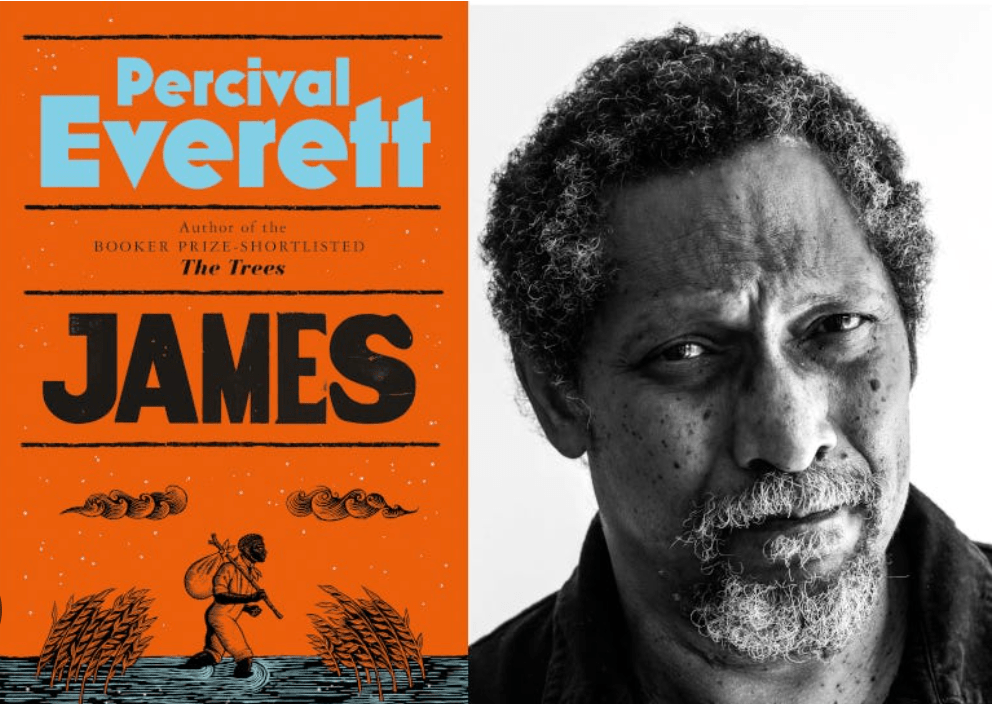
Much more recently, we have Percival Everett’s 2024 novel James, which reimagines Mark Twain’s Adventures of Huckleberry Finn from the vantage point of escaped slave Jim — after Twain mostly focused on Huck in his 1884 book. The duality here is that James, in a recognizable self-preservation maneuver, speaks in a different way (intellectually) to his fellow Black people than to white people (with whom he plays dumb). James, which I read last week, won the Pulitzer Prize for fiction earlier this year.

Jim’s dual persona reminds me of female characters who are smarter and/or more strategic than they let on. Daisy Buchanan of F. Scott Fitzgerald’s The Great Gatsby (1925) would be one example.

Returning to contemporary literature, we have Val McDermid’s crime series about cold-case detective Karen Pirie. She is mostly tough while on the job — both with suspects and with the people (including sexist men) she works with — while Pirie’s more vulnerable side emerges in her personal life.

Then there are the characters who are warrior-like in battle even as they can have more-tender aspects when not fighting. Jamie Fraser of Diana Gabaldon’s Outlander series certainly has those two elements.

Sometimes, two parts of a personality exist more consecutively than simultaneously — as with young Neville Longbottom of J.K. Rowling’s Harry Potter series. He starts off bumbling and insecure, but eventually becomes quite courageous. Perhaps that arc is more maturity than duality.

Any comments about and/or examples of this topic?

Misty the cat says: “It’s the first day of winter. Autumn must still be around here somewhere.”

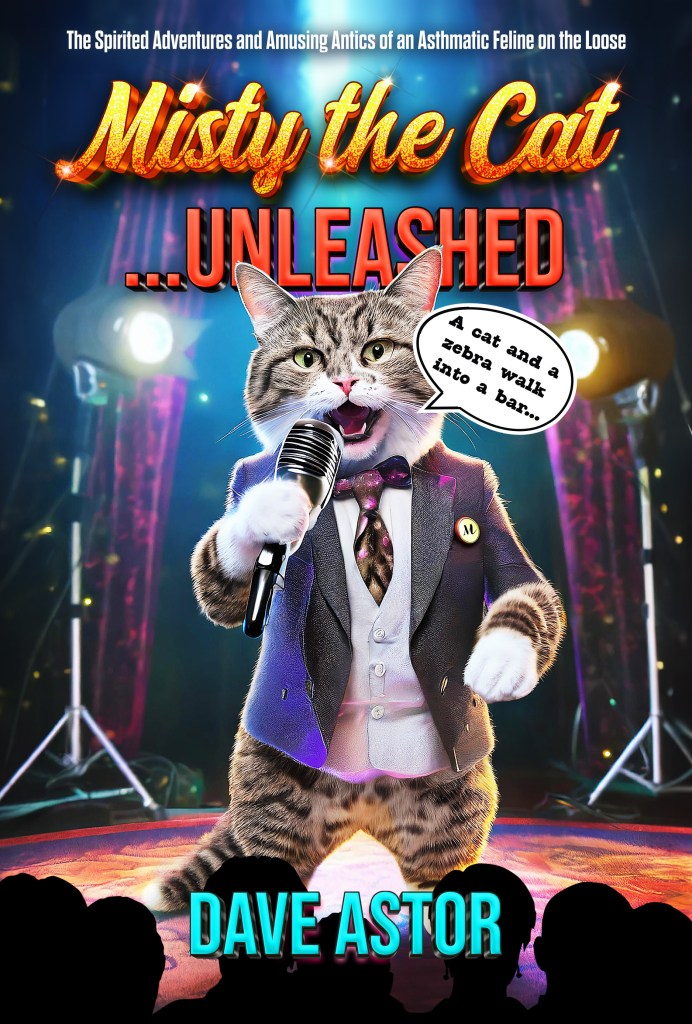
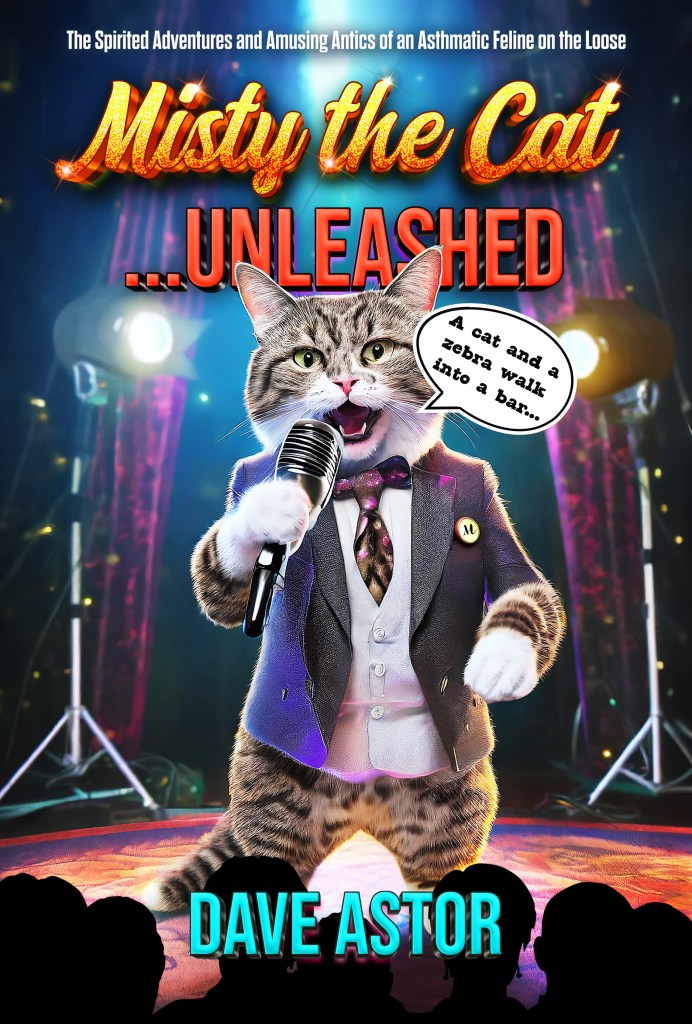
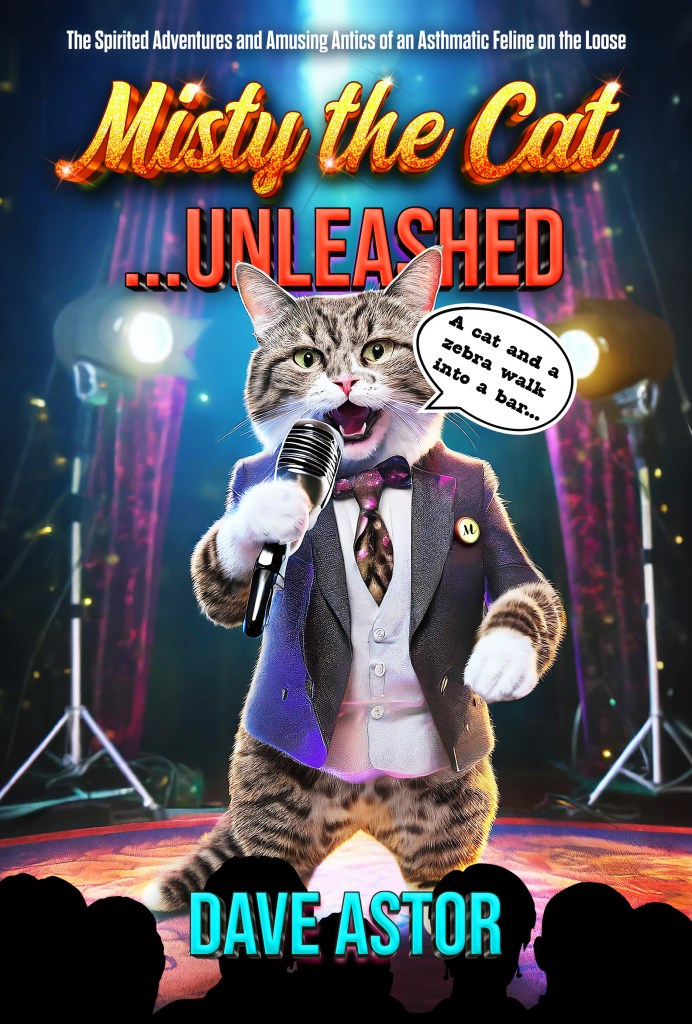
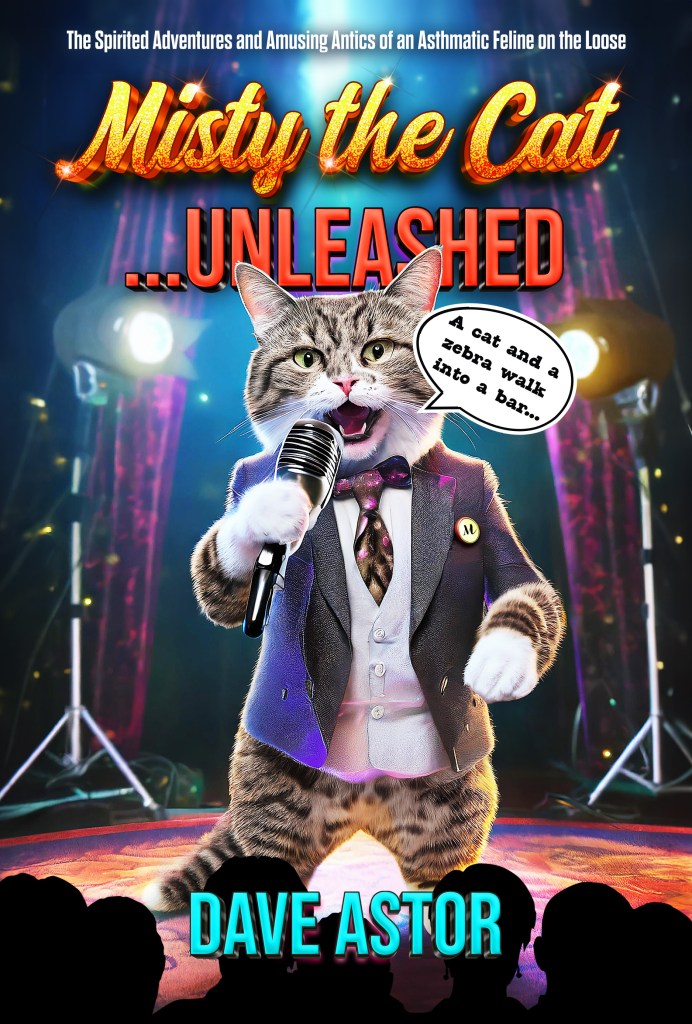
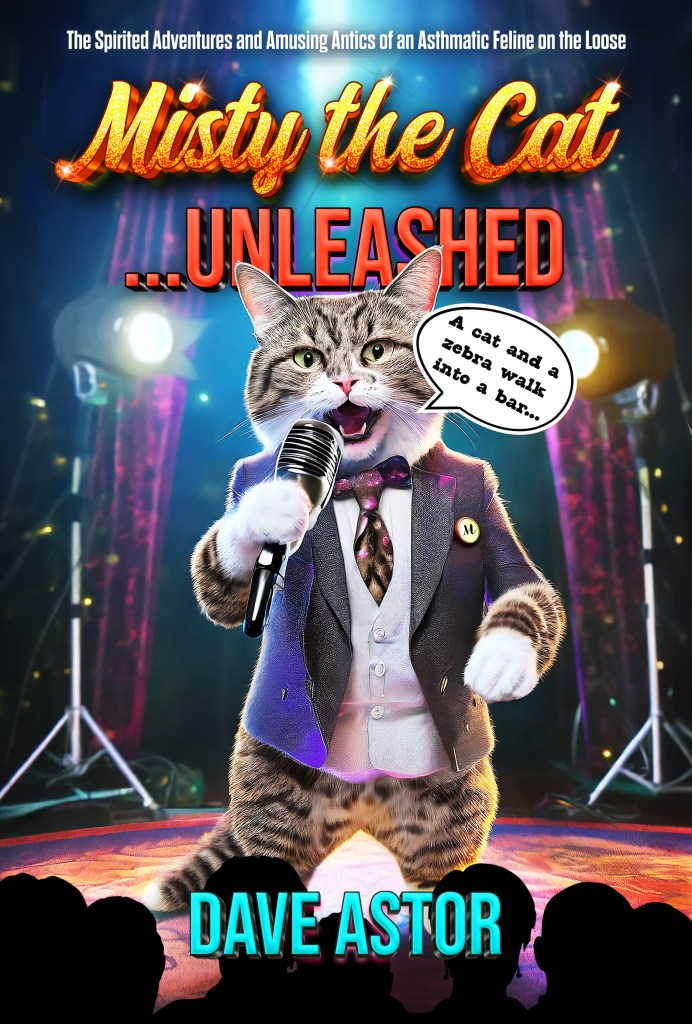
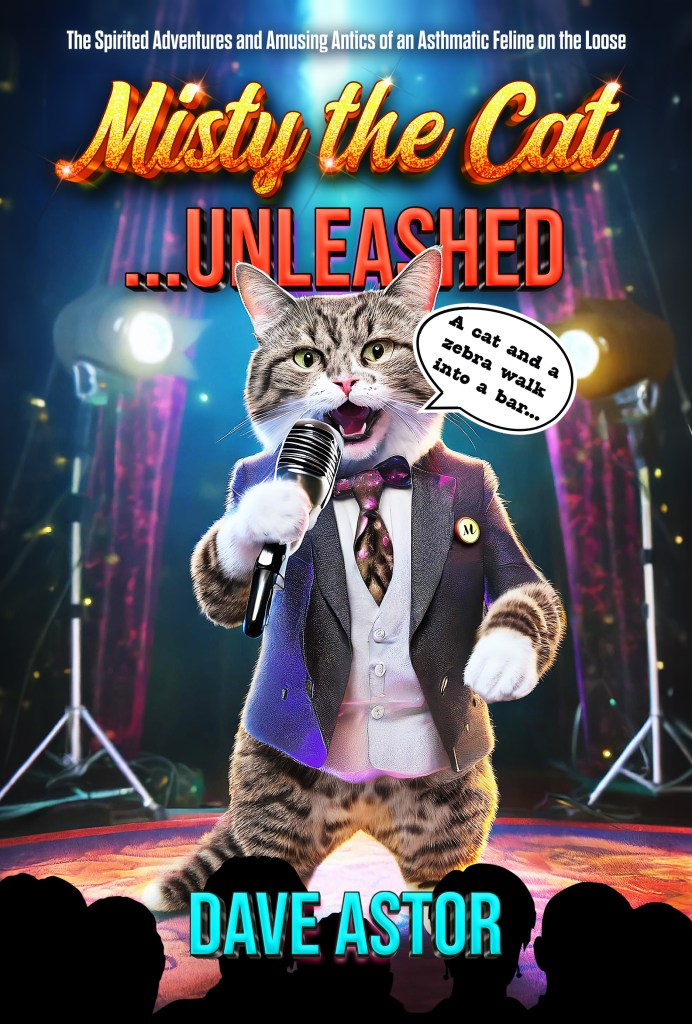
My comedic 2024 book — the part-factual/part-fictional/not-a-children’s-work Misty the Cat…Unleashed — is described and can be purchased on Amazon in paperback or on Kindle. It’s feline-narrated! (And Amazon reviews are welcome. 🙂 )
This 90-second promo video for the book features a talking cat: 🙂

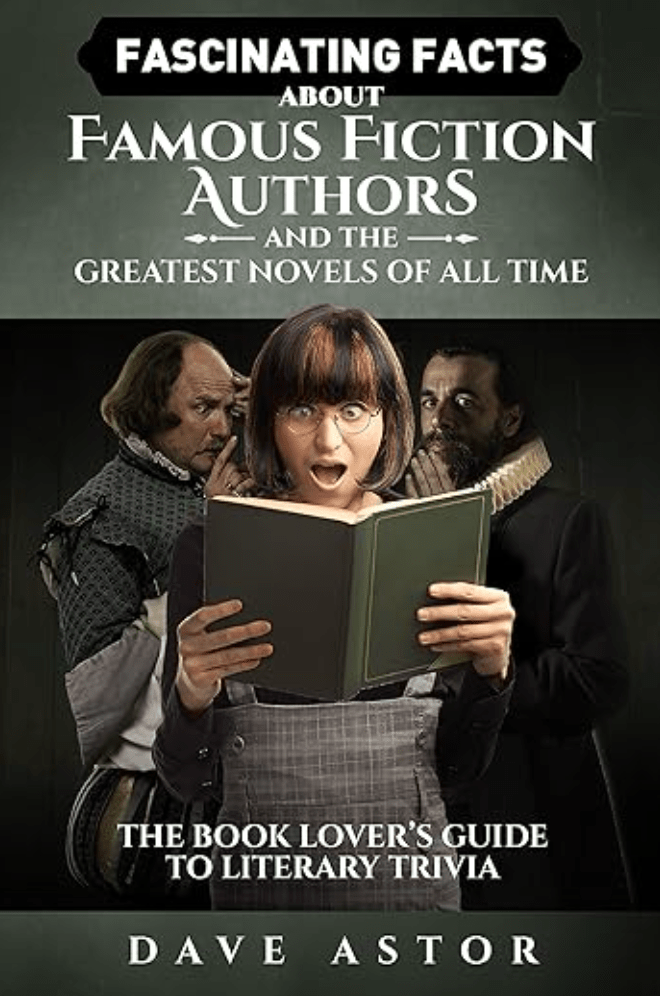
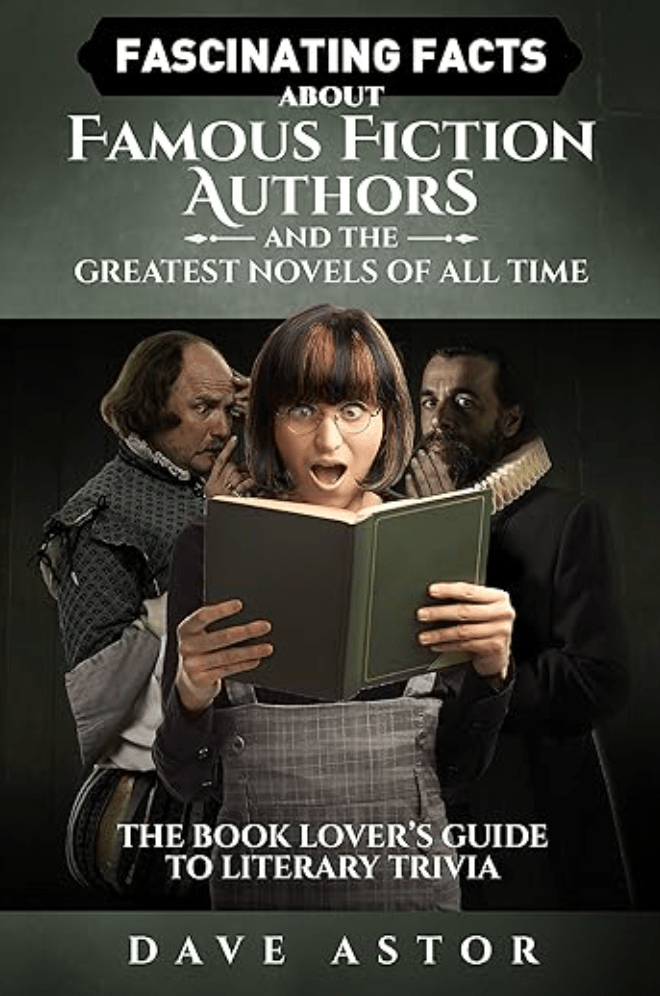
I’m also the author of a 2017 literary-trivia book

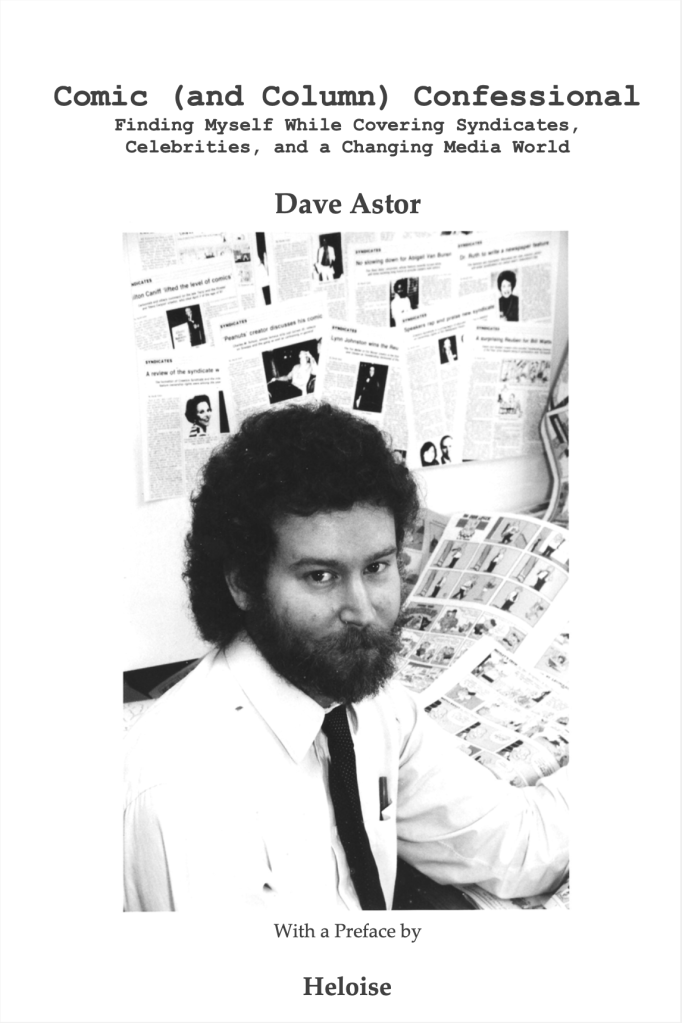
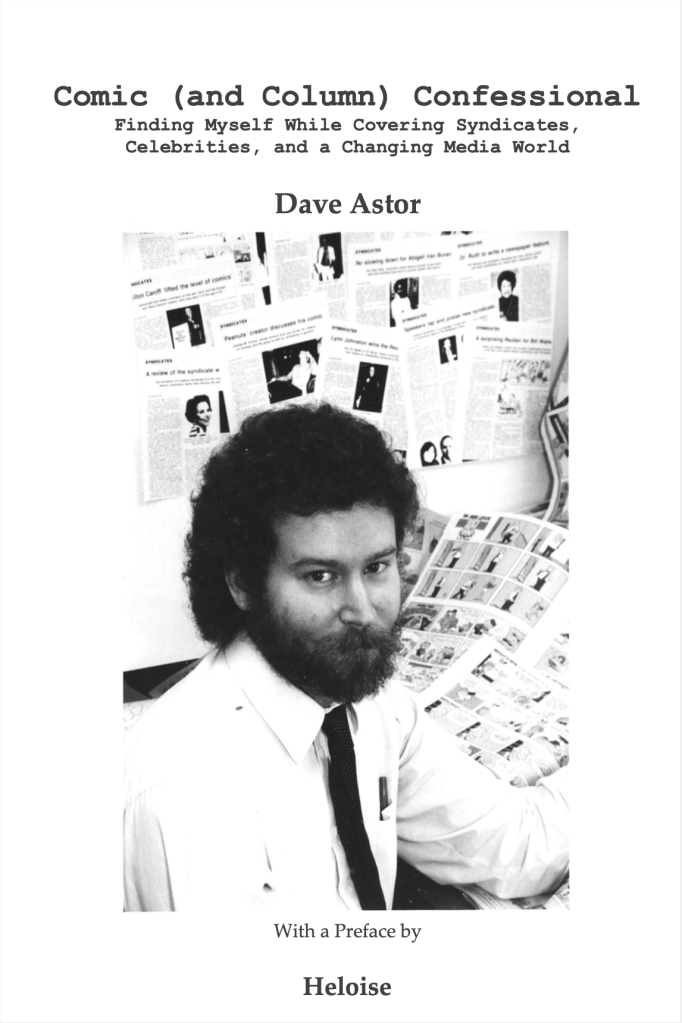
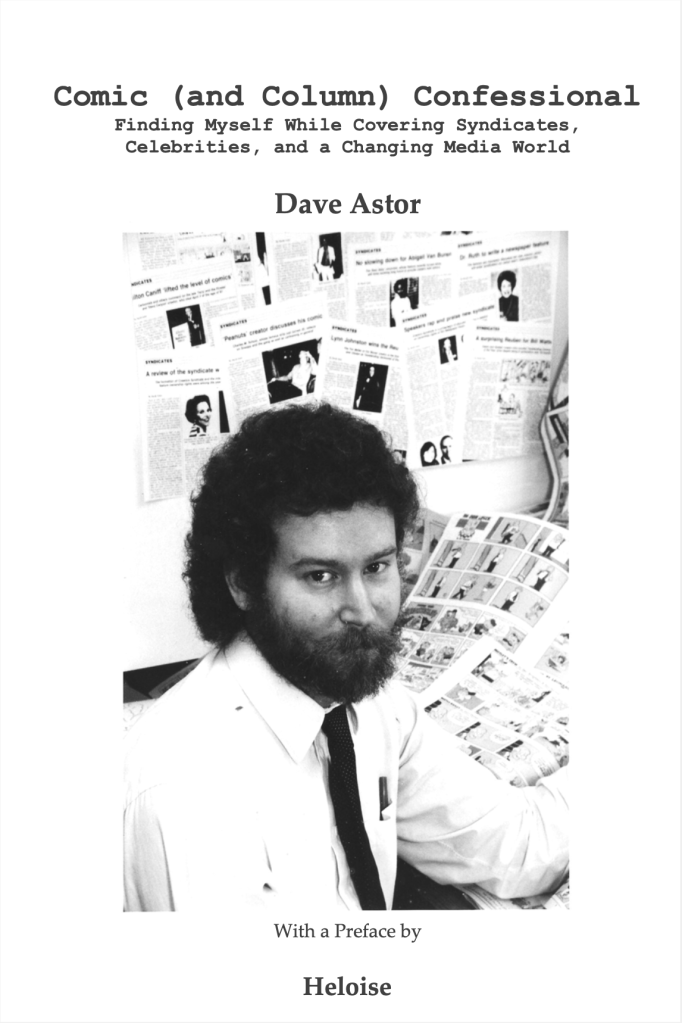
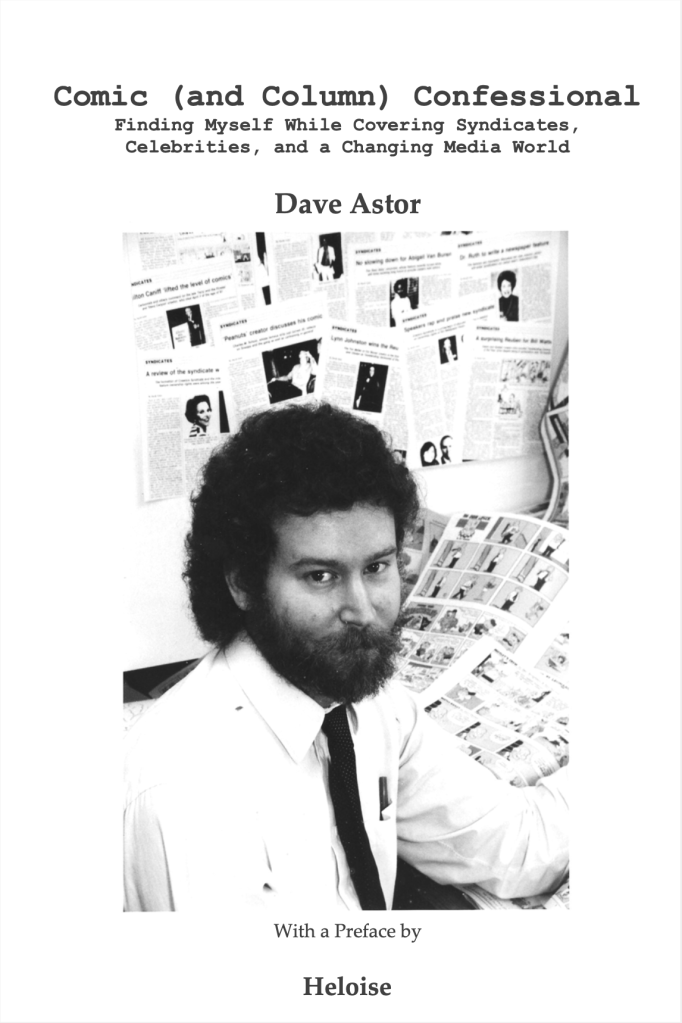
…and a 2012 memoir that focuses on cartooning and more, including many encounters with celebrities.
In addition to this weekly blog, I write the 2003-started/award-winning “Montclairvoyant” topical-humor column every Thursday for Montclair Local. The latest piece — which has a dystopian novel theme as it discusses 19 school-district jobs saved and 84 not saved (evoking George Orwell’s 1984) — is here.

Observe the Learning Curve

Sometimes, authors dazzle with their debut novels. Mary Shelley and Frankenstein. Emily Bronte and Wuthering Heights. Carson McCullers and The Heart Is a Lonely Hunter. Ralph Ellison and Invisible Man. Arundhati Roy and The God of Small Things. Zadie Smith and White Teeth. Etc.

But more frequently there’s somewhat of a learning curve for authors, which is totally natural — and totally the topic of this post.

I came to this topic via the work of Stephenie Meyer, three of whose novels I recently read in reverse order: first The Chemist (2016), then The Host (2008), and then Twilight (2005). Twilight was of course Meyer’s mega-bestselling debut featuring a teen human and teen vampire who fall in love. An interesting take on the vampire genre that held my interest even as it was too often written in a pedestrian way. Published three years later, The Host turned out to be a fascinating sci-fi story — and more skillfully crafted. Finally, The Chemist thriller about a hunted female ex-government agent was full of superb prose and dialogue. Meyer’s wordsmithing arc was impressive.

It all reminded me a bit of J.K. Rowling’s progression. The first Harry Potter novel was compelling and tons of fun as the author did her world-building, even as the writing itself was not super-scintillating. But Rowling’s prose and dialogue got better and better as her next six wizard-realm books emerged, and continued in that direction with the skillfully written The Casual Vacancy and the riveting crime series starring private investigators Cormoran Strike and Robin Ellacott.

Both Rowling and Meyer can be rather long and wordy in their more recent offerings, but I’m here for it.

Going much further back in time, I liked the feminist idea of Jack London’s early novel A Daughter of the Snows, but the dialogue was laughable and the prose clunky. One year later, London’s pitch-perfect The Call of the Wild was released. I don’t know what writing elixir the author imbibed during those 12 months, but I want it. 🙂

F. Scott Fitzgerald’s college-set debut novel This Side of Paradise is quite uneven, only hinting at the greatness of The Great Gatsby published just five years later.

John Steinbeck’s debut novel Cup of Gold was an okay, rather conventional pirate novel before much of his later fiction became light years better — including, of course, his masterpiece The Grapes of Wrath.

Willa Cather’s first two novels — Alexander’s Bridge and O Pioneers! — exhibited some authorial growing pains before they were followed by her absorbing The Song of the Lark and then the masterful My Antonia.

Dan Brown’s early-career novel The Da Vinci Code was VERY popular and quite ingenious in its way but even more awkwardly written than Stephenie Meyer’s Twilight. I never read Brown again, but I assume his writing improved?

Any comments about, or examples of, this theme?

Misty the cat asks: “How am I supposed to shovel this stuff without opposable thumbs?”

My comedic 2024 book — the part-factual/part-fictional/not-a-children’s-work Misty the Cat…Unleashed — is described and can be purchased on Amazon in paperback or on Kindle. It’s feline-narrated! (And Amazon reviews are welcome. 🙂 )

This 90-second promo video for the book features a talking cat: 🙂

I’m also the author of a 2017 literary-trivia book

…and a 2012 memoir that focuses on cartooning and more, including many encounters with celebrities.

In addition to this weekly blog, I write the 2003-started/award-winning “Montclairvoyant” topical-humor column every Thursday for Montclair Local. The latest piece — which has “no appeal” appeal — is here.

Feline Post Includes Mentions of Jane Austen and ‘The Host’

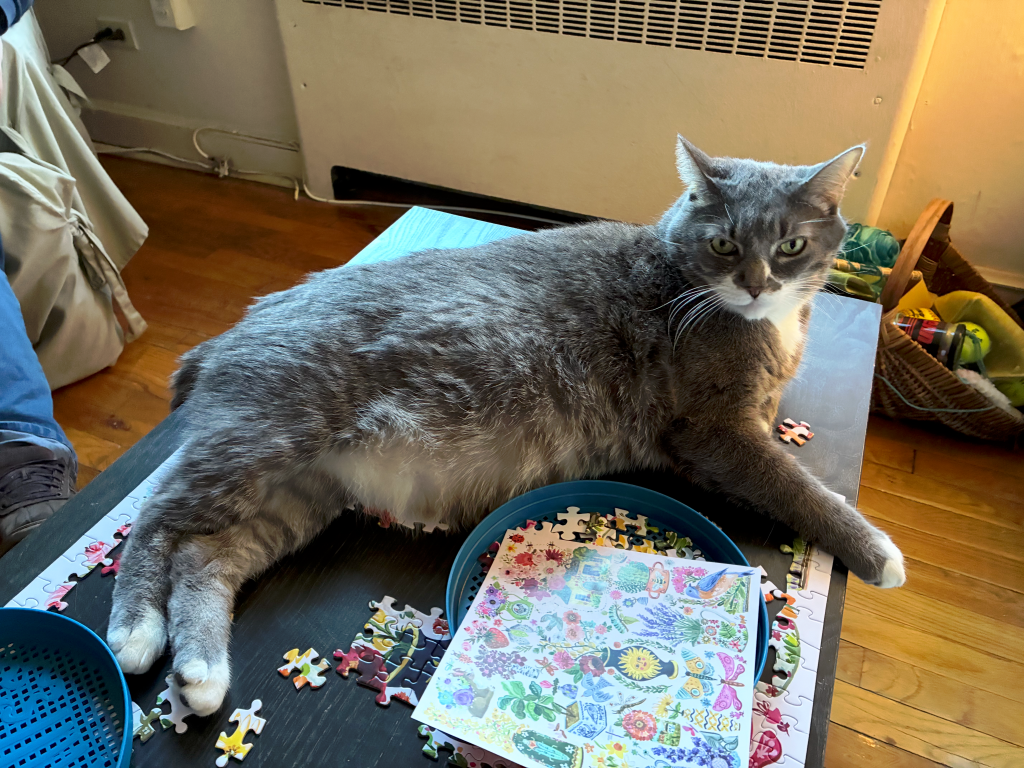
I, Misty the cat, say: “Putting together a guest blog post is like putting together a puzzle.” (Photo of my kitty self taken by my adult female human Laurel.)

Misty the cat here, returning for my every-two-month takeover of Dave’s blog — which I do by gunpoint, minus the gun. This is a particularly memorable time for me to post because tomorrow is the 8th anniversary of my adoption into my forever family, from whom I’ve received everything I could desire except a bed the size and shape of Buckingham Palace. King Chuck III has some ‘splaining to do.

And in nine days — December 16 — there’ll be a milestone moment for literature: the 250th anniversary of Jane Austen’s 1775 birth! Rebecca Budd, who comments here every week, has already posted about that anniversary in one of her great blogs. The year 1775 was also significant for being the start of the American Revolutionary War and for Apple’s rollout of the iMusket 9.

Back to Austen. I’m often (well, never) asked how I rank her six novels, and here’s my kitty answer: 1, 2, 3, 4, 5, 6. Oh, you want titles, too? 1) Persuasion. 2) Pride and Prejudice. 3) Sense and Sensibility. 4) Mansfield Park. 5) Emma. 6) Northanger Abbey. This is also Dave’s order of faves (rhyme alert!), which means we were both bribed by the same literary scholars. Austen’s early 19th-century books have aged well…partly because I keep them in my wine cellar. Actually, I don’t have a wine cellar. No cat does.

And today, December 7, is the 84th anniversary of the 1941 attack on Pearl Harbor, an event vividly depicted near the end of Herman Wouk’s compelling novel The Winds of War. If those winds had become strong enough, Wouk’s book would’ve been titled The Hurricanes of War — storms that fall alphabetically between Hurricane Violin and Hurricane Xylophone.

The Winds of War was followed by Wouk’s epic War and Remembrance — the title of which has the initials “WAR.” Coincidence? Well, Hurricane Coincidence falls alphabetically between Hurricane Bassoon and Hurricane Didgeridoo.

My current reading? I, Misty the cat, recently finished Twilight author Stephenie Meyer’s The Host, an excellent work of sci-fi that stars a being who lives inside a human body. So, no, the book is not a historical novel about Johnny Carson, who was not related to The Heart Is a Lonely Hunter author Carson McCullers, who was a top-notch writer but apparently didn’t know that a heart can’t hunt animals without a permit and that vegans prefer Fannie Flagg’s novel Fried Green Tomatoes at the Whistle Stop Cafe. Also, American frontiersman Kit Carson was not a feline like me.

Natty Bumppo did the frontiersman thing, too, in James Fenimore Cooper’s five “Leatherstocking” novels that included The Last of the Mohicans. Cooper was an American contemporary of aforementioned Englishwoman Jane Austen, and there are even rumors that they collaborated on a novel called The Last of the Emmas. So I’m puzzled (see photo) that we later had people such as actresses Emma Thompson and Emma Watson.

The latter of course played Hermione Granger in the Harry Potter movies based on the J.K. Rowling novels. Seven books, eight movies, and nine lives (experienced by cats like me). Plus there are 10 characters in Agatha Christie’s famed mystery novel And Then There Were None, whose plot focuses on the number of dry-food pellets left in my bowl after I finish eating. No mystery where those pellets went.

Which books do I want for Christmas? Charles Dickens’ A Christmas Carol, Fannie Flagg’s A Redbird Christmas, John Grisham’s Skipping Christmas, Betty Smith’s A Christmas Tree Grows in Brooklyn, Anthony Burgess’ A Christmas Orange, Fyodor Dostoevsky’s Christmas and Punishment, Aldous Huxley’s Brave New Christmas, Barbara Kingsolver’s Demon Christmashead, E.M. Forster’s A Passage to Christmas, Chinua Achebe’s Christmas Falls Apart

Dave will reply to comments as I either finish the puzzle I’m photographed with or swat every piece of that puzzle into January 2026.

I, Misty the cat, say: “There’s gotta be a sidewalk sale around here somewhere.”

Dave and my comedic 2024 book — the part-factual/part-fictional/not-a-children’s-work Misty the Cat…Unleashed — is described and can be purchased on Amazon in paperback or on Kindle. It’s feline-narrated! (And Amazon reviews are welcome. 🙂 )

This 90-second promo video for the book features a talking cat: 🙂

Dave is also the author of a 2017 literary-trivia book

…and a 2012 memoir that focuses on cartooning and more, including many encounters with celebrities.

In addition to this weekly blog, Dave writes the 2003-started/award-winning “Montclairvoyant” topical-humor column every Thursday for Montclair Local. The latest piece — from which Sir Walter Scott should remove himself from discussion of a referendum-halting court decision — is here.
Summer in the City? No, Summer with a Kitty

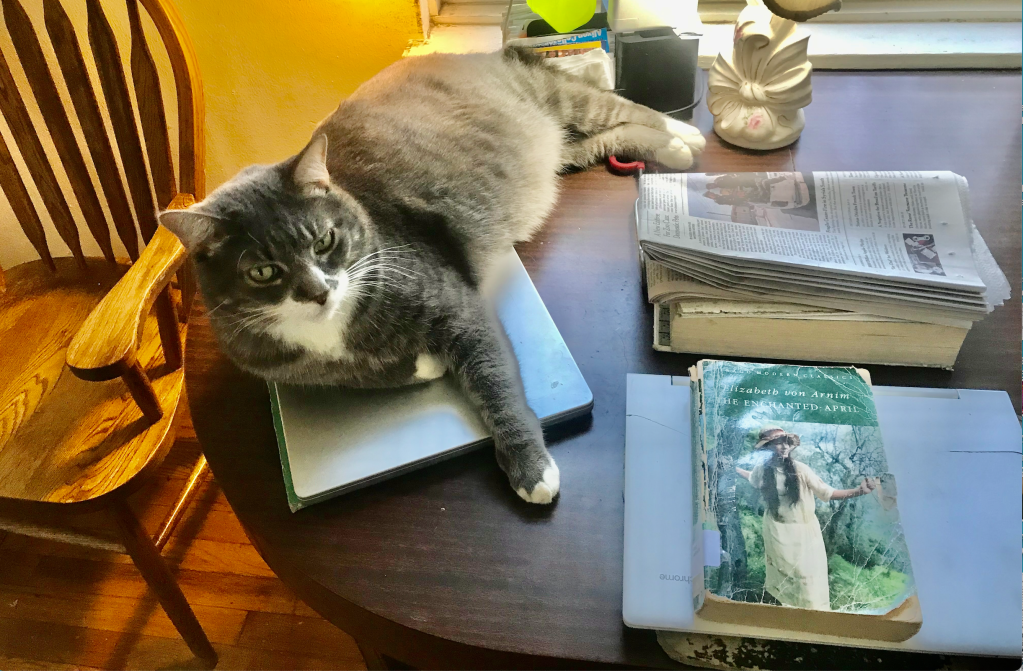
My feline self sprawled next to Elizabeth von Arnim’s The Enchanted April, which I will not discuss today because I haven’t finished reading it yet. The first letters of that novel’s title spell “tea,” which I don’t drink. Thank you for your attention to these two matters. (Photo by Dave.)

Misty the suburban cat here with my every-two-month blog post. My previous guest piece was in June, this one is in August, and the next one will be in October. Except that U2’s October album was released in 1981, so I’m not sure how my next blog post will be in…October. There IS a song on that album called “Stranger in a Strange Land,” which is about me at the vet for my yearly check-up.

Anyway, my adult humans Dave and Laurel saw the Superman movie this month, and enjoyed its thrills, acting, and empathy. But I, Misty, was not allowed in the theater because of being a cat. I was actually kind of relieved, because sitting through 25 minutes of ads and previews would have had me yowling loud enough to be heard on Mars — which billionaire bozo Elon Musk, aka the Tesla dude, wants to not only colonize but have The Martian Chronicles author Ray Bradbury write a 2025 sequel called The SpaceX Chronicles. Given that Bradbury died in 2012, he…missed the pleasure of seeing the catastrophic flop of Musk’s stupid Cybertruck.

The Superman film reminds me and other kitties of Michael Chabon’s The Amazing Adventures of Kavalier & Clay, the 2000 novel partly based on the real-life Jerry Siegel/Joe Shuster duo who created the Superman character for comic books in 1938 — the year the iPhone minus-69 was released.

More generally, the 2025 movie starring the “Man of Steel” also reminds my meowing self of fictional characters possessing abilities beyond the capacity of most mortals. One is the Lee Child-created Jack Reacher — who’s not a superhero but displays unusual strength, incredible fighting abilities, great intellect, and other attributes in the 29-book series that began in 1997. Exactly a century after Bram Stoker’s Dracula (1897), which stars a vampire who acts out in all kinds of ways after Frankenstein defeats him in pickleball. A tip of the hat to Mary Shelley.

Another character who combines exceptional brains with exceptional physical abilities is the prehistoric protagonist Ayla of Jean M. Auel’s The Clan of the Cave Bear and its sequels. Ayla’s many accomplishments included inventing things and being the only person able to ride Baby the lion (a feline like me!), although she never played pickleball with her horse Whinney.

Some fictional people even rise in the air or fly — in magic-realism novels and other books. Among them are Remedios in Gabriel Garcia Marquez’s One Hundred Years of Solitude, Margarita in Mikhael Bulgakov’s The Master and Margarita, and the title character of J.M. Barrie’s Peter Pan — which was first a play, then a novel, then an animated movie, then a live TV film, and finally a jar of peanut butter which also flew when Dave tossed it out the window to compare its hang time with a jar of Skippy peanut butter. Denying me the opportunity to swat both brands off the counter with my cat paws.

There are also characters who might not be extraordinarily adept in a brute physical way but are really, really smart. Hermione Granger of J.K. Rowling’s Harry Potter books, Sherlock Holmes of Arthur Conan Doyle’s detective fiction, Hercule Poirot of Agatha Christie’s mysteries, Lisbeth Salander of Stieg Larsson’s The Girl with the Dragon Tattoo and its sequels, etc. Lisbeth sadly did not have a cat tattoo, but I forgive her because she’s Swedish and thus might toss some Swedish meatballs my way.

Dave will reply to comments so that I have time to eat the aforementioned meatballs. Rest assured that I maintain a balanced diet — one meatball in each side of my mouth.

I, Misty the cat, say: “After years of study, I’m finally qualified to inspect Belgian blocks.”

My and Dave’s comedic 2024 book — the part-factual/part-fictional/not-a-children’s-work Misty the Cat…Unleashed — is described and can be purchased on Amazon in paperback or on Kindle. It’s feline-narrated! (And Misty says Amazon reviews are welcome. 🙂 )

This 90-second promo video for the book features a talking cat: 🙂

Dave is also the author of a 2017 literary-trivia book

…and a 2012 memoir that focuses on cartooning and more.

In addition to this weekly blog, Dave writes the 2003-started/award-winning “Montclairvoyant” topical-humor column every Thursday for Montclair Local. The latest piece — about my school district’s huge, recently discovered deficit — is here.

They’re Serious about Series and Standalone Novels

Some authors are good at two or more things: novels and short stories, fiction and nonfiction, literary fiction and mass-audience fiction, etc. For this post, I’ll add to that by focusing on authors who are good at series as well as standalone novels. It certainly requires some different writing muscles to wrap up things in one book vs. extending things across multiple books.

This topic occurred to me last week as I read Val McDermid’s A Place of Execution, a superb standalone novel with a concluding twist that will knock your socks off. My previous experience with McDermid was with her series fiction, including the books starring “cold case” detective Karen Pirie.

I followed A Place of Execution with Martin Cruz Smith’s Independence Square — his 10th in the series starring Russian investigator Arkady Renko that began with Gorky Park. (Independence Square was okay; not as good as the earlier Renko books.) Smith has also written standalone novels such as Rose.

Sometimes, authors toggle throughout their careers between standalone books and series — as has been the case with Smith and McDermid as well as authors such as Walter Mosley with his Easy Rawlins books and much more. Other times, authors start with standalone novels before hitting on a hit series and focusing on that — as did Sue Grafton, who wrote two standalones before launching her popular Alphabet Mysteries (25 in all; she reached the letter “Y” before she died).

J.K. Rowling has also written many more series novels than standalone ones: seven Harry Potter books, then The Casual Vacancy one-off, then seven Cormoran Strike/Robin Ellacott crime novels (so far).

L.M. Montgomery followed her classic Anne of Green Gables with seven sequels over the years, during which time she also penned the Emily trilogy and standalones such as The Blue Castle.

Stephen King is known mostly for standalone novels, with a sprinkling of sequels and trilogies, but has also written many books in The Dark Tower series.

Some long-ago authors also toggled. For instance, James Fenimore Cooper wrote the five “Leatherstocking” novels (including The Last of the Mohicans) as well as various standalone books. Alexandre Dumas did both as well — many standalones (most famously The Count of Monte Cristo) as well as The Three Musketeers and its five sequels (sometimes published as fewer sequels when certain books were combined into one edition).

Your thoughts about and examples of this topic?

Misty the cat says: “My fitness tracker better record backward steps.”

My comedic 2024 book — the part-factual/part-fictional/not-a-children’s-work Misty the Cat…Unleashed — is described and can be purchased on Amazon in paperback or on Kindle. It’s feline-narrated! (And Misty says Amazon reviews are welcome. 🙂 )

This 90-second promo video for my book features a talking cat: 🙂

I’m also the author of a 2017 literary-trivia book

…and a 2012 memoir that focuses on cartooning and more.

In addition to this weekly blog, I write the 2003-started/award-winning “Montclairvoyant” topical-humor column every Thursday for Montclair Local. The latest piece — about a lot of school news during a non-school time — is here.

When It’s Two or More, Jaws Can Hit the Floor

J.K. Rowling with the screen versions of her Harry Potter, Hermione Granger, Cormoran Strike, and Robin Ellacott characters (Everett/Getty/BBC).

It’s impressive enough when a novelist creates one successful series — as, say, Lee Child did with his Jack Reacher books and Sue Grafton did with her alphabet mysteries. But an author who creates two or more successful series? Wow!

Some writers produce multiple series consecutively — finishing one series before starting another. Other writers tack back and forth between different series. Either way, it takes some impressive and wide-ranging creative talent, and helps “serial” novelists stay fresh. Those authors can also feel good about readers staying with them as they offer something new.

Among the queens and kings of multiple series is J.K. Rowling. She of course penned the seven mega-popular Harry Potter books. Then, after writing The Casual Vacancy standalone novel, Rowling as “Robert Galbraith” launched her crime series starring private investigators Cormoran Strike and Robin Ellacott. I’m currently close to finishing the seventh installment — The Running Grave, in which Robin goes undercover to infiltrate a very problematic cult — and its 945 pages are full of the thrills, humor, suspense, poignancy, complications, excellent prose, and believable dialog Rowling always provides.

Walter Mosley is best-known for his detective series starring Easy Rawlins, who has now starred in 16 novels. But the author has interspersed those books with smaller series such as the King Oliver books and the Socrates Fortlow books. Mosley is always a great read, no matter who the protagonist is.

Val McDermid has gone the several-series route, too, including a compelling saga starring inspector Karen Pirie and another featuring journalist Allie Burns. Also not a clunker in the installments I’ve read.

Leaving contemporary fiction for a minute, L.M. Montgomery wrote Anne of Green Gables and its many sequels while also penning the semi-autobiographical Emily trilogy. (I consider a trilogy to be a series of sorts.)

Returning to a living author, Diana Gabaldon has gone the “sub-series” route by writing nine main Outlander novels (so far) and a number of offshoot books starring the Lord John character who’s a supporting player in the main novels.

Your thoughts about, and examples of, this theme?

Misty the cat says: “Snow means ‘Middlemarch’ author George Eliot wrote ‘Middledecember,’ too.”

My comedic 2024 book — the part-factual/part-fictional/not-a-children’s-work Misty the Cat…Unleashed — is described and can be purchased on Amazon in paperback or on Kindle. It’s feline-narrated! (And Misty says Amazon reviews are welcome. 🙂 )

This 90-second promo video for my book features a talking cat: 🙂

In addition to this weekly blog, I write the 2003-started/award-winning “Montclairvoyant” topical-humor column every Thursday for Montclair Local. The latest piece — which discusses what’s happening with my town’s animal shelter and much more — is here.

Fiction’s Great and Grating Parental Expectations

You want drama in literature? How about story lines that focus on parents’ expectations for children, and the success or failure of their kids to meet those expectations. Also, does what the parents want match what their daughters or sons want? Often not.

Expectations are a big issue in Harry Potter and the Cursed Child — the J.K. Rowling/Jack Thorne/John Tiffany play of which I’m currently reading the script in book form. The action takes place about 20 years after the amazing events in the seven Harry Potter novels, and Harry’s son Albus is having a heckuva time living up to his heroic, ultra-famous father.

In L.M. Montgomery’s The Blue Castle (which features a different “castle” than Hogwarts), the narrow-minded mother has little confidence in the social and intellectual abilities of her bright daughter Valancy Stirling. Valancy proves her wrong by showing she’s an absolutely amazing person after leaving her oppressive childhood home.

Did the mother expect less of Valancy because of Valancy being a daughter rather than son? That reminds me of how the Tulliver parents in George Eliot’s The Mill on the Floss give their son Tom more respect, education, and responsibility than their much smarter, much nicer, stifled-in-her-ambition daughter Maggie. Patriarchy, sexism, and all that in what is probably Eliot’s most autobiographical novel.

On the more positive side, the man (not her biological father) who raises the title character in Fanny Burney’s 18th-century novel Evelina is a really nice guy who thinks the world of Evelina. While having some trepidation about her going to the big city (London), he believes she will do well in life. Evelina proves him correct.

The father-daughter dynamic is not as pleasant in Henry James’ Washington Square, in which Dr. Sloper is mean and controlling with his rather dull, dutiful daughter Catherine. Obviously, the dad doesn’t have high expectations for Catherine, who, while ending up having a mostly unhappy life, does become a more independent person who stands up for herself.

Another example of the father-son dynamic (besides Harry Potter and Albus) involves Gabriel Grimes and his stepson John in James Baldwin’s Go Tell It On the Mountain. Gabriel is a religious hypocrite who expects John (a semi-autobiographical teen version of Baldwin) to be obedient and religious. The conflicted John sees Gabriel for the nasty man he is, but does have sort of a religious conversion that the reader figures will not last long.

Then there’s the obnoxiously “manly” dad (Henry Stamper) who expects little of his weak-ish younger son (Leland) in Ken Kesey’s Sometimes a Great Notion. Leland subverts that expectation, but only a little.

What have been some of the memorable novels for you that touch on this topic?

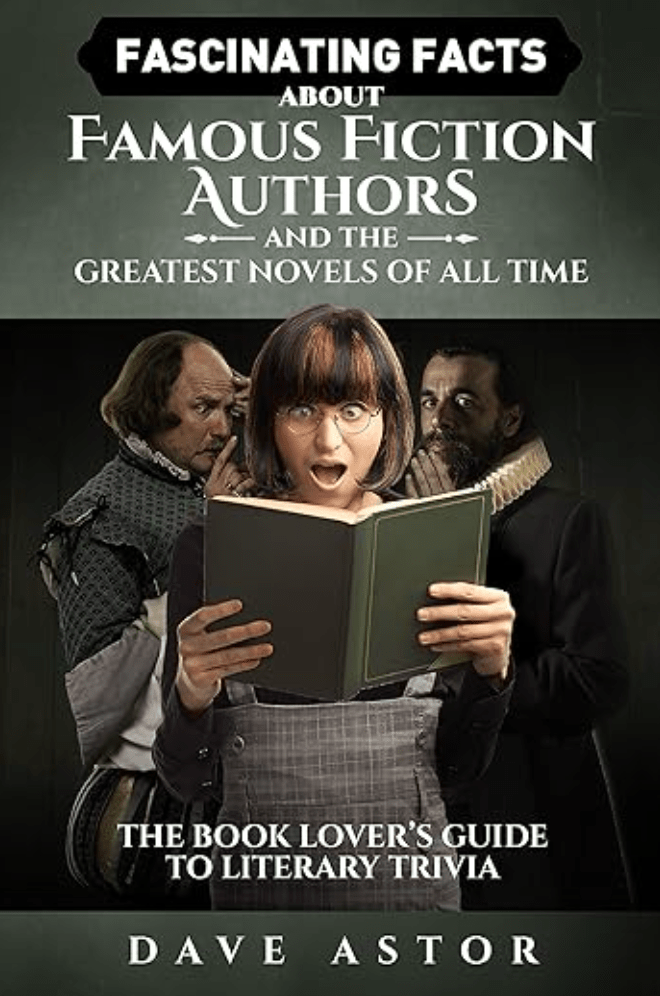
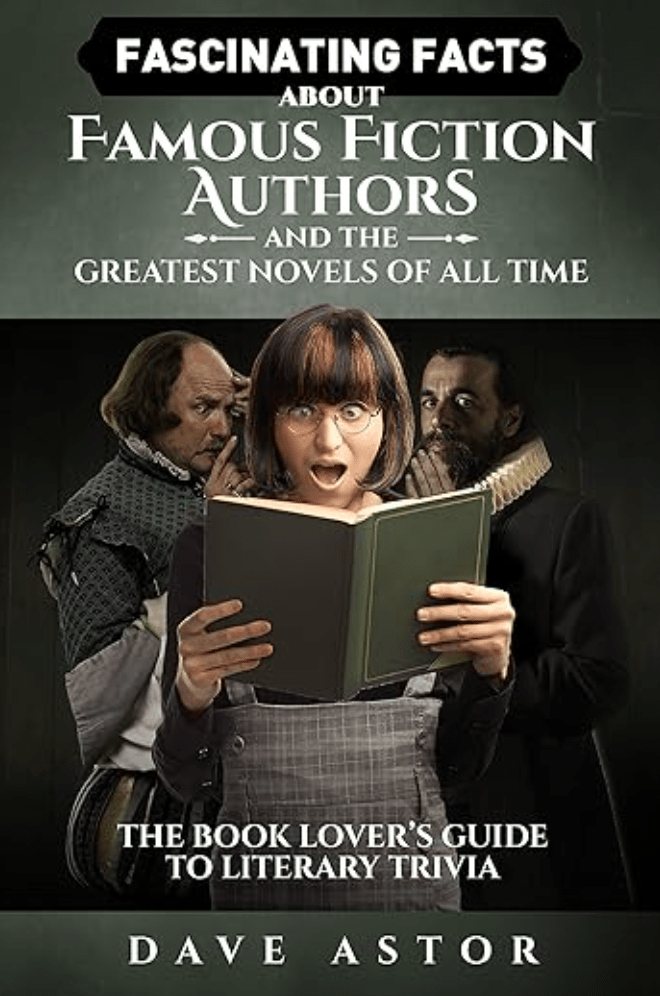
My 2017 literary-trivia book is described and can be purchased here: Fascinating Facts About Famous Fiction Authors and the Greatest Novels of All Time.

In addition to this weekly blog, I write the award-winning “Montclairvoyant” topical-humor column for Baristanet.com. The latest weekly piece, about both overdevelopment and a curriculum that downplays novels, is here.