Cars Can Help Drive the Plots of Novels

Our 2014 Toyota Prius leaving its apartment-complex garage. (Driven by my wife Laurel/photographed by me.)

My wife Laurel and I drove from New Jersey to Michigan and back this weekend for a memorial service in Ann Arbor for a cherished family member. It was a crazily compressed November 14-16 car journey of more than 1,200 miles round trip — a travel method we chose to avoid possible flight problems in the aftermath of the U.S. government shutdown.

Anyway, all that automotive time means I have driving on my mind, so I’m resurrecting a piece about cars in literature that I wrote for The Huffington Post in 2013, a year before starting this WordPress blog. Here it is, slightly edited and slightly rewritten:

In literature, sometimes a car is just a car. But sometimes it’s a “vehicle” for authors to write about independence, loneliness, progress, sex, death, wealth, poverty, and more.

Whether or not book-based cars are weighted with symbolism, most readers relate to driving. So I’d like to steer you to some novels in which cars are important “characters,” and then hear about your favorite fictional works that feature those on-the-road contraptions.

Which reminds me of Jack Kerouac’s On the Road novel and the way some cars in literature are used to search (futilely or otherwise) for freedom and/or pleasure, and can speak to characters’ restlessness, aimlessness, and/or discontent.

That’s the case in Paul Auster’s The Music of Chance. Protagonist Jim Nashe spends the first part of the novel endlessly crisscrossing the U.S. in a car after his wife leaves him. The ex-firefighter, who finances his marathon road trip with an unexpected inheritance, eventually ends up involved in a high-stakes poker game at the mansion of two eccentric/heartless rich guys. Then things get really weird before the novel concludes with (wait for it!) one more car ride.

There’s another fateful auto scene — though not at the end of the book — in Jeffrey Eugenides’ Middlesex. It’s a car chase that features Calliope’s dad Milton driving too fast on the Ambassador Bridge between Detroit and Canada.

Motor vehicles also figure prominently in Booth Tarkington’s The Magnificent Ambersons, with successful automaker Eugene Morgan representing turn-of-the-20th-century progress while Major Amberson and his dwindling fortune represent the vanishing horse-and-buggy age. New money vs. old money and all that.

Tarkington contemporary L.M. Montgomery offers a scene in The Blue Castle of Valancy Stirling sharing an exuberant car ride with “misfit” Barney Snaith. Many people in their straitlaced town are suspicious of Barney, but Valancy finds him very interesting — so the car ride is a symbol of Valancy’s break from the conventions of her place, time, and family.

Novels of the Montgomery-Tarkington era were usually subtle about sex, but that’s not the case with many books of recent decades. For instance, there’s a scene in Ken Grimwood’s time-travel novel Replay that shows how cars can potentially be bedrooms on wheels.

Speaking of time travel, there’s a great section of Jack Finney’s Time and Again in which Simon accompanies Julia from her present (1880s) to his present (around 1970), and Julia is of course stunned by the experience of riding in a modern motor vehicle.

Readers are the ones who might be stunned as they peruse Charles Dickinson’s The Widows’ Adventures, a novel starring two women on a long road trip. The one doing the driving is…blind!

Then there are supernatural thrills in car-oriented Stephen King novels such as Christine and From a Buick 8. The latter book includes a spooky gas station scene before various law-enforcement people enter the story.

Two memorable moments in Cormac McCathy’s Suttree involve what the title character does to a police car (to avenge racist cop behavior) and what Suttree’s girlfriend does to the couple’s own car. And in Fay Weldon’s The Bulgari Connection, the spurned older wife is jailed after using an auto to do a certain something to the trophy wife who “replaced” her.

Or how about that tense yet hilarious Harry Potter and the Chamber of Secrets scene in which J.K. Rowling has Harry and Ron travel to Hogwarts in a flying car? An auto can definitely be a “vehicle” for humor.

On a much more serious note, a car converted into a truck of sorts is how the Joad family travels from drought-stricken/agribusiness-devastated Oklahoma to a hoped-for better life in California. But the reality out west for the non-rich is as dismal as the Joads’ aged jalopy in John Steinbeck’s The Grapes of Wrath.

People take long car trips for various reasons. In John Grisham’s The Client, attorney Reggie Love and her beleaguered 11-year-old client Mark drive from Memphis to New Orleans to try to locate the body of a murdered U.S. senator.

What are your favorite fictional works with motor vehicle motifs?

Misty the cat says: “The Lincoln Tunnel has been renovated!”

My comedic 2024 book — the part-factual/part-fictional/not-a-children’s-work Misty the Cat…Unleashed — is described and can be purchased on Amazon in paperback or on Kindle. It’s feline-narrated! (And Amazon reviews are welcome. 🙂 )
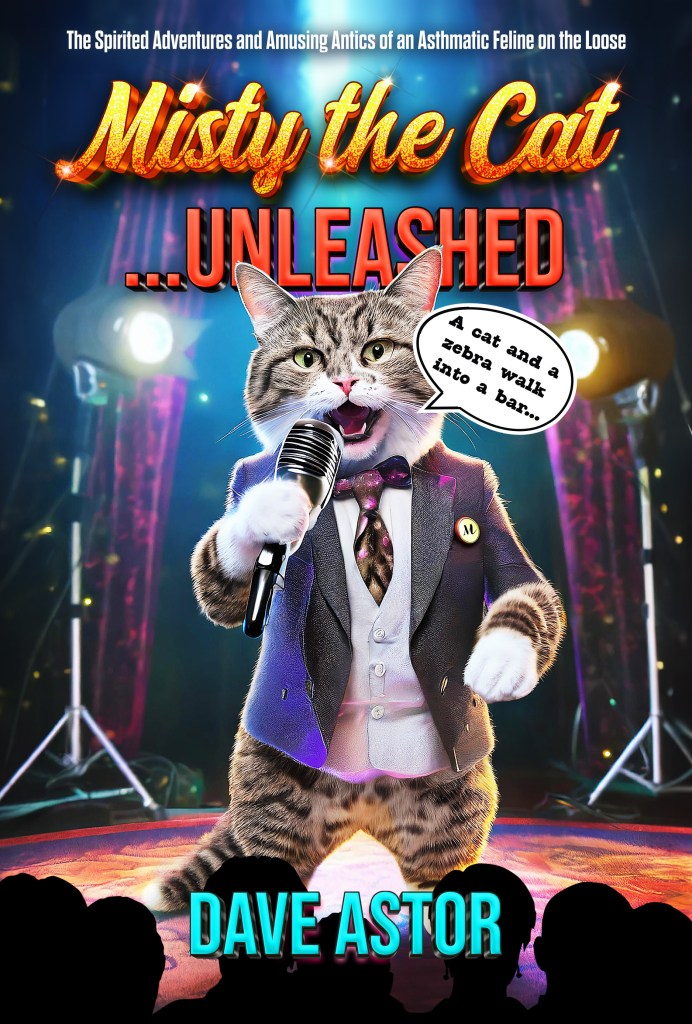
This 90-second promo video for the book features a talking cat: 🙂

I’m also the author of a 2017 literary-trivia book

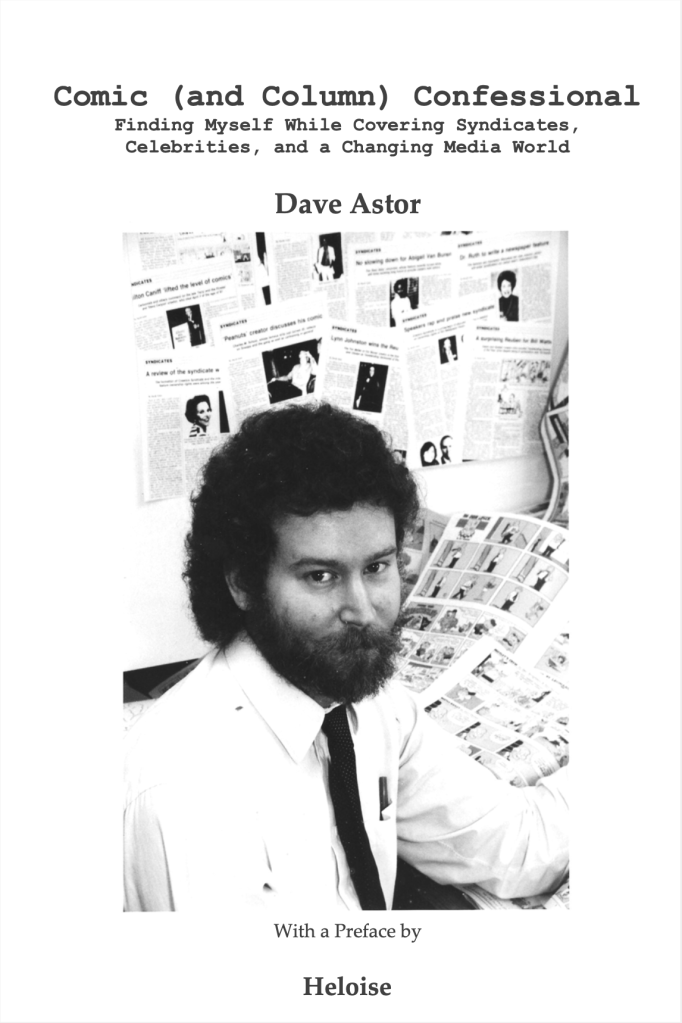
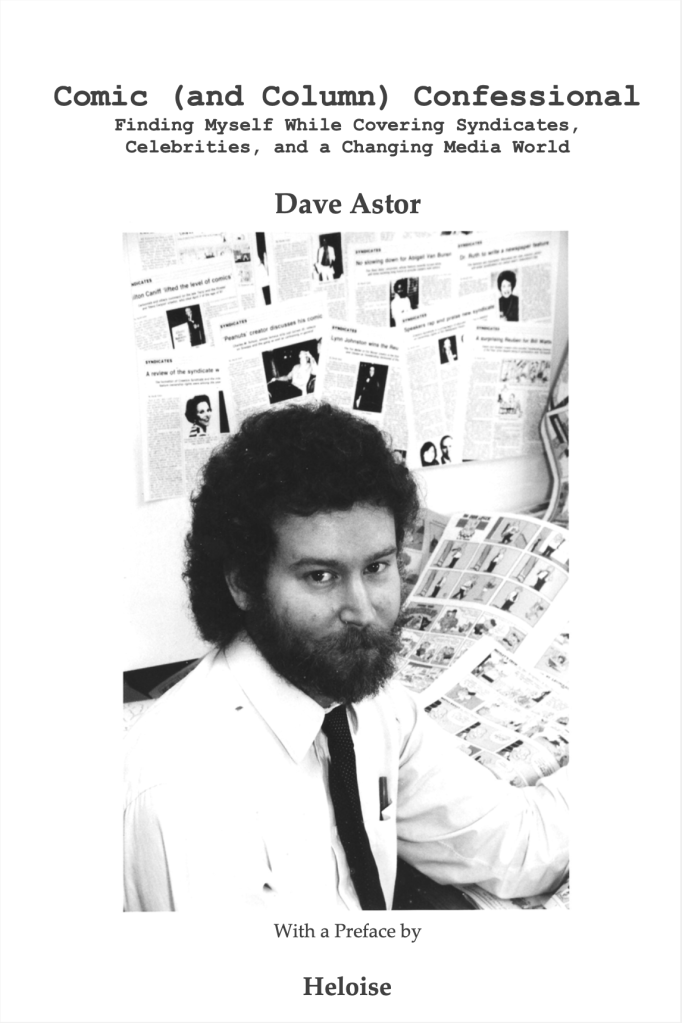
…and a 2012 memoir that focuses on cartooning and more, including many encounters with celebrities.
In addition to this weekly blog, I write the 2003-started/award-winning “Montclairvoyant” topical-humor column every Thursday for Montclair Local. The latest piece — about two flawed local ballot questions relating to a massive school budget deficit — is here.

They’re Serious about Series and Standalone Novels

Some authors are good at two or more things: novels and short stories, fiction and nonfiction, literary fiction and mass-audience fiction, etc. For this post, I’ll add to that by focusing on authors who are good at series as well as standalone novels. It certainly requires some different writing muscles to wrap up things in one book vs. extending things across multiple books.

This topic occurred to me last week as I read Val McDermid’s A Place of Execution, a superb standalone novel with a concluding twist that will knock your socks off. My previous experience with McDermid was with her series fiction, including the books starring “cold case” detective Karen Pirie.

I followed A Place of Execution with Martin Cruz Smith’s Independence Square — his 10th in the series starring Russian investigator Arkady Renko that began with Gorky Park. (Independence Square was okay; not as good as the earlier Renko books.) Smith has also written standalone novels such as Rose.

Sometimes, authors toggle throughout their careers between standalone books and series — as has been the case with Smith and McDermid as well as authors such as Walter Mosley with his Easy Rawlins books and much more. Other times, authors start with standalone novels before hitting on a hit series and focusing on that — as did Sue Grafton, who wrote two standalones before launching her popular Alphabet Mysteries (25 in all; she reached the letter “Y” before she died).

J.K. Rowling has also written many more series novels than standalone ones: seven Harry Potter books, then The Casual Vacancy one-off, then seven Cormoran Strike/Robin Ellacott crime novels (so far).

L.M. Montgomery followed her classic Anne of Green Gables with seven sequels over the years, during which time she also penned the Emily trilogy and standalones such as The Blue Castle.

Stephen King is known mostly for standalone novels, with a sprinkling of sequels and trilogies, but has also written many books in The Dark Tower series.

Some long-ago authors also toggled. For instance, James Fenimore Cooper wrote the five “Leatherstocking” novels (including The Last of the Mohicans) as well as various standalone books. Alexandre Dumas did both as well — many standalones (most famously The Count of Monte Cristo) as well as The Three Musketeers and its five sequels (sometimes published as fewer sequels when certain books were combined into one edition).

Your thoughts about and examples of this topic?

Misty the cat says: “My fitness tracker better record backward steps.”

My comedic 2024 book — the part-factual/part-fictional/not-a-children’s-work Misty the Cat…Unleashed — is described and can be purchased on Amazon in paperback or on Kindle. It’s feline-narrated! (And Misty says Amazon reviews are welcome. 🙂 )

This 90-second promo video for my book features a talking cat: 🙂

I’m also the author of a 2017 literary-trivia book

…and a 2012 memoir that focuses on cartooning and more.

In addition to this weekly blog, I write the 2003-started/award-winning “Montclairvoyant” topical-humor column every Thursday for Montclair Local. The latest piece — about a lot of school news during a non-school time — is here.

A Kitty Tries to Be Witty

“Perhaps I should wake up and write a blog post,” says Misty. (Photo by Maria.)

I, Misty the cat, guest-blog for Dave every two months. I last did this on April 13 and today is June 8, so that’s…hmm…actually not quite two months. Reminds me of when Dave returned some novels to the library five days before their due date, and the indignant book drop expelled said novels with such force that they traveled back in time and landed on the heads of the three Karamazov brothers. Fortunately, each of the books was under 400 pages.

But Fyodor Dostoevsky’s 824-page The Brothers Karamazov is even longer than my average nap, during which I experience “Dreams” more often than Fleetwood Mac did at their 1977 concerts. And Dostoevsky’s 1880 novel might have been the first volume of an even longer work if the Russian author hadn’t died in early 1881. Perhaps a trilogy of sorts — like Suzanne Collins’ The Hunger Games (about me nudging my cat-food bowl so that each serving lands in the exact center) and J.R.R. Tolkien’s The Lord of the Rings (about my epic quest to be a male feline version of the Ernestine telephone operator played by Lily Tomlin).

I recommend shopping at Pop Culture R Us for all your celebrity-name-dropping needs.

Speaking of decades-ago entertainment, do you remember the 1978 movie Same Time, Next Year about a married woman and a married man who have a multi-year annual affair? That film partly inspired the long-term romance of Mallory Blessing and Jake McCloud in Elin Hilderbrand’s 2020 novel 28 Summers, which I read last week and found to be a wonderful, poignant book. It’s 422 pages in hardcover, which explains why various other 19th-century Russian fictional characters are donning helmets to avoid concussions. Helmets with stickers saying “Please Don’t Name Your Cat Anna Karenina.”

I’ll add that 28 Summers has an alternate-history element, with Jake’s wife Ursula DeGournsey running for President of the United States in 2020. Reminds me that my aforementioned cat-food bowl is shaped sort of like the Oval Office, and even has a tiny edible desk.

Other novels featuring politicians? Stephen King’s The Dead Zone, Robert Penn Warren’s All the King’s Men, J.K. Rowling’s The Casual Vacancy, Fannie Flagg’s Standing in the Rainbow, and Sinclair Lewis’ It Can’t Happen Here, to name a few. When my cat-food bowl was empty for five seconds, you know what I screamed? Yes, I screamed “It can’t happen here!!!”

A century ago, Lewis had quite a run of notable novels: Main Street (1920), Babbitt (1922), Arrowsmith (1925), Elmer Gantry (1927), and Dodsworth (1929). It Can’t Happen Here was published in 1935, eight decades before my 2015 birth year — which means that in 2025 I’m now…furry.

I’m sometimes asked how I, the kitty Misty, consume literature. Smeared with tasty cat food, of course. But, seriously, I read novels in the traditional print-book format rather than via eBook or audiobook. I guess I’m “old school,” like the 1636-founded Harvard University. I expect only a few members of The Class of 1640 to be at Harvard’s 2040 alumni reunion; they’re the ones who reside with cats, who help humans live longer.

Long-lived humans in literature? The over-2,000-year-old Lazarus Long of five Robert Heinlein novels; Ayesha, who also clocks in at about two millennia in H. Rider Haggard’s She; the 250-year-old High Lama of James Hilton’s Lost Horizon; etc. I assume they had well-funded retirement accounts.

One of the oldest of my fellow cats is Garfield, who has starred in Jim Davis’ 1978-founded comic strip for 47 years! Which reminds me that my next guest blog post will appear in 47 years — minus 46 years and 10 months. So, August 2025. That’s also when my teen human Maria is starting college, which means her bedroom will be…mine!

Dave will reply to any comments because I, Misty the cat, am busy consulting with an interior decorator about changes in Maria’s room (where you see me in the photo atop this post). A kitty can’t have enough scratching posts, treat dispensers, and paintings of hairballs playing poker.

Misty the cat says: “That railing’s shadow means 4,378 more days of spring.”

Dave’s comedic 2024 book — the part-factual/part-fictional/not-a-children’s-work Misty the Cat…Unleashed — is described and can be purchased on Amazon in paperback or on Kindle. It’s feline-narrated! (And Misty says Amazon reviews are welcome. 🙂 )

This 90-second promo video for Dave’s book features a talking cat: 🙂

Dave is also the author of a 2017 literary-trivia book

…and a 2012 memoir that focuses on cartooning and more.

In addition to this weekly blog, Dave writes the 2003-started/award-winning “Montclairvoyant” topical-humor column every Thursday for Montclair Local. The latest piece — about New Jersey’s upcoming primary election and much more — is here.

When Good Novels Are Good Enough

You absolutely love an author and then read a novel by her or him that’s good but not great. A problem? Not for me.

It’s unreasonable to expect a masterpiece every time — though some writers (George Eliot is one) have produced A+ novels many times in each of their careers. I’m just grateful that my favorite authors, dead or living, came up with multiple books I really liked even if I didn’t fall head over heels for every title. Heck, books that are good often have at least some great moments.

I thought about this while reading the last three novels I borrowed from the library. First up was Stephen King’s The Girl Who Loved Tom Gordon, whose nine-year-old protagonist gets lost in the Maine woods. Trisha’s struggle for survival is at times gripping and at times tedious for the reader, with the less riveting portions partly caused by the fact that Trisha can talk to nobody but herself. The book is ultimately worth reading, but it doesn’t have the wallop of King novels such as Carrie, The Dead Zone, Misery, From a Buick 8, and a number of others.

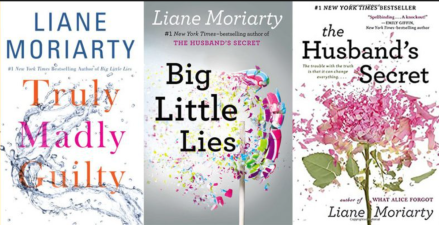
Then came Liane Moriarty’s Truly Madly Guilty — which has the author’s signature elements of all-too-human characters, deep insight into female friendships, many psychological nuances, lots of humor and pathos, and more. But the novel is more a B+ than an A+, and its focus on a fateful barbecue seems less consequential than the storylines in Moriarty works such as the masterful Big Little Lies and powerful The Husband’s Secret. Yet I’m glad I read Truly Madly Guilty. Heck, what happened at that barbecue is rather consequential.

The third novel was Zadie Smith’s The Auto-Graph Man, which has the author’s dead-on depictions of ethnic similarities and differences as well as many hilarious moments (I think Smith might be the funniest living author). But her novels On Beauty and especially White Teeth are far superior works.

Donna Tartt? I’d rank her tour de force The Goldfinch one of the very best novels of the 21st century. Memorable characters, a terrific plot concerning the painting that gives the book its title, well-handled settings ranging from New York City to Las Vegas to Amsterdam, and a completely satisfying conclusion. Tartt’s first two novels — The Secret History and The Little Friend — are quite good, but have flaws such as being too long for their subject matter and less-accomplished conclusions.

Among past authors, there are so many who offer readers immense enjoyment with novels that are not fantastic but are still plenty good. I’ll list some of those “lesser” works and then put a sampling of the authors’ masterpieces in parentheses.

There’s Jane Austen’s Northanger Abbey (Persuasion, Pride and Prejudice); Alexandre Dumas’ Georges (The Count of Monte Cristo); Charlotte Bronte’s Villette (Jane Eyre); Anne Bronte’s Agnes Grey (The Tenant of Wildfell Hall); Fyodor Dostoyevsky’s The House of the Dead (Crime and Punishment, The Brothers Karamazov); Thomas Hardy’s The Hand of Ethelberta (Jude the Obscure); Edith Wharton’s The Custom of the Country (The House of Mirth, The Age of Innocence); Willa Cather’s The Song of the Lark (My Antonia); John Steinbeck’s The Winter of Our Discontent (The Grapes of Wrath, East of Eden); Gabriel Garcia Marquez’s Love in the Time of Cholera (One Hundred Years of Solitude); Octavia E. Butler’s Parable of the Sower (Kindred); and so on!

Some novels you like by favorite authors that are not those authors’ masterpieces?

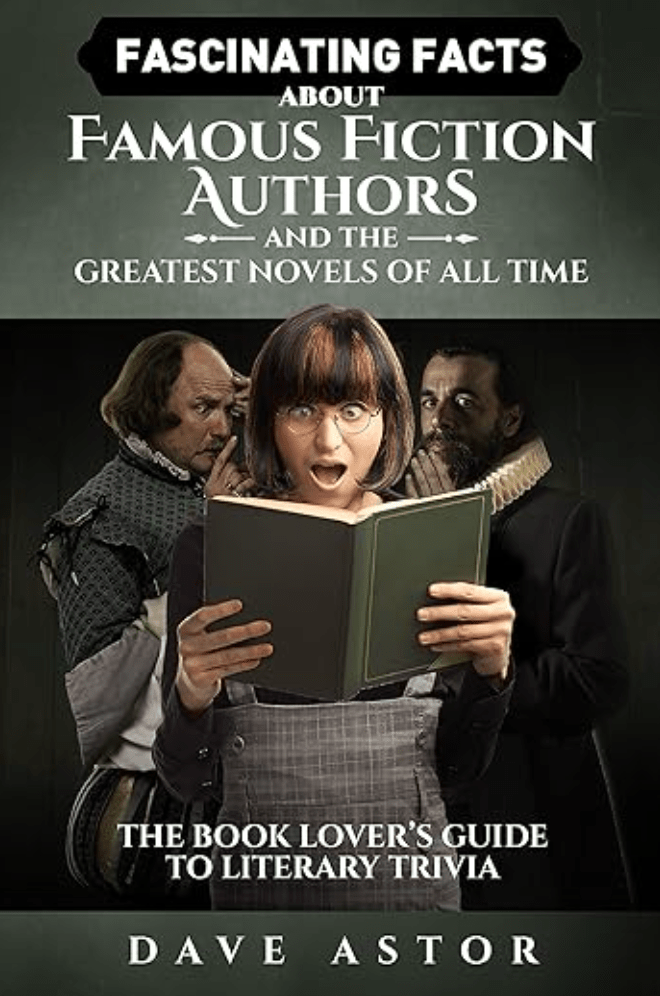
My 2017 literary-trivia book is described and can be purchased here: Fascinating Facts About Famous Fiction Authors and the Greatest Novels of All Time.

In addition to this weekly blog, I write the award-winning “Montclairvoyant” topical-humor column for Baristanet.com. The latest weekly piece — which discusses a battling Board of Education and a congressional candidate unfortunately disinvited from my town’s high school — is here.