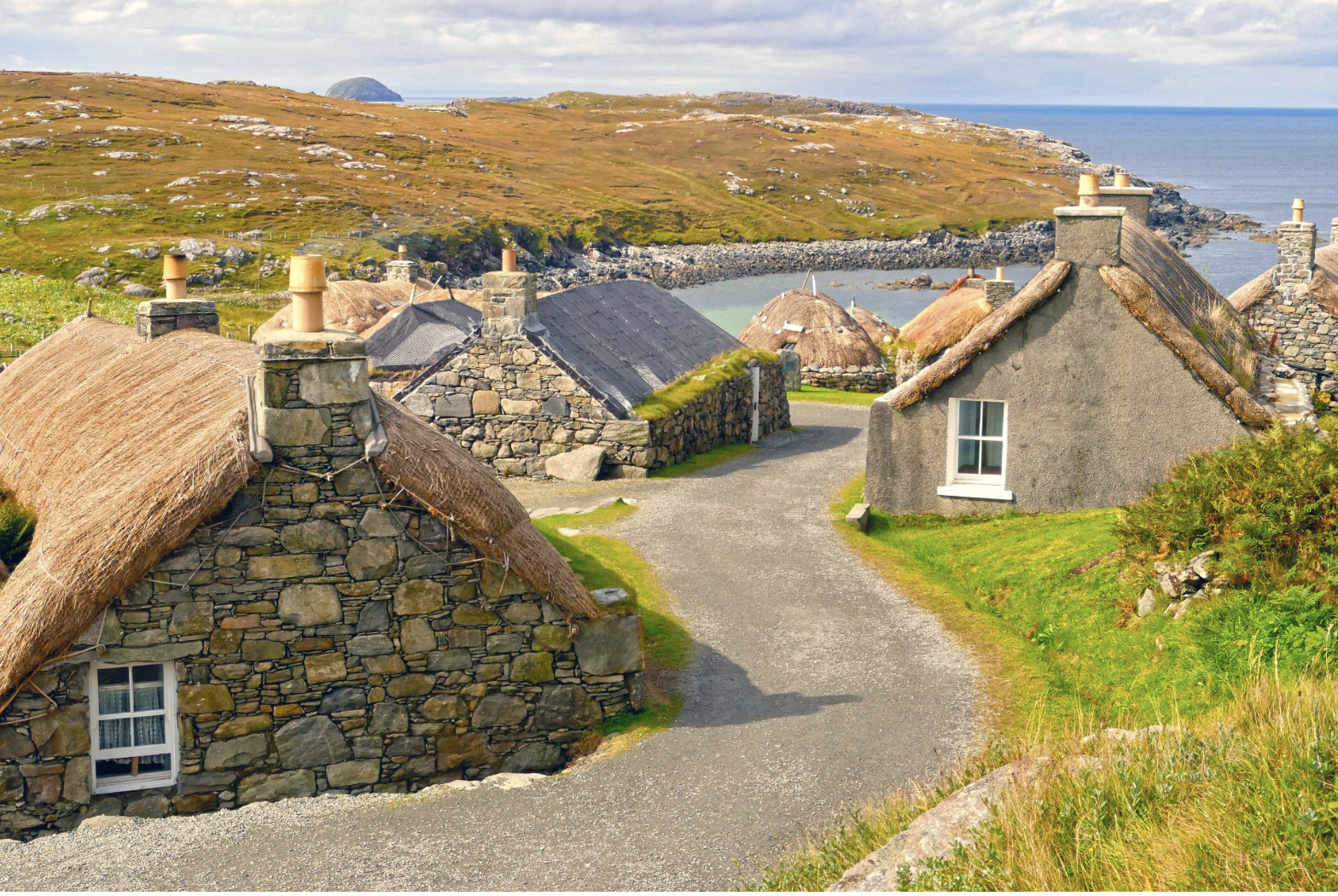
The Isle of Lewis (© Manel Vinuesa).
Novels with remote settings can be highly populated with elements fascinating to readers. Challenging weather. Lonely characters. Intense interactions between a relatively small number of people. Heightened danger because of the remoteness. And more.
The Blackhouse and its first sequel The Lewis Man, two riveting Peter May novels I read this month, mostly unfold on the isolated Isle of Lewis off Scotland. This setting gives the books lots of atmosphere amid murders and interesting (at times pathological) relationships between various three-dimensional characters.
I also recently read Frenchman’s Creek by Daphne du Maurier, who uses a remote setting as a backdrop to an intriguing love affair between a dissatisfied upper-class woman and a charismatic pirate.
Pirates have ships, of course, and many novels with remote settings unfold on boats, islands, or other isolated places near water. Among the examples I’ve read are Daniel Defoe’s Robinson Crusoe (obviously), Edgar Allan Poe’s The Narrative of Arthur Gordon Pym of Nantucket (which chronicles a surreal journey to the South Pole), Herman Melville’s Typee (whose escapee sailor protagonist enjoys Polynesian island life), and Alexandre Dumas’ The Count of Monte Cristo (a key part of which is set on a prison island off Marseille).
Also: Aldous Huxley’s Island (as utopian as that author’s Brave New World is dystopian), Agatha Christie’s And Then There Were None (murders on an island), Yann Martel’s Life of Pi (boy and tiger overboard), Martin Cruz Smith’s Polar Star (the ship-set first sequel to Gorky Park), M.L. Stedman’s The Light Between Oceans (about the troubled life of a married couple on an island off Australia), and Peter Hoeg’s Smilla’s Sense of Snow (partly set on an island off Greenland).
Other remote locales in fiction can be mostly on land — including Canada’s Yukon wilderness in Jack London’s The Call of the Wild, the Alaskan wilderness in Kristin Hannah’s The Great Alone, the New York State wilderness in James Fenimore Cooper’s The Deerslayer, the Siberian wilderness in Louis L’Amour’s Last of the Breed, and the African desert in J.M.G. Le Clezio’s Desert and Paul Bowles’ The Sheltering Sky.
There’s also the bleak end-of-the-world landscape in the concluding pages of H.G. Wells’ The Time Machine, and of course lonely settings in many sci-fi novels — such as Andy Weir’s The Martian and Arthur C. Clarke’s 2001: A Space Odyssey.
Your thoughts on this topic (which I also covered, in a partly different way, seven years ago) — including your favorite fiction with remote locales?
Misty the cat says: “My back legs and gasoline prices are both up.”
My comedic 2024 book — the part-factual/part-fictional/not-a-children’s-work Misty the Cat…Unleashed — is described and can be purchased on Amazon in paperback or on Kindle. It’s feline-narrated! (And Amazon reviews are welcome. 🙂 )
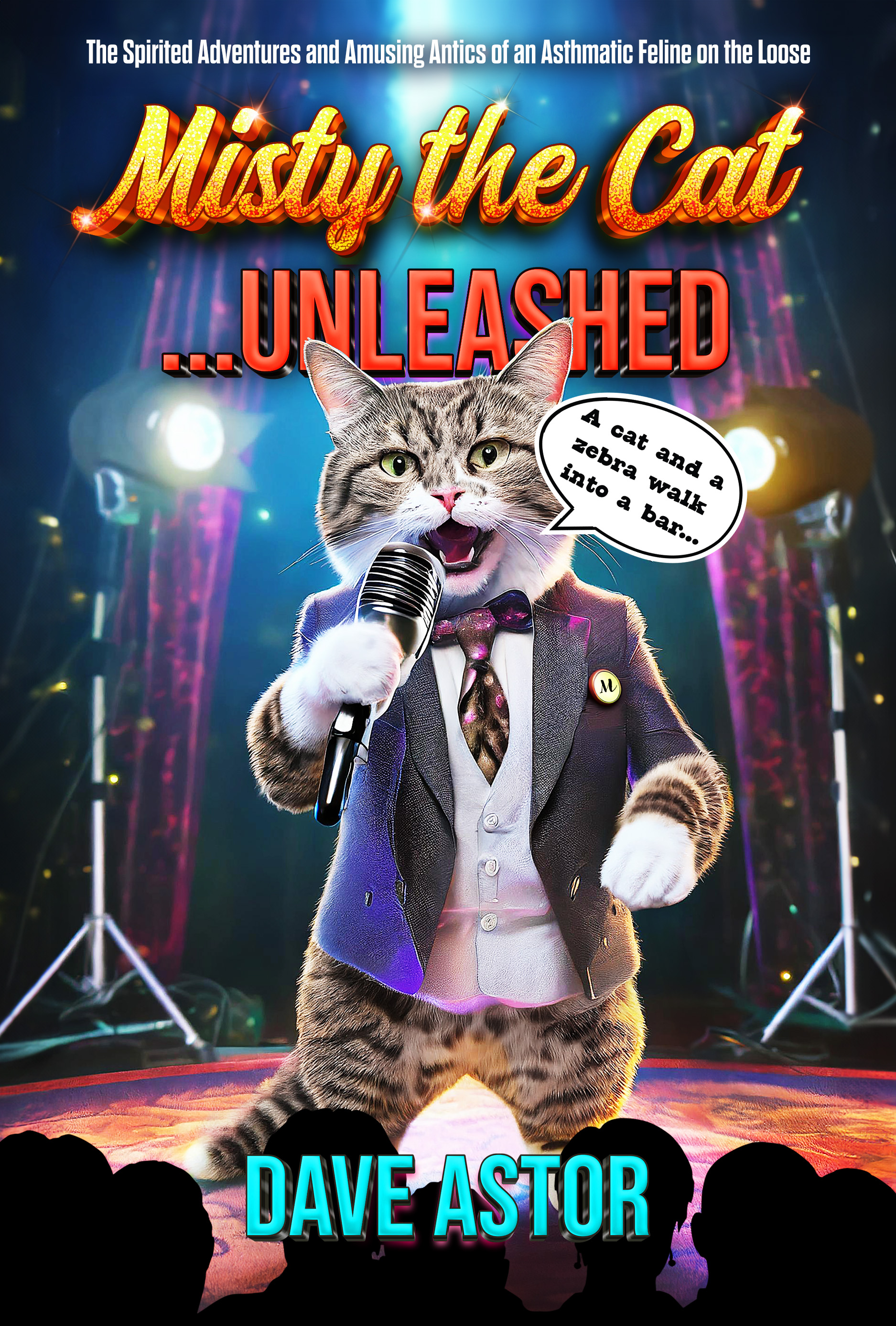
This 90-second promo video for the book features a talking cat: 🙂
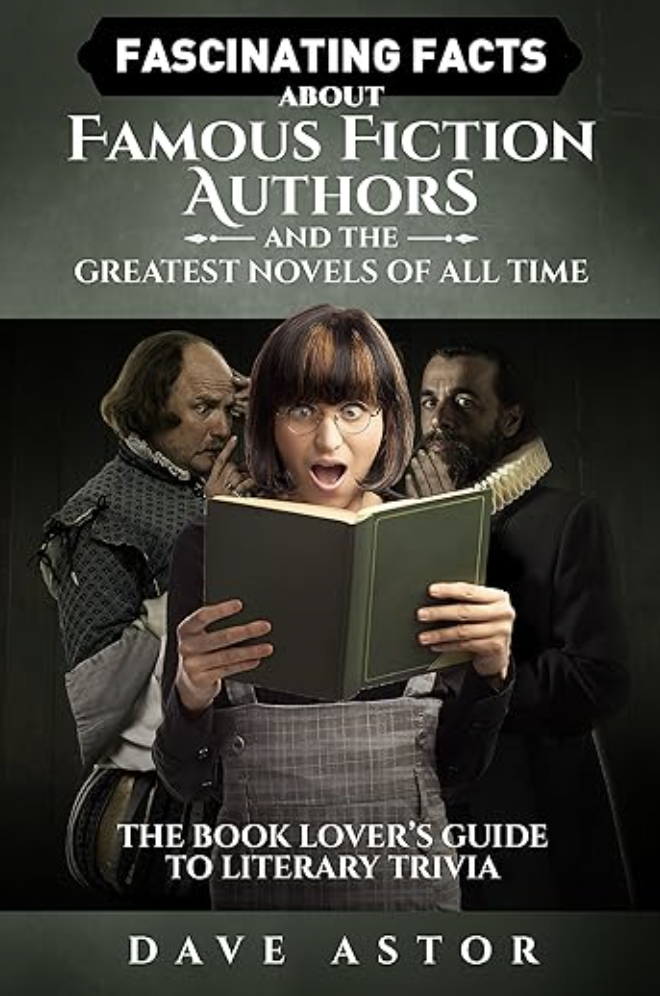
I’m also the author of a 2017 literary-trivia book…
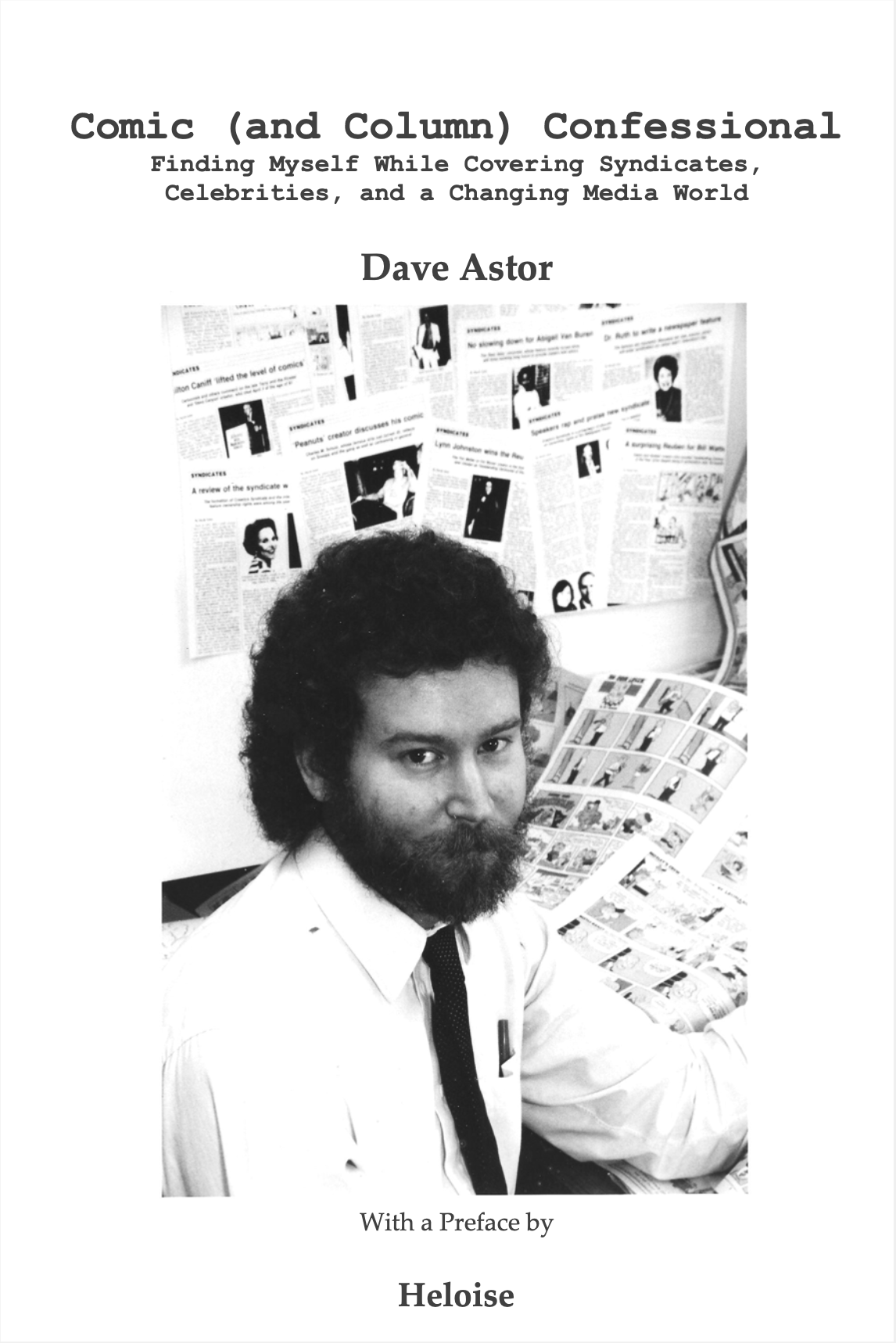
…and a 2012 memoir that focuses on cartooning and more, including many encounters with celebrities.
In addition to this weekly blog, I write the 2003-started/award-winning “Montclairvoyant” topical-humor column every Thursday for Montclair Local. The latest piece — which discusses a welcome downzoning decision in my town — is here.


Hi Dave, I will add The Coral Island by RM Ballentyne, Mutiny on the Bounty, and some with partial remote settings: The Thorn Birds, Jane Eyre, The Day of the Triffids and The Swiss Familt Robinson 💛
LikeLiked by 2 people
Thank you, Robbie, for the great mentions! Of those you named, I’ve read “Jane Eyre” (my favorite novel) and “The Thorn Birds” (which is excellent). Another part-remote Colleen McCullough novel, which I read after you recommended it, is the very compelling “Morgan’s Run.”
LikeLike
Me too! 😂😂😂
LikeLiked by 2 people
🙂 🙂 🙂
LikeLiked by 1 person
Another thoughts, Dave, a book which I meant to mention in my first comment, but forgot; senile decay is setting in, unfortunately. ‘The Old Man and the Sea’, where Hemingway’s Santiago spends 84 days out at sea trying for a catch, then losing the marlin he fights so hard for to sharks. Isolated doesn’t cover it … 😦
LikeLiked by 1 person
Thank you, Laura! “The Old Man and the Sea” (which I finally read a few years ago) is indeed a study in isolation, among other things. I was rooting for the fish, but… 🙂
LikeLiked by 1 person
A great mention, Laura. My favourite Hemingway 💙
LikeLiked by 2 people
Mine too, Robbie! 🙂
LikeLiked by 1 person
Anne of Green Gables (L.L.Montgomery) takes place in a rural farming community in Avonlea. Is this remote enough? The era makes it remote, as well.
How about Heart of Darkness? (Joseph Conrad) It feels remote, and is dangerous.
It’s a bit late, and I can’t come up with anything clever? .
Have fun reading, Dave!
LikeLiked by 3 people
Thank you, Resa, for those two great mentions! A rural farming community sounds isolated to me! As for “Heart of Darkness,” it of course inspired “Apocalypse Now” — which was successful enough at the box office for film-goers not to feel lonely in movie theaters. 🙂
LikeLike
My first thought on a comparative book was Gretel Ehrlich’s “The Solace of Open Spaces,” but (buzzer sound) it’s not fiction. It’s set in the American West. My next thought was “Eye of the Wolf,” which is fiction and is set on the remote Isle Royale National Park in Lake Superior. I happen to know the author of that one. 🙂
LikeLiked by 1 person
Thank you, Marie! Definitely a lot of nonfiction out there with remote settings! (I enjoyed your parenthetical “buzzer sound.” 😂 ) And nice that you know the author of “Eye of the Wolf”!
LikeLiked by 1 person
Hi Dave, a couple of thoughts about remoteness. First off, that rather irritating book called The Lord of the Flies by William Golding – I was also at high school when I had to read it, but why I wonder? But never mind.
I quite liked The Beach by Alex Garland, and I read it before I watch the movie. I liked a lot the one called The Shipping News by Annie Proulx, and she got her Pulitzer prize too. A particularly long book, The Stand by Stephen King (the complete and uncut version), was pretty good, there were not many people left since this was a post-apocalyptic dark fantasy novel.
Finally, this is a rather good novel: Easter Island by Jennifer Vanderbes. I had been reading this as one of my good friends went there for a holiday… wish I’ve been there as well.
LikeLiked by 1 person
Thank you, Chris! I agree that while “Lord of the Flies” is a classic and says a lot about humankind, it IS irritating. Not a novel I ever had the desire to reread.
I appreciate your various other mentions: two of which (“The Shipping News” and “The Stand”) I’ve read. Yes, when the apocalypse happens, things get lonely for the survivors. Also the case in Mary Shelley’s “The Last Man,” Cormac McCarthy’s “The Road,” etc.
LikeLiked by 1 person
Great post and comments, Dave. My favorite of all the mentions is The Time Machine.
LikeLiked by 1 person
Thank you, Dan! “The Time Machine” IS a novel that really stays in the brain long after it’s read.
LikeLiked by 1 person
Hi Dave!
Another interesting angle when thinking about location/settings in literature. Remote locations?!! I haven’t thought of it like that before now!
A remote location for me, immediately evokes a sense of atmosphere and possibly suspense!
‘The Call of the Wild’ has been on my TBR list for some time.
Thanks Dave for the fascinating post!
Sharon 🙂
LikeLiked by 1 person
Thank you, Sharon! I agree that a remote location in literature often means atmosphere and suspense! As for “The Call of the Wild,” a very memorable novel about a domesticated dog that ends up in the wild. Followed by Jack London reversing that plot in “White Fang,” about a wolf/dog going from the wild to civilization.
LikeLiked by 1 person
I’m glad you agree Dave!
Yes, ‘The Call of the Wild’ sounds good. It sounds like it would have a lot of atmosphere!
Thanks once again Dave, for your helpful book tips!
Kindest regards,
Sharon ☺️
Ps: ‘White Fang’. Plot reversal interesting!
LikeLiked by 1 person
“The Call of the Wild” is definitely engrossing, Sharon; Jack London gives the dog a lot of personality, but doesn’t make that canine seem part-human. And flipping the plot for “White Fang” was a brilliant idea!
LikeLiked by 1 person
Thanks for that Dave! A dog with a lot of personality but not seeming part-human is clever! It’s certainly worth a read.
Have a great week!
Thanking you! 😊
LikeLiked by 1 person
Yes! Jack London pulled off that tightrope act. 🙂
Have a great week, too, Sharon!
LikeLiked by 1 person
Thank you, Dave!
😊😀
LikeLiked by 1 person
You’re very welcome, Sharon! 🙂
LikeLiked by 1 person
🙂😊
LikeLiked by 1 person
🙂
LikeLiked by 1 person
I’ve never been to the Isle of Lewis, Dave, although have been to Islay, where my husband’s family lived. Isolation is an intriguing theme in books, especially when it affects the characters on a psychological level. I guess The Shining springs to mind. Pirate ships are an interesting setting, too! 🌸
LikeLiked by 1 person
Thank you, Ada! Exciting that you’ve visited Islay, and have a family connection there! Yes, isolation can affect characters psychologically, which has major plot potential. And “The Shining” is a great example of a novel with a remote setting!
LikeLiked by 1 person
First of all I would like to say that I love your little village here with thatched roofs along the sea, where people may have different problems from those in big cities. I would like to reread George Orwell’s “1984” and “Lord of the Flies” is one of the books which I still remember quite well for its tragedy! Many thanks, Dave.
LikeLiked by 1 person
Thank you, Martina! That IS quite an Isle of Lewis photo I randomly found in Google Images. 🙂
Dystopian novels such as “1984” have a lot of psychic loneliness, even if the locations are not remote per se. And glad you mentioned “Lord of the Flies”!
LikeLiked by 1 person
Thank you Dave, for having made me travel to the Isle of Lewis, which I hadn’t known at all and which made me think about the various different points worthwhile to visit that place, such as writing a book!
LikeLiked by 1 person
Martina, I also wasn’t familiar at all with the Isle of Lewis until I read “The Blackhouse.” I think the author, Peter May, spent a lot of time there — which showed in his writing.
LikeLike
Dave, thanks to you, I have also found some Information about Peter May, who was also unknown to me!
LikeLiked by 1 person
You’re welcome, Martina! I’ll definitely be reading more of Peter May’s work.
LikeLiked by 1 person
:):)
LikeLiked by 1 person
🙂
LikeLike
Hi Martina, it’s nice to see you here. 1984 is an incredible read but I don’t think I could reread ‘the rat’ scene. It was hard enough the first time. I’ve read Lord of the Flies twice. The second time I compared it to Ballentyne’s The Coral Island where three English youngsters make a big success of their marooned on a remote island.
LikeLiked by 2 people
Dear Roberta it is so nice to hear from you! Unfortunately I can’t be on the computer often anymore, because of my eyes. I agree with you that the rat scene and what rats could do with a baby, is horrible in 1984! I really appreciate your proposal to read something positive concerning youngsters in a similar situation as in Lord of the Flies:) All the best in the meantime.
LikeLiked by 1 person
Tove Jansson’s “The Summer Book” is set on an island. Other than that and books that have been already mentioned, I’m drawing a blank. But as always, so many good titles to add to the “to read” list in your post and in the comments.(K)
LikeLiked by 3 people
Thank you, Kerfe! I appreciate the mention of “The Summer Book.” One day I need to read Tove Jansson! And, like you, I’m enjoying seeing the comments containing some of people’s novel favorites. 🙂
LikeLiked by 2 people
I thought of The Swiss Family Robinson and a more recent book, The Weight of Water by Anita Shreve, which is set on Smutty Nose Island off the coast of Portsmouth, New Hampshire. I thought the novel was flawed, but it fits your theme!
LikeLiked by 3 people
Thank you, Liz, for those two excellent examples! I read “The Weight of Water” a few years ago, and thought it was good not great.
LikeLiked by 1 person
Dark Matter: A Ghost Story by Michelle Paver fits the “remote” category here. I just looked at my review of it on Goodreads and found this: “What makes it [the book] work are the utter darkness of the Arctic night in a remote place, the main character’s solitude, and wondering what terrible event brought about the haunting.”
It’s a nice shivery read!
LikeLiked by 1 person
Thank you, Audrey! “Dark Matter” sounds very compelling — and I love your description of it as “a nice shivery read.” 🙂
LikeLiked by 1 person
Novels set in remote settings can be quite haunting. The first one that came to mind, that you’ve mentioned, is Kristin Hannah’s The Great Alone. Other stories that have stayed with me is Lord of the Flies by William Golding (we had to study it in high school), and The Lamplighters by Emma Stonex. Stonex’s novel is inspired by the real-life 1900 mysterious disappearance of three lighthouse keepers from a remote tower on Flannan Isle in Scotland.
LikeLiked by 3 people
Thank you, Rosaliene! “The Great Alone” is a very intense and compelling novel. And “The Lamplighters” sounds really intriguing!
“Lord of the Flies” is on a LOT of high school reading lists. That’s when I read it, too.
LikeLiked by 1 person
Dave, how interesting that the work of a British novelist was also added to America’s high school reading list. I suppose his audacious plot could not be ignored.
LikeLiked by 1 person
Seems that way, Rosaliene!
LikeLiked by 1 person
“Lord of the Flies” came to my mind as well!
LikeLiked by 2 people
Liz, I’m glad that novel has been mentioned in the comments more than once. 🙂
LikeLiked by 1 person
That’s a novel that stays with you for a lifetime.
LikeLiked by 1 person
True, Liz! Partly because of the light it shines on how badly humankind too often acts.
LikeLiked by 1 person
Exactly it.
LikeLiked by 1 person
Another serendipitous moment, Dave!!! These past few weeks on my blog break, I read The Blackhouse and The Lewis Man, and I became completely immersed in the atmosphere of the Outer Hebrides. Peter May captures that feeling of remoteness so vividly that the landscape almost becomes another character in the story. The isolation intensifies everything. Memory, conflict, weather, grief, and human relationships.
And I absolutely agree with you about Frenchman’s Creek. It remains one of my favourite novels, particularly because of the emotional complexity of the ending. The final decision feels deeply human precisely because it is not simple or romanticized. Du Maurier understood longing, freedom, responsibility, and the pull between different lives extraordinarily well.
What strikes me reading your post is how remote settings often strip life down to essentials. Characters can no longer hide behind society, routine, or distraction. Nature, weather, silence, and isolation force confrontation, sometimes with danger, but often with themselves.
I had to leave a quote: “The trouble with jealous revenge is that while you might inflict hurt on the other party, it does nothing to lessen the effect of the hurt you are feeling yourself. So everyone ends up unhappy.” Peter May, The Blackhouse
P.S. I read that Peter May has written a fourth Fin Macleod novel set in the Outer Hebrides called The Black Loch. I understand it is a return to the world of the original Lewis Trilogy, set about ten years after The Chessmen. I have yet to read The Chessmen.
LikeLiked by 5 people
Thank you, Rebecca! Wow — that IS serendipitous! And I totally agree that “The Blackhouse” and “The Lewis Man” completely immerse a reader for all kinds of reasons, including the Isle of Lewis setting. I greatly look forward to reading “The Chessmen” and “The Black Loch.”
I also agree that “Frenchman’s Creek” is a terrific novel, and that its excellent ending is very mature and realistic.
All very well said by you! And by Peter May in the astute quote of his you cited.
LikeLiked by 1 person
There I was thinking Robinson Crusoe when you beat me to it… Obviously! It is prob one of the first books that springs to mind. I’ll add Lord of he Flies and Storm Island.
LikeLiked by 5 people
Thank you, Shehanne! I wonder if “Robinson Crusoe” was the first stranded-on-an-island novel.
“Lord of the Flies”! Of course! I should have thought of that, too. 🙂
LikeLiked by 4 people
it prob was. it was written at the back of the Alexander Selkirk story, which was very much in the public’s consciousness. but there, if you go further back, Shakespeare did bring ships wrecks and islands into his plays so. …
When you are raking your brains for books to include it is really easy to overlook one.
LikeLiked by 1 person
True, Shehanne! And I imagine ancient epic poems (I’ve read very little of them) must have had some shipwrecks.
LikeLike
.Oh aye. The Odyssey prob ‘cashed in’ early on this theme.
LikeLiked by 1 person
Yes! 🙂
LikeLiked by 1 person
Robinson Crusoe came to mind as well!
LikeLiked by 2 people
A classic novel of isolation!
LikeLiked by 1 person
Well, now! What a title for this post – love it! And you started off with a captivating offer…two books from Peter May set on the Isle of Lewis? I’m in! Discovering some of my mom’s forgotten Scottish roots has completely renewed my fascination with all things Scotland…especially remote and rugged landscapes!
Truthfully, though, I love many of your suggestions. There’s something about a solitary setting…it becomes a character and a story driver in so many ways. Good stuff for me to remember! Thank you, Dave! 💝😊💝
LikeLiked by 2 people
Thank you, Vicki! “…a solitary setting…becomes a character and a story driver in so many ways” — great, astute line!
I can understand your fascination with a country where you have some ancestral roots. I’ve never been to Scotland myself, but it seems like a place that would be very worth visiting. Plus the various great Scottish authors, as well authors who have used that country as a setting — including Diana Gabaldon in the “Outlander” novels. I love her books.
Peter May was an author unknown to me until blogger/author Laura Lyndhurst (a regular commenter here) reviewed “The Blackhouse” a few months ago.
LikeLiked by 2 people
Oh, Dave! I love the feedback about my comment! Thank you —and same! Never been to Scotland but it’s calling me and I appreciate the book suggestions – always! ❤️😉❤️
LikeLiked by 2 people
You’re very welcome, Vicki, and thanks again! 🙂
I’ve made it to England and to (just an airport stop in) Ireland; that’s as close as I’ve gotten to Scotland. 🙂
LikeLiked by 2 people
Well, now. We both have Scotland travel aspirations then! Same for me…a quick hop to London (far too short) and nothing more than an unintended layover in Ireland.
😜❤️😜
LikeLiked by 2 people
Sounds like we had very similar UK experiences, Vicki! I was in London for only three days as I hopped from one place to another during my first European trip.
LikeLiked by 2 people
Ahhh! Similar! I was there for a literal blink – 1/2 day – and haven’t been back in 30 years! Where DOES the time go????😉❤️😉
LikeLiked by 2 people
Sorry you only had a half day in London, Vicki. And, yes, the decades do go by too quickly. 🙂 😦
LikeLiked by 1 person
!!!😉😉😉!!!
LikeLiked by 1 person
🙂
LikeLike
I read the Peter May trilogy in preparation for a trip to Scotland and, especially, the Orkney Islands. I found his descriptions to be spot on.
Some remote setting books–The Light Between Oceans by M. L. Stedman and the The Lightkeeper’s Daughter by Jean Pendziwol are both set in remote locations. I found the remote setting of Shutter Island by Dennis Lehane added to the suspense. I also think the setting for Delia Owens Where the Crawdads Sing was its own character in the book.
LikeLiked by 1 person
Thank you, Madeline! Great that you read Peter May’s trilogy before a trip to Scotland! That’s excellent preparation. 🙂 And nice to hear that May captured the place accurately. I appreciate the other book mentions, too!
LikeLike
What a fascinating post!
I really like how you categorized these different types of isolation.
In Italian literature, I immediately thought of Dino Buzzati’s “The Tartar Steppe” (Il deserto dei Tartari). It fits your description perfectly: Fort Bastiani, perched on a solitary cliff overlooking a vast, desolate desert, creates an incredibly intense atmosphere and perfectly captures the psychological burden of isolation, and endless waiting,
LikeLiked by 3 people
Thank you, Luisa! I appreciate the great example, and your evocative description of that Dino Buzzati work! A fort on a cliff overlooking a desert certainly sounds VERY isolated.
LikeLiked by 3 people
You are so very welcome my dear Dave!
LikeLiked by 2 people
🙂
LikeLiked by 2 people
Thank you to Laura Lyndhurst for her blog review of “The Blackhouse” that inspired me to read that novel!
LikeLiked by 2 people
You’re most welcome, Dave; I had to go and check that I’d written a review, when I read the mention of the books, and I’m glad you liked the book enough to include it in a post. To business, though. You’ve got some of the best examples up there, so may I add ‘Mexican Gothic’, by Silvia Moreno-Garcia? I haven’t read the book yet, having only discovered the author recently, but it’s on my TBR pile and I gather takes place in a remote Mexican location. There’s also ‘The Last Man’ by Mary Shelley, in which the globe becomes a place of isolation for Lionel, the last survivor of a global pandemic. Angela Carter’s ‘The Bloody Chamber’ finds a bride transported to a castle in a remote area of Normandy, in a ‘Bluebeard’ retelling which I love. And may I add my own ‘Degenerate, Regenerate’, set on a far-flung Greek island where the young have departed to find work elsewhere and the island is dying, along with its ageing population. Thanks for a good post on which to exercise my little grey cells, and have a good week. 🙂
LikeLiked by 2 people
Thank you, Laura, for all those interesting and well-described mentions! The only one I’ve read is Mary Shelley’s “The Last Man” (published exactly 200 years ago in 1826), which I thought was excellent. Set so far in the future that we haven’t yet reached, in 2026, the time period in Shelley’s novel.
I’m looking forward to reading the third book (“The Chessmen”) in Peter May’s Lewis-set trilogy.
Have a good week, too!
LikeLiked by 2 people