In 2017, I wrote a post about novels with unlikable characters and how we might still like those novels – or maybe not.
I noted nine years ago that “we hope the story line is compelling enough and the writing impressive enough to make up for the absence of congenial characters.” Humor can help, too.
The five books I cited in that post were mostly readable despite the downer characters – and perhaps partly because of them. Donna Tartt’s The Secret History, Cormac McCarthy’s Blood Meridian, Andre Dubus III’s House of Sand and Fog, Emile Zola’s Therese Raquin, and John Kennedy Toole’s A Confederacy of Dunces.
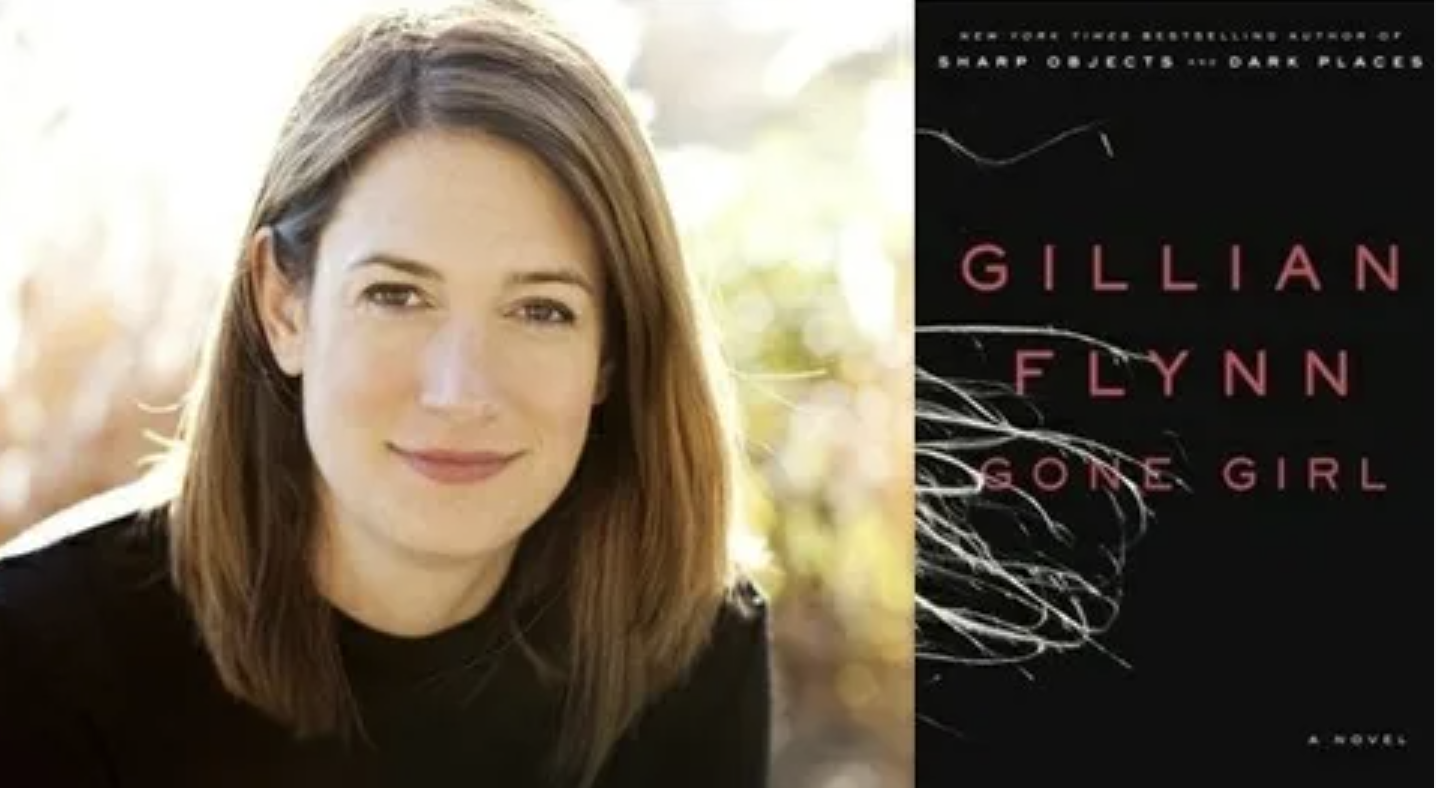
Today, I’m going to use this same theme to discuss five more novels – all of which I’ve read or reread since 2017 — starting with the 2012 bestseller Gone Girl that I finally got to last week.
Gillian Flynn’s two protagonists – Amy and Nick – were so off-putting that I almost stopped reading after a few dozen pages. Both were what we would’ve called “yuppies” back in the day: young urban professionals a little too spoiled and a little too full of themselves.
But I soldiered on, and Gone Girl became quite original and riveting in a very twisted way before going off the rails (in my opinion) toward the end.
As with many other books featuring unlikable protagonists, it helps when you have supporting characters who are at least somewhat appealing. Gives a reader a person or two to latch onto. In Gone Girl, Nick’s twin sister Margo is mostly likable — even as several other supporting characters (such as Nick’s hateful aged father and the obsessed-with-Amy/passive-aggressive Desi) are loathsome.
Fifty years earlier, we had Shirley Jackson’s 1962 novel We Have Always Lived in the Castle in which virtually every character is unpleasant or greedy or weird or antisocial. That was Jackson’s intent, and she was very good at that in this and her other best-known works. But one does feel some sympathy and sorrow for certain characters, and I think that was the author’s intent, too.
Most of the major players in Hilary Mantel’s historical novel Wolf Hall (2009) are far from lovable. When there’s royalty and “court intrigue,” you’re going to get a lot calculating, ruthlessness, sucking up, etc.
Agatha Christie’s ingeniously plotted 1939 mystery And Then There Were None features a cast in which every featured character is guilty in some way. Still, we can empathize with their ordeal after they’re invited to gather together by a person with murder on the mind.
A decade later, Daphne du Maurier’s The Parasites was published. I included that 1949 novel in a post last month about entertainers in fiction, and the pampered/irresponsible show-biz family (father, mother, daughter, son) in du Maurier’s book is certainly not one you’d want on your holiday card list. The non-show-biz other daughter is a little more sympathetic in a self-sacrificing way, but does not elicit much respect.
Comments about, and examples of, this theme?
Misty the cat says: “One more space to add to my classic car collection!”
My comedic 2024 book — the part-factual/part-fictional/not-a-children’s-work Misty the Cat…Unleashed — is described and can be purchased on Amazon in paperback or on Kindle. It’s feline-narrated! (And Amazon reviews are welcome. 🙂 )
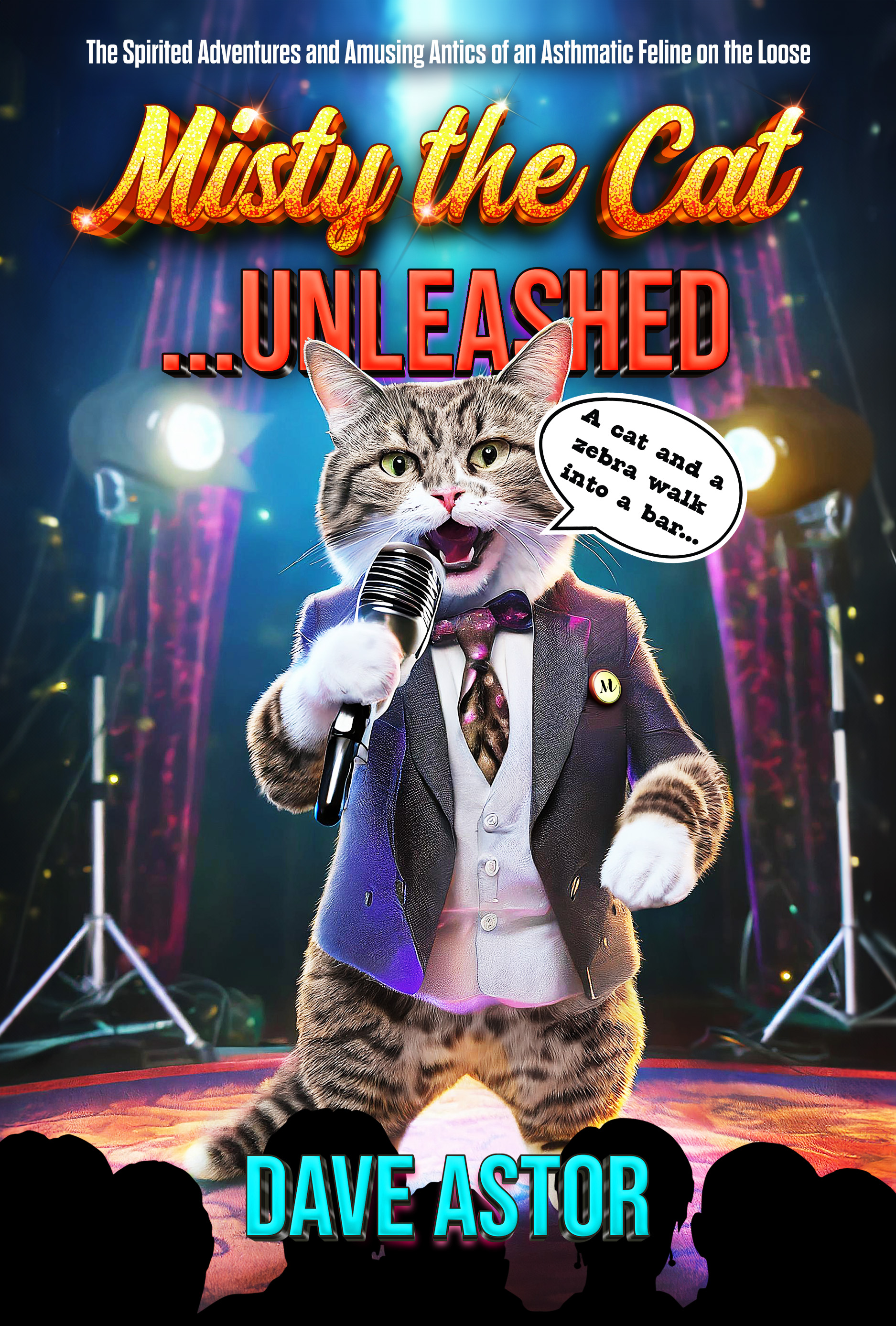
This 90-second promo video for the book features a talking cat: 🙂
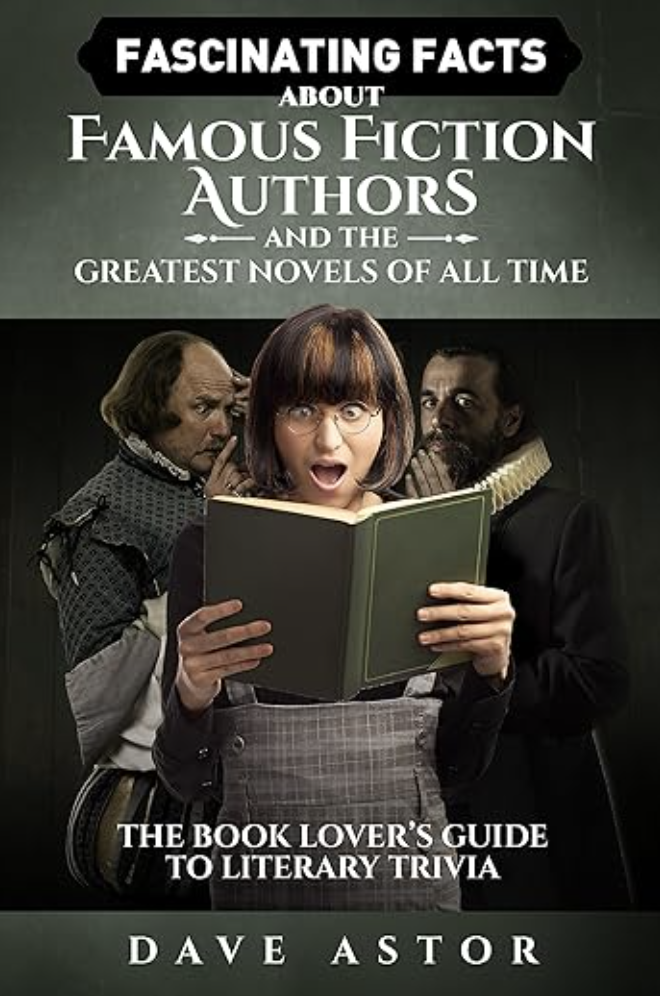
I’m also the author of a 2017 literary-trivia book…
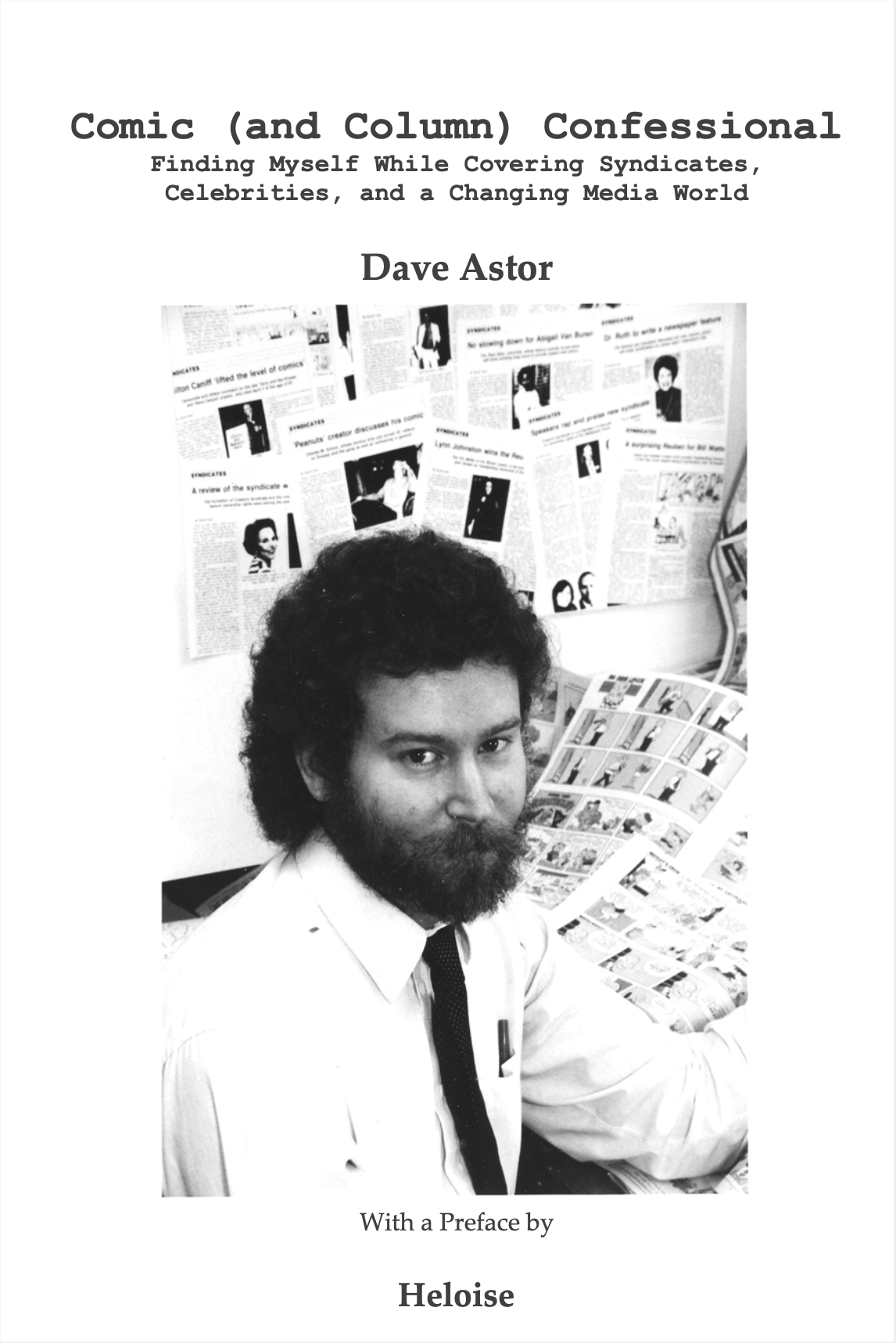
…and a 2012 memoir that focuses on cartooning and more, including many encounters with celebrities.
In addition to this weekly blog, I write the 2003-started/award-winning “Montclairvoyant” topical-humor column every Thursday for Montclair Local. The latest piece – which includes topics such as Spain’s World Cup-winning team staying at a hotel in my town — is here.


The problem started Dave when we left the European Market in 2020. You may have heard. Huge mistake. We are out of Europe so the movement of goods and trade now costs a packet. Terrible. I’m aware though that this is indeed a problem that’s affecting most major big cities. It’s become a worldwide issue!!
Oh, I’m so pleased you enjoyed your visit to London and saw all major attractions. I haven’t been to the British Museum in years! I bet France and Italy were nice. I like Paris! I did visit Washington DC and New York when I was in my late twenties for Christmas to see family. It was quite nice. 😊
LikeLiked by 2 people
I agree, Sharon, from a distance that England “going it alone” was not a good idea. 😦 Yes, also seeing France and Italy for the first time was wonderful, and then a train ride through Switzerland to Luxembourg’s airport — with a stopover in Iceland on the flight home. 🙂 Great that you spent some time in NYC and DC!
LikeLiked by 1 person
Yes Dave! Huge mistake! And we the nationals are paying for it. The UK is too small a country to go it alone! Bad news! 😐
Now you’re talking Dave! Switzerland has been a dream location for me for years!! What was that like? I heard it has some lovely mountains etc. I’m so glad you caught some it, even if you were just passing through to Luxembourg! Wow!
I remember doing lots of walking in New York especially. I recall going to Macy’s – huge! 😃
LikeLiked by 1 person
Excellent point, Sharon, about the UK not being big enough to go it alone! And, as is often the case, citizens suffer for the bad decisions of their leaders.
I only saw Switzerland through the train window; didn’t set foot in it. I regret that, but didn’t have time to visit. Beautiful through the window. 🙂
NYC is a great place to walk! And the flagship Macy’s on 34th Street is indeed enormous. I pass it all the time when I’m in Manhattan. Glad you saw it — with its vintage wood in-store escalators. 🙂
LikeLiked by 1 person
Thanks Dave on all points! I appreciate our discussions!
Well, you still got closer to visiting Switzerland than I have! 😀 Seeing a country through a train window still sounds nice!
🤗
LikeLiked by 1 person
Yes, Sharon! Not a bad way to head to an airport. 🙂
I appreciate our discussions, too!
LikeLiked by 1 person
Thank you Dave! I hope you enjoyed your stopover in Iceland!!! I missed that point!! Sounds chilly! 😬😄
LikeLiked by 1 person
Just the airport in/near Reykjavík, Sharon, but it was exciting to look out the windows there. 🙂
LikeLiked by 1 person
Hi Dave! Looking out of the window still sounds nice! 😊
LikeLiked by 1 person
It was, Sharon! 🙂
I have a couple of photos somewhere…
LikeLiked by 1 person
😊
LikeLiked by 1 person
🙂
LikeLiked by 1 person
Some would say Scarlet O’Hara was an unlikeable character. She did steal her sister’s fiance after all, and coveted her friend’s husband. I guess you need to be a bad ass to get what you want and to survive sometimes!
LikeLiked by 1 person
Thank you, Darlene! Totally agree about Scarlett O’Hara! Partly unlikable, yet partly admirable for her strength. Many white people in America’s slave-holding/pre-Civil War South were not exactly the best humans…
LikeLiked by 1 person
Not only am I late to the party, Dave, I’ve arrived empty handed. Still, I enjoyed the post and the comments. I hope you’re having a good week.
LikeLiked by 1 person
Thank you, Dan! Not a problem. 🙂 As always, I enjoyed the comments, too. 🙂 Hope you’re having a good week as well! Lots of rain coming…
LikeLike
Hi Dave!
I really enjoyed this week’s post! Horrible or unlikeable characters interestingly, makes for compelling reading if only to discover if they get their just deserts in the end! It can be a bit of a gamble for the author though, as readers might be so put off and discontinue reading! As you experienced! 😊
You have mentioned some lovely books. I’m currently reading ‘The Secret History’, so will let you know my thoughts later on.
‘Gone Girl’, sounds intriguing, So does ‘Wolf Hall’. Both books have been in my periphery for a long while!!
‘And Then There Were None’, sounds like my kind of mystery. Very keen to read it in the near future.
Thanks as always for the books Dave! I’m always on the lookout for the next great read.
With best wishes,
🙂
LikeLiked by 1 person
Thank you, Sharon! You’re right — unlikable characters can make for very compelling reading, and it’s quite satisfying when they get their comeuppance (if a reader makes it to the end). Of course, sometimes those characters don’t get their comeuppance. 😦
Ah, “The Secret History.” I have mixed feelings about that novel, but it’s worth reading. I also had mixed feelings about “Gone Girl” and “Wolf Hall”; I read them both at least partly because I wanted to see what all the hype was about. 🙂
“And Then There Were None” is a total mystery classic! I didn’t see the shocking conclusion coming.
LikeLiked by 1 person
Hi Dave!
I very much appreciate your honest feedback. I also have mixed feelings about ‘The Secret History’. Hmm!
Like you were, I’m curious to read ‘Wolf Hall’ and ‘Gone Girl’ if only to see what all the hype is about!! I will let you know my thoughts if I get around to reading them.
‘And Then There Were None’, twist ending?! I’m excited to read it!
Thank you Dave for your wonderful feedback. And the books!
With best wishes for a great week!
😊
LikeLiked by 1 person
You’re very welcome, Sharon! I’ve read that “And Then There Were None” is the best-selling mystery of all time, and I can see why. 🙂
“The Secret History” is a debut novel, and I guess that showed to an extent. I’m much more a fan of Donna Tartt’s later “The Goldfinch,” which is long (about 800 pages) but pretty gripping.
Wishing you a great week, too!
LikeLiked by 1 person
Oh Dave! Don’t take this the wrong way but I don’t know if I have the stamina to read another lengthy novel! ‘The Goldfinch’, 800 pages long?!! 😳 At the same time I’m curious now you have said it’s the better novel!!
The Agatha Christie sounds fantastic! It is now a ‘must read’ on my part.
Thanks for your best wishes for the week. London is fairly quiet now the schools are out until September!
😊🤗
LikeLiked by 1 person
I totally hear you, Sharon! I mostly avoid very long novels these days, but sometimes… 🙂 “And Then There Were None” is not super long — under 300 pages, I think. It’s nice when big cities, such as London, temporarily get a bit quieter. 🙂
LikeLiked by 1 person
Thank you Dave for your thoughts on very long novels. But of course there are exceptions! 😀
I’m thankful ‘And Then There Were None’ is not over long which is in my view a testament to the great writer Agatha Christie was. Or maybe books were shorter then.
Yes Dave, London is hectic normally, traffic busy in every direction!! I’m enjoying the quiet of the summer!
😊
LikeLiked by 1 person
Agatha Christie definitely got things done without entering tome territory, Sharon. 🙂
It’s been a long time since I’ve visited London (it was in a September), but I remember the traffic. 🙂 Given that I used to live in New York City and still go there at least once a month, at least I was prepared. 🙂
LikeLiked by 1 person
That’s true Dave! Agatha Christie didn’t venture into tome territory (I like that). 😊
September or October is the best time to visit London. I hope you had a great time. However, costs have gone up so much now, another visit would wear a hole in your pocket!!! 🤨
LikeLiked by 1 person
Sorry to hear about the higher costs in London, Sharon. Not surprised. Almost everywhere is getting much more expensive; big cities especially. 😦
I did have a great time in London. It was my first trip to Europe (I was in my 20s), and I did the very touristy things: Westminster Abbey, British Museum, Tower of London, Buckingham Palace, Hyde Park, Dickens’ house, etc. — all in four days before moving on to France and Italy. 🙂
LikeLiked by 1 person
Hello Dave,
Joy Fielding is great at writing unlikeable characters.
In Grand Avenue Chris’s husband, Warren, is abusive. If I remember correctly at the peak of disgustingness, he throws her out, naked (or just about), in the middle of winter. He does not let her back in. All the while the daughter is watching.
Jane’s husband, Michael in See Jane Run is a successful surgeon, but he is sinister and manipulates his amnesiac wife, Jane, via drugs.
In Still Life the husband is a real creep, while his wife is a coma.
There are more in her novels.
I get what you mean about Gone Girl taking one twist too, many… then off the rails.
Yes, nasty characters in Wolf Hall, but I find history can be addictive. We can learn a lot.
I like this topic. Thanks Dave!
LikeLiked by 1 person
Thank you, Resa! True about Joy Fielding — some VERY sinister characters, including ones that at least partly hide their sinister nature for a while. Fortunately, that author usually offers some sympathetic/admirable characters to balance things out. 🙂 “Cul de Sac” is another of Fielding’s excellent novels with that duality.
Totally agree about historical fiction — a reader can learn a LOT in a way that’s often more compelling than historical nonfiction.
LikeLiked by 1 person
Some books mentioned here that I’d like to add to my list! I’m currently reading Yesteryear, and I’m not a huge fan of the main character! She’s definitely a bit on the unlikeable side!
LikeLiked by 1 person
Thank you, M.B.! I hadn’t heard of “Yesteryear” until seeing your comment, so I read a Wikipedia summary of the book. I can see why the main character might not be that likable; the “tradwife” trend is reactionary and depressing. 😦
LikeLiked by 1 person
That was an interesting post, Dave. I have tried to think of another different novel about unlikable characters, but none came into my mind apart from all those which had been already mentioned. I’m stumped with this one!
LikeLiked by 1 person
Thank you, Chris! Okay to be stumped. 🙂 There doesn’t seem to be a huge number of novels with all the major characters being unlikable. I had a hard time coming up with five in 2017 and five this week. 🙂
LikeLiked by 1 person
Very interesting post Dave. I will have to go away and think of some I really found unlikable. I didn’t tale to Gone Girl either. actually. I don’t think I finished it.
LikeLiked by 1 person
Thank you, Shehanne! “Gone Girl” definitely evokes mixed feelings. I think there were two or three points while reading that novel that I wanted it…gone. 🙂 Will look forward to your possible follow-up comment!
LikeLiked by 1 person
I will get my brain in gear. I can think of plenty unlikeable characters but for me their unlikeability is what I like because it is also very human. But I will get my thinking cap on. Just got a lot of things doing today.
LikeLiked by 1 person
So true, Shehanne! A certain amount of unlikability is normal and (as you say) human. As long as it’s not too much unlikability. 🙂
LikeLiked by 1 person
Dave, great list of poisonous protagonists. I’ll hafta check out the Jackson novel. One character I love to hate is Saruman from JRR Tolkien’s sprawling LOTR trilogy. Tearing up the forest and the Ents, creating a new breed of orc, hogging all the best ale and pipeweed in middle earth, and ready to throw Gandalf under the bus for a little piece of the action… ugh.
A close second is Herr Zeller from “The sound of music.” Truly a despicable character! 😝
LikeLiked by 1 person
Thank you, Darryl! “Poisonous protagonists” — that’s a great phrase! And the villains in “The Lord of the Rings” are indeed deliciously villainous. Excellent/partly wry description of Saruman and his deeds!
LikeLiked by 1 person
Fascinating theme, Dave. It takes a masterful writer to keep us reading stories with unlikable protagonists.
LikeLiked by 1 person
Thank you, Rosaliene! That’s a great point! Definitely some talent needed to pull that off.
LikeLiked by 1 person
🙂 ❤
LikeLiked by 1 person
🙂
LikeLiked by 1 person
Dave, another fascinating topic and follow-up discussions. It occurs to me that it must take a very special kind of writer to spend years living with unpleasant characters through the writing, rewriting, and editing of a novel. There has to be a compelling reason for creating them.
Books allow us to encounter difficult personalities from the safety of the page. We watch how they think, how they relate to others, and the consequences of their choices. Whether it’s Heathcliff, Ebenezer Scrooge, or King Lear, we don’t necessarily admire them, but we come away understanding something deeper about revenge, redemption, pride, and the human condition. We don’t always have to like the characters, but we do hope to understand them a little better. Those insights can help us better understand some of the people we meet in our own lives.
I’ve encountered more difficult personalities in my non-fiction reading than in fiction. Real life often reminds us that human nature is complex and sometimes there is no happy ending, no redemption. Do you remember this quote from To Kill a Mockingbird: “You never really understand a person until you consider things from his point of view… until you climb into his skin and walk around in it.”
LikeLiked by 3 people
Thank you, Rebecca! Very interesting observation; it must indeed be unpleasant for authors to “live with” unpleasant characters while writing the novels in which they reside. And a great point about trying to understand characters we don’t like, including understanding why they might be unlikable. All that, as you say, can help give us insight into real-life unlikable people. And I do remember that wise and iconic “To Kill a Mockingbird” quote!
LikeLiked by 1 person
I started the movie gone girl but it was too much for my fairy tale fantasy vision! You
Make
Me want to read the book though if only time wasn’t a factor, Dave! ❣️
LikeLiked by 3 people
Thank you, Cindy! I haven’t seen the movie, but the “Gone Girl” novel definitely feels anti-fairy tale. 🙂 😦 And I hear you about time; “Gone Girl” is not a short book.
LikeLike
Oh, what an interesting topic, Dave! Gone Girl sounds intriguing. I remember reading The Wasp Factory Iain Banks at school when I found it in the library. It was the first book I’d read with an unlikeable main character; I’ll admit, it scared me a bit!
LikeLiked by 3 people
Thank you, Ada! “Gone Girl” IS intriguing, but I’m not sure I’d recommend it. 🙂 Re “The Wasp Factory,” I just read about it online after seeing your comment and it does sound scary!
LikeLiked by 1 person
Hi Dave, disagreeable characters feature in many books but I can’t think of one where all the main characters were horrible. Miss Havisham from Great Expectations was definitely a horrible character, as was Heathcliff from Wuthering Heights. She from the book by Rider Haggard. Mr Plod from noddy 🤣
LikeLiked by 3 people
Thank you, Robbie, for those various great examples! “Great Expectations,” “Wuthering Heights,” and “She” had some at least semi-likable characters in their casts, but Miss Havisham, Heathcliff, and Ayesha (She) were definitely not likable at all — even if one could partly understand what made them what they were.
LikeLiked by 3 people
Yes, that was a big part of those books, the backstories of the unlikable characters. The knock on effects on other characters of their nastiness was also a theme.
LikeLiked by 1 person
Yes in both instances, Robbie! Those three characters definitely had a huge impact on other characters, and often not for the better.
LikeLike
Really unlikable characters can taint a book in memory. I remember Gone Girl with distaste. Donna Tartt’s characters are also pretty much unlikable, despite her sometimes wonderful writing. I found The Secret History intriguing, but didn’t like any of the characters.
LikeLiked by 3 people
Thank you, Audrey! Distasteful is a great way to describe “Gone Girl,” although I did find it compelling for a while before things got absolutely nuts and I felt like the characters were author constructs rather than believable people.
You’re right about Donna Tartt; even her “The Little Friend” and “The Goldfinch” (both of which I liked better than “The Secret History” and I loved “The Goldfinch”) don’t have much in the way of likable characters.
LikeLiked by 3 people
I love the way she creates atmosphere in The Goldfinch, but couldn’t relate to the Russian guy and all the drug use. In fact, the drug element in her other books damaged them for me.
LikeLiked by 1 person
Donna Tartt does seem a bit drug-fixated, Audrey. And “The Goldfinch” is indeed off-putting in certain ways but overall pretty riveting.
LikeLiked by 1 person
I confess to a childish need for someone to care about and identify with in any fiction book I read. The person can start out unpleasant, as long as their personality and character improve throughout the book, but I need that to happen. For example, I like Austen’s Emma (although not as much as Persuasion) because I think Emma is a somewhat more thoughtful, less manipulative woman by the end of the book. (Thanks to Linda Lyndhurst for bringing her up.) But I thought Gone Girl was awful–I’m not sure why I finished reading it. However, I thought Wolf Hall was a wonderful book and found Thomas Cromwell a very sympathetic character, despite his having to change masters as Wolsey falls out of favor with the king. Perhaps Cromwell’s character deteriorates in the second and third books, but I found a lot to admire in him in Wolf Hall.
Nick Hornby’s About a Boy is a novel I’m very fond of, even though one of the two main male characters, Will, starts out as a jerk. But watching him become a nicer person is one of the pleasures of the book!
LikeLiked by 3 people
Thank you, Kim! I hear you — having characters (even if “only” supporting ones) to like usually makes for a much better reading experience. Emma Woodhouse definitely became a least somewhat nicer by the end of the Austen novel (always good to see that happen with a character), even as Anne Elliot was appealing from first page to last in “Persuasion.” Thomas Cromwell was probably the most likable major character in “Wolf Hall,” though I probably had more mixed feelings about him than you did. Still, “he had to do what he had to do” to get ahead and stay ahead as a non-royal person in a fraught time and place.
“Gone Girl” is a VERY strange novel.
LikeLiked by 2 people
So interesting! I’ve never read “Gone Girl”, but I remember how I felt about the film, directed by David Fincher, I think? I wanted to like it (love Rosamund Pike), but the whole experience of watching freaked me out. I think I blocked out the “why”, LOL. But you’ve got my attention with your description of Shirley Jackson’s “We Have Always Lived in the Castle”. A boatload of nutty characters? I’m intrigued! Thanks, as always, for your fabulous Sunday posts. 😊💝😊
LikeLiked by 3 people
Thank you, Vicki! I haven’t seen the “Gone Girl” movie, but I can imagine that it must have been quite an…”experience.” The book is very disturbing.
“We Have Always Lived in the Castle” is definitely quirky and dark, like much of Shirley Jackson’s fiction. But also kind of funny in a bizarre way. I liked it! “A boatload of nutty characters” — that describes it drolly and correctly. 🙂
LikeLiked by 2 people
Ahhh! Many thanks, Dave! 🤪❤️🤪
LikeLiked by 2 people
You’re very welcome, Vicki! 🙂
LikeLiked by 2 people
Great post.
Your observation about the need for a compelling plot or an engaging secondary character to balance out unlikable protagonists is spot on.
It reminds me of Don Rodrigo, the character from Alessandro Manzoni’s 1827 masterpiece, The Betrothed, a novel I’ve often mentioned and which for generations was required reading in all Italian high schools.
Don Rodrigo is an arrogant and detestable tyrant who upends the lives of innocent peasants out of pure malice and a stupid bet.
LikeLiked by 3 people
Thank you, Luisa! Glad you mentioned “The Betrothed” again! I looked for it during my last library visit; it wasn’t there, but I hope for better luck in the future. Don Rodrigo sounds awful. 😦 (Unlike singer Olivia Rodrigo. 🙂 )
LikeLiked by 2 people
🙏🙏🙏
I love Olivia Rodrigo’s voice!!!
LikeLiked by 1 person
Me, too, Luisa! Plus she seems like a strong, tolerant person.
LikeLiked by 1 person
🙏🤗🙏
LikeLiked by 1 person
🙂
LikeLiked by 1 person
I’ve only read ‘ Therese Raquin’ of all the books you name above, Dave, and that only because I was getting a bit in-depth with Zola for an essay I was writing on him; otherwise I’d probably never have read it, as the synopsis of it and the others put me off before I’d even opened the cover. I suppose a good example is Jane Austen’s ‘Emma’, of whom the author stated ‘I am going to take a heroine whom no one but myself will much like.’ I came around to her when she learned what a pain she was, and as Mr Knightley was okay with her that was good enough for me – plus Mrs Elton outdoes Emma in every dislikeable way, along with her smug husband, and neither of them redeems themselves. I remember reading ‘Madame Bovary’ in the summer before I was to study it, and was confused because I didn’t like Emma Bovary (is it me and characters called Emma?) at all. She was the eponymous protagonist; surely I was supposed to like her? When I got onto the course – on Literary Realism – I realised that it was all about the absence of the author, who usually subtly manipulates readers to like or dislike as he/she wishes; hence it was up to readers to make up their own minds, and in my case it was a thumbs-down for Mme B. Elsewhere there’s Mrs Bennett, and Mr Collins, and Mr Dashwood’s family of his first marriage, not to mention Heathcliffe, and Jane Eyre’s a bit of a prig … there are just too many to go into here! For myself I recently created a highly-unlikeable character in ‘Fatal’ – but that’s enough about that. Many thanks for your weekly brain-teaser, Dave; have a good week. 🙂
LikeLiked by 3 people
Thank you, Laura! The “Therese Raquin” potboiler is definitely a lesser, early Zola novel, but it has the distinction of being his first success.
Yes, the title characters in “Emma” and “Madame Bovary” are not particularly likable, and that can be a surprise in a way until literature lovers think that through a bit. I found Emma Woodhouse very annoying, but she does show some maturity by the end of the novel.
I appreciate the other mentions, too! Jane Eyre is indeed a bit of a prig, but overall admirable and mostly likable, I think.
Have a good week, too!
LikeLiked by 2 people
I think I’ve mentioned J.P. Dunleavy’s horrid main character in The Ginger Man. 🤢 The other unlikable main character that springs to mind is Luke Carr in Thomas Williams’s The Followed Man. The main character in Williams’s The Hair of Harold Roux was also unlikable. Both characters were sexist, misogynist pigs.
LikeLiked by 3 people
Thank you for those excellent examples, Liz! Few characters are as unlikable as those who are sexist, misogynist pigs. (With apologies to actual pigs, who are wonderful animals.)
LikeLiked by 2 people
You’re welcome, Dave. I agree about real pigs.
LikeLiked by 2 people
Yes, Liz! Quite intelligent creatures, too.
LikeLiked by 2 people
Thank you so much, my dear author, When I opened Gone Girl, I could not stop smiling with the first phase: “When I think of my wife, I always think of the back of her head.” Thank you for it!
LikeLiked by 2 people
Thank you, Ahmadou! That WAS quite a first line in “Gone Girl.” The Amy character had a brilliant but very disturbing brain inside that head.
LikeLiked by 1 person
I see , it was rather a line, I very much thank you. I like the prose.
LikeLiked by 1 person
You’re very welcome, Admadou! Although I had mixed feelings about “Gone Girl,” Gillian Flynn indeed writes very well (her prose and dialogue).
LikeLike
I totally agree with you. She writes very well. Thank you again for making me discover literature works that really matter.
LikeLiked by 1 person
You’re welcome again, Ahmadou, and thank you! 🙂
LikeLike
My eternal gratitude for you.
LikeLiked by 1 person
🙂
Grateful for your comments, too!
LikeLike
A very interesting subject, Dave, and many thanks! I can remember “Heart and Darknes” by Joseph Conrad in which through -Kurtz- we learn something about colonialisation in Africa! All the best:)
LikeLiked by 2 people
Thank you, Martina! It’s been ages since I read “Heart of Darkness,” but it sounds like you’re saying it had significant unlikable characters. Any character who’s an attempted colonizer and/or in favor of colonialism is unlikable in my book.
LikeLiked by 2 people
Yes Dave, you are right, of course! 🌻
LikeLiked by 2 people
🙂
LikeLiked by 1 person
Thank you to Resa for mentioning “Gone Girl” under a recent post!
LikeLiked by 1 person