
Fleetwood Mac’s Stevie Nicks (left) and bandmate Lindsey Buckingham in the official video for the Nicks-written 1977 song “Dreams.” (Screenshot by me.)
Fiction is of course not always totally fiction. One example of that is when authors create characters inspired by real-life people, even if those fictional characters are often different in significant ways.
This approach can certainly be compelling for readers as they look for the similarities and differences between the created people and the actual people – and wait to see where authors take these hybrid humans. Also, authors are helped by having a factual template for creating fictional characters.
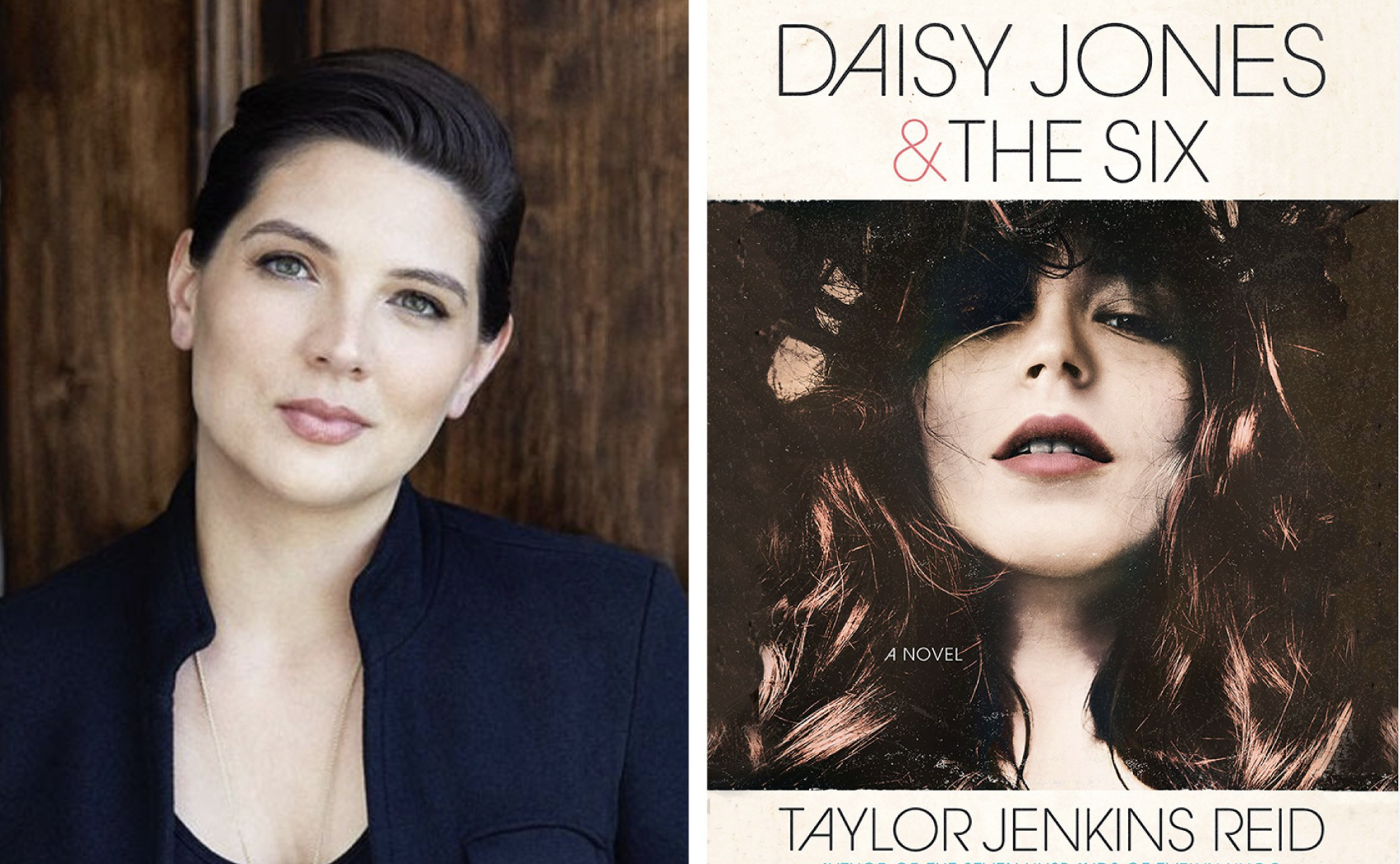
Taylor Jenkins Reid (above) took that approach in her 2019 novel Daisy Jones & The Six, which I read last week, about a fictional mega-popular 1970s band inspired by the real-life Fleetwood Mac. Daisy has some similarities to Stevie Nicks, an FM singer-songwriter, while Six member Billy Dunne has aspects of Lindsey Buckingham, another FM singer-songwriter as well as the band’s guitarist.
But there are differences. For instance, Nicks and Buckingham were real-life romantic partners before their breakup, while Daisy and Billy’s relationship has a different dynamic. Also, Daisy and Billy co-write a number of songs amid their love-hate feelings for each other, while Nicks and Buckingham each mostly composed their songs solo.
Another Six member is keyboardist Karen Sirko, loosely based on late Fleetwood Mac keyboardist/singer/songwriter Christine McVie. But, again, various differences between the two.
A much different novel, All the King’s Men (1946) by Robert Penn Warren, stars a charismatic populist governor — Willie Stark – who begins as an idealist but ends up corrupt. Stark was clearly inspired by real-life Louisiana politician Huey Long.
F. Scott’s Fitzgerald’s 1925 classic The Great Gatsby includes several characters modeled on real-life people. Daisy Buchanan was inspired by socialite/heiress Ginevra King – a longtime romantic obsession of the author. And fictional Daisy’s fictional golfer friend Jordan Baker was based on Ginevra’s golfer friend Edith Cummings.
Three years later, Aldous Huxley’s 1928 novel Point Counter Point included the character of Mark Rampion as a D.H. Lawrence type.
In Harper Lee’s To Kill a Mockingbird (1960), Atticus Finch was inspired by the author’s attorney father Amasa Lee. And the young Scout Finch’s friend Dill Harris was based on Harper Lee’s childhood pal Truman Capote, the future author.
Looking to real-life people for novelistic inspiration of course predates 1900.
The title character in Bram Stoker’s 1897 novel Dracula was partly inspired by 15th-century Romanian prince Vlad the Impaler.
In Mary Shelley’s 1826 novel The Last Man, there are characters based on Percy Bysshe Shelley (the author’s late husband by that time) and Lord Byron.
Of course, authors often create characters who are like themselves – as was the semi-autobiographical case with the aforementioned Scout Finch (Harper Lee as a kid), The Last Man’s Lionel Verney (Mary Shelley gender-switched), My Antonia’s Jim Burden (Willa Cather also gender-switched), The Mill on the Floss’ Maggie Tulliver (based on George Eliot), Little Women’s Jo March (based on Louisa May Alcott), David Copperfield‘s title character (whose name flips Charles Dickens’ initials), Martin Eden‘s title character (whose initials spell “me” for author Jack London), etc.
Comments about, and examples of, this theme?
Misty the cat says: “Two more foundations and we’ll have Isaac Asimov’s ‘Foundation Trilogy.'”
My comedic 2024 book — the part-factual/part-fictional/not-a-children’s-work Misty the Cat…Unleashed — is described and can be purchased on Amazon in paperback or on Kindle. It’s feline-narrated! (And Amazon reviews are welcome. 🙂 )
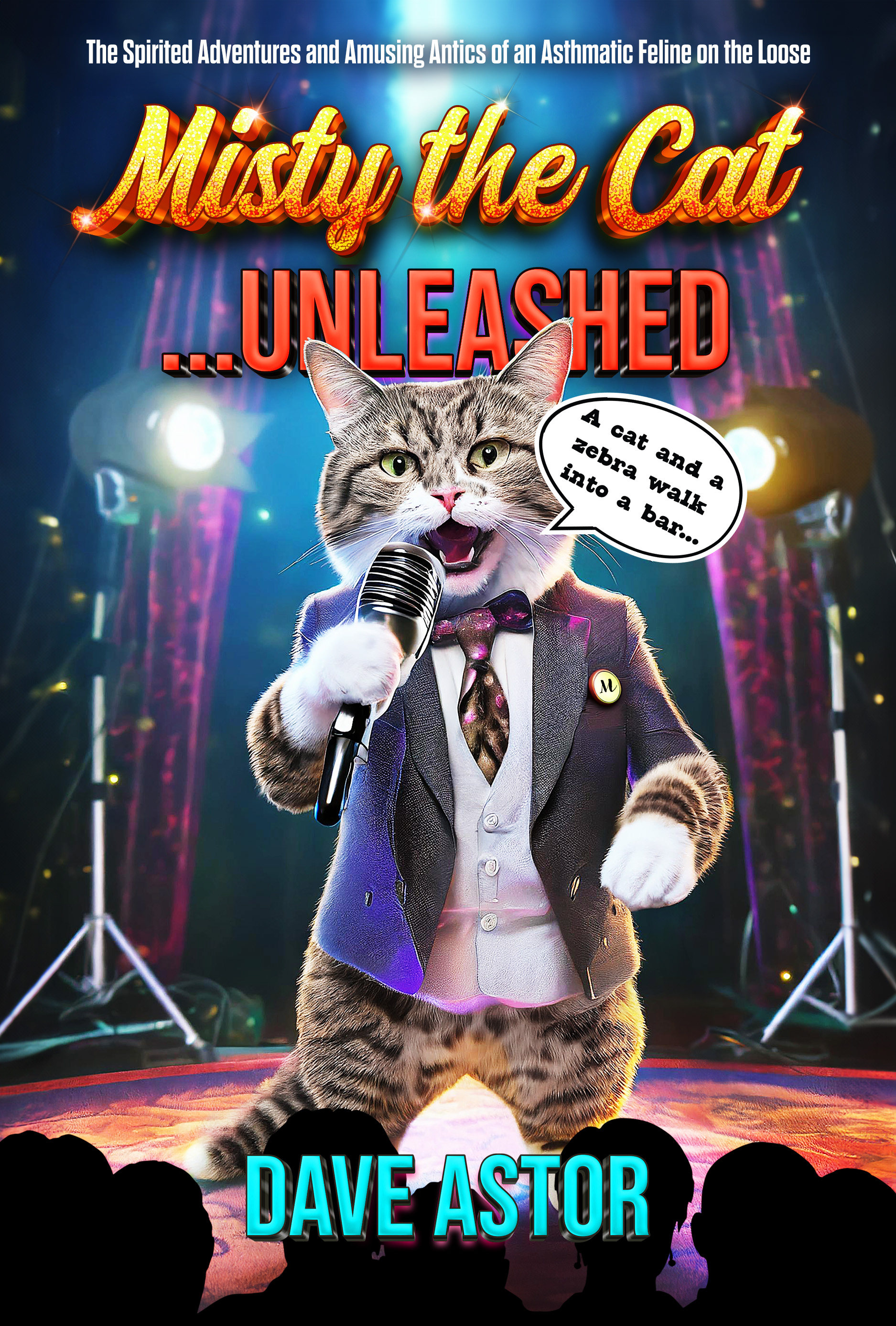
This 90-second promo video for the book features a talking cat: 🙂
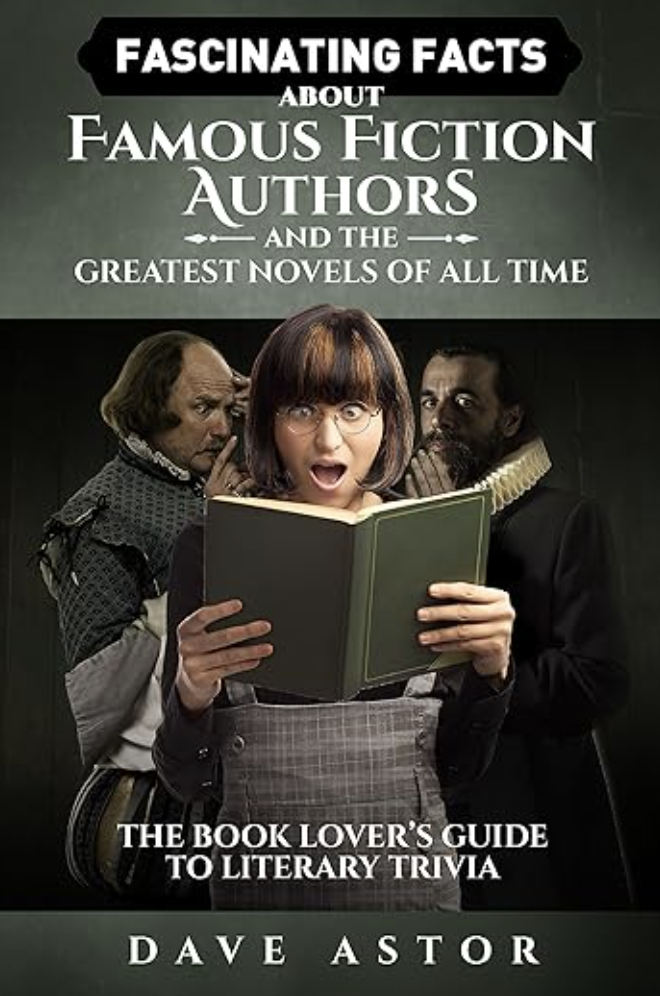
I’m also the author of a 2017 literary-trivia book…
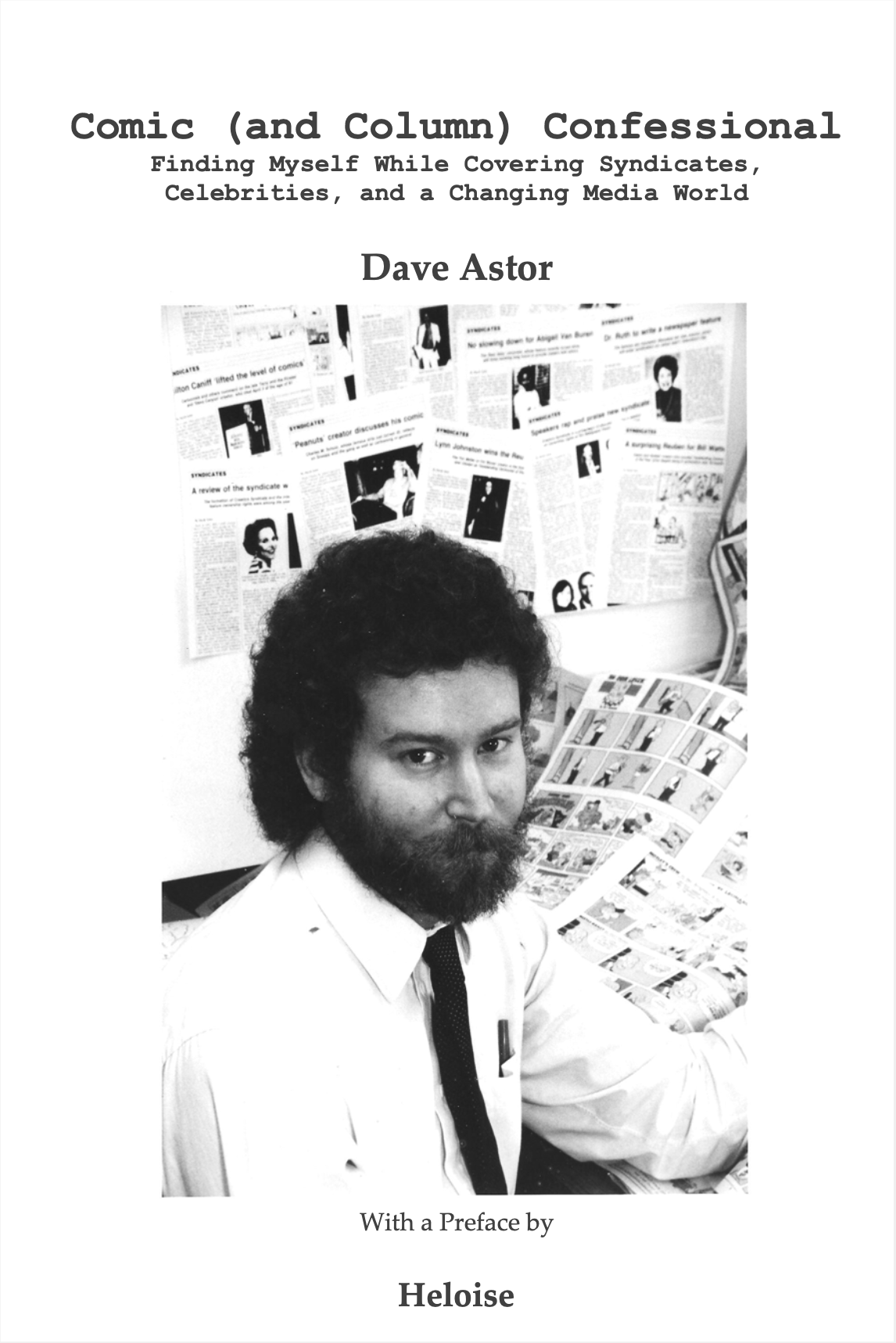
…and a 2012 memoir that focuses on cartooning and more, including many encounters with celebrities.
In addition to this weekly blog, I write the 2003-started/award-winning “Montclairvoyant” topical-humor column every Thursday for Montclair Local. The latest piece – about my town’s welcome pulling of $91.1 million from a bank supporting cruel privately run immigrant detention centers — is here.


Dave, it took me days, but I did come up with –
Daschiell Hammett worked as a private detective for the Pinkerton National Detective Agency before writing crime fiction.
So… maybe there is some of him in Sam Spade?
Misty, could you investigate that for me, please!
LikeLiked by 1 person
Thank you, Resa! Never too late. 🙂 That sounds like a distinct possibility! (Some of Dashiell Hammett in Sam Spade.) Ha — 😂 — Misty, as an occasional sleuth himself, agrees. 🙂
LikeLiked by 1 person
M&M Cat Detectives. He’s the good cop. 😺 She’s the nasty. 😼 Where there’s food, there’s litter. Where there’s litter there’s a crime.
And of course, as the beloved humans reporting to them – we get the scoop!
LikeLiked by 1 person
Brilliant, Resa! 😂 😂
Misty just ordered two Sherlock Holmes hats and two pipes for the co-partners in the M&M Cat Detectives agency. 🙂
LikeLiked by 1 person
..Quick… to the Catmobile! A cat up the street just had one of its lives stolen by a dog!
LikeLiked by 1 person
Ha ha! 😂 Eight lives still ain’t bad. 🙂
LikeLiked by 1 person
꧁😺꧂
LikeLiked by 1 person
🙂
LikeLiked by 1 person
Engaging
LikeLiked by 2 people
Thank you, Swamigalkodi Astrology!
LikeLiked by 1 person
Hi Dave, I’ve used real people as inspiration for many of my paranormal stories. In my novels, I’ve used real people in lessor roles to keep the story true to history. I don’t, however, put a lot of words into their mouths like many historical fiction authors do. I prefer fictional characters as main characters so I have more scope for imagination and don’t need to follow a life story to closely. Jeff Shaara writes about a mixture of real and fictional character as does Bernard Cornwell. There are many books and series about the Tudors and other kings and queens of England.
LikeLiked by 3 people
Thank you, Robbie! I hear you — using real people in novels (including royalty, as you note) definitely adds authenticity but somewhat limits what the writer can do with those characters. And I appreciate the mention of Jeff Shaara, whose work I hope to try someday.
LikeLiked by 1 person
I like Jeff Shaara very much 🥰
LikeLiked by 2 people
🙂
LikeLiked by 1 person
Hi Dave!
You are indeed a real ‘lexicon’ of literature! A marvellous topic as always!
Don’t you find that if novels are based partly on real-life characters, then the book feels more authentic? The book becomes more real even though it’s fiction.
Some interesting details you have provided here, most of which I was unaware of.
Thanks for the books Dave! I’m particularly interested in reading Bram Stoker’s ‘Dracula’, I love a good gothic tale.
With all best wishes,
Sharon
LikeLiked by 3 people
Thank you, Sharon! I appreciate the kind words!
You make a great point that a novel that includes one or more inspired-by-actual-people characters can have an added feeling of authenticity. “The book becomes more real even though it’s fiction” — love that line. 🙂
I haven’t read “Dracula” in ages, but it’s definitely a compelling classic!
LikeLiked by 2 people
You are welcome Dave!
Thank you for the very interesting post!
That’s the thing I think Dave, the more ‘real’ a book feels I’m certain will increase its popularity!
When I get around to reading ‘Dracula’ I’ll let you know my thoughts. In the back of my mind however, I have a vague memory of having read it years before!!!
Thanks once again.
Sharon 😊
LikeLiked by 2 people
Thanks for the followup comment, Sharon! I’ll be interested in hearing what you think about “Dracula” — and if you find that you’ve read it before. 🙂
LikeLiked by 2 people
An absolute pleasure, Dave!
I certainly will let you know my thoughts when I read Dracula!
Ps: It wouldn’t be the first time I have read the same book twice, only realising after I have finished it!! 😁
Hope your week is going well.
LikeLiked by 2 people
Repeat reading can happen. 🙂 Especially an issue for Count Dracula, who’s several hundred years old. 🙂
Hope your week is going well, too, Sharon!
LikeLiked by 2 people
Oh! That’s so funny!!
Thank you Dave, my week is going quite well.
☺️
LikeLiked by 2 people
Thank you, Sharon! 🙂
LikeLiked by 2 people
🙂
LikeLiked by 2 people
🙂
LikeLiked by 2 people
Running late this time, Dave! A novel I love is A S Byatt’s POSSESSION, about two modern-day British academics investigating a mystery in the lives of two Victorian poets. The two fictional poets are loosely based on Robert Browning and Christina Rossetti (with some Emily Dickinson thrown in, even though she’s American). Or so I have read.
I thought Daisy and the Six was a great read (listen, in my case–I had an audiobook), and I didn’t know the band was loosely based on Fleetwood Mac. It was lots of fun to find that out. Thank you.
LikeLiked by 3 people
Thank you, Kim! “Possession” is a terrific example! I read it several years ago, and it’s one of my favorite novels (in my personal top 20, I think).
Fortunately, the Daisy Jones & The Six band was different enough from Fleetwood Mac that there were no lawsuits I’m aware of. 🙂 I even read somewhere that Stevie Nicks (aka sort of Daisy Jones) liked the book and the screen adaptation.
LikeLiked by 2 people
Interesting theme, Dave. I would like to add the controversial 1971 novel “Angle of Repose” by Wallace Stegner that won the Pulitzer Prize for Fiction in 1972. His fictional character Susan Burling Ward was inspired by the letters of Mary Hallock Foote (1847-1938), an American author and illustrator.
LikeLiked by 3 people
Thank you, Rosaliene! Very interesting mention of a novel I wasn’t familiar with. From reading your comment and looking up more about the novel on Wikipedia, it looks like Wallace Stegner might have drawn from those Mary Hallock Foote letters too much and too verbatim.
LikeLiked by 2 people
It would appear so, Dave. During my beginning journey of becoming a writer, I received a copy of Stegner’s book as a gift from a member of my writer’s critique group.
LikeLiked by 2 people
A memorable gift, Rosaliene, for better or for worse. 🙂
LikeLiked by 2 people
I love the threads of inspiration showcased here…seeing the spark of real life, real people in fiction IS fun, I think. Adds gravitas, somehow — sparking my compulsion to see just how closely the characters are drawn, when compared to their real-life counterparts. But I also think it’s why I’ve hesitated about reading “Daisy Jones & the Six” — fearful there’d be some trampling on icons/music I adore. Sort of a ‘don’t mess with Fleetwood Mac’…too sacred, LOL?
Always love your Sunday posts, Dave. They make me think – and smile! 😊💝😊
LikeLiked by 3 people
Thank you, Vicki! Well said — your take on the potential appeal of fictional characters partly based on real-life people.
I was also a big fan of Fleetwood Mac back in the day, and wondered how I’d react to “Daisy Jones & The Six.” But that not-real band and its members, and their lives and career arcs, are fictional enough to feel like the novel was influenced by Fleetwood Mac but not a ripoff of that band’s story.
LikeLiked by 2 people
Okay! That’s good to hear. Thanks so much, Dave! 😎❤️😎
LikeLiked by 2 people
You’re very welcome, Vicki! 🙂
LikeLiked by 2 people
💝😊💝
LikeLiked by 2 people
🙂
LikeLiked by 2 people
Dear Dave Astor, Thank you indeed for your regular emails, full of insightful reflection. I am recovering from a serious seizure of malaria. Thank you, and I look forward to reading you as often as possible.
LikeLiked by 3 people
Thank you, Ahmadou! So sorry about the bout with malaria. 😦 Hope your recovery is going as well as possible.
LikeLiked by 1 person
Thank you ever so much. And have a beautiful day.
LikeLiked by 2 people
You’re very welcome, Ahmadou, and hope you’ve had a great day, too!
LikeLiked by 1 person
Yes, I did, my favourite author!
LikeLiked by 2 people
Thank you again for the kind words! 🙂
LikeLiked by 1 person
Yep, that’s a very interesting topic, Dave, and having just read what Dan said, I also would say that almost everyone who writes novels would often use at least bits of real people when writing. I know I’ve done that.
LikeLiked by 3 people
Thank you, Chris! Yes, so true that “almost everyone who writes novels would often use at least bits of real people when writing.” I guess it’s sometimes more overt than at other times. 🙂
LikeLiked by 2 people
What an interesting post! My son was recently studying The Great Gatsby and we were talking about it. I had no idea F. Scott’s Fitzgerald’s 1925 classic several characters modeled on real-life people; that is so cool! I’ll have to tell him!
LikeLiked by 3 people
Thank you, Ada! Until researching this post, I had known about the Jordan Baker inspiration but not the Daisy Buchanan inspiration. That will be a fun conversation with your son!
LikeLiked by 2 people
Dave, these are very cool insights, I was always wondering about The Great Gatsby’s characters because they never felt believable enough. I read reread the story to find a deeper message but it was probably a good reflection of the people and the time.
Another one I am always curious about is Lord Byron, I was taken by his writing as early as middle school. Still looking for a good biography/ documentary on this controversial character.
LikeLiked by 3 people
Thank you, Milena! I hear you about “The Great Gatsby.” I found Fitzgerald’s prose the best part of the book, with the character depictions and plot not quite as good.
I’m sure there must be a great Lord Byron biography or two out there, but I’ve never read one. “The Last Man” character based on Byron gives some insights, but he’s a supporting character in that Mary Shelley novel.
LikeLiked by 2 people
I remember that Dorian Gray was based on a real person (I had to look up the name) John Gray who was known well by Oscar Wilde. The book was published while John Gray was still alive, and he didn’t appreciate the connection. Kurt Vonnegut’s Slaughterhouse-Five was partially based on his experience during WWII.
I weave characteristics of real people into my characters — it’s hard not to — but I try not to bring the characters close to the person. A person I know in town told me that one of my young character’s life “could be me.” I wrote the book before I knew this man, but some of the things he describes are a very good fit.
This is an interesting topic, Dave.
LikeLiked by 4 people
Thank you, Dan! I didn’t know that Dorian Gray wasn’t a totally fictional creation! I can understand why John Gray was annoyed. 🙂 Reminds me of how Emile Zola partly based the unappealing artist in “The Masterpiece” on his painter pal Paul Cezanne, ending that friendship.
Yes, “Slaughterhousehouse-Five” was semi-autobiographical.
Re your second paragraph, sounds like you have the right philosophy for your books when it comes to at least somewhat drawing on people you know.
LikeLiked by 3 people
It probably wouldn’t have mattered, but he could have gone with The Picture of Dorian Black 😉
LikeLiked by 2 people
That would have been wise!
LikeLiked by 2 people
I never knew that Dill was based on Truman Capote; interesting, Dave. As to others, the big brother Edison of Lionel Shriver’s ‘Big Brother’ was based on the author’s own big brother. Elsewhere, the activities of James Wormold, the protagonist of Graham Greene’s ‘Our Man in Havana’ were based on those of World War II double agent Juan Pujol García; to quote from the internet: ‘the premise of inventing a vast network of fictional sub-agents is taken directly from García. During WWII, García worked as a double agent for British intelligence (MI5) by feeding disinformation to Nazi Germany. To fool the Germans, he invented a wildly elaborate, completely fictitious network of twenty-seven spies across the UK and fed them fake reports that eventually helped successfully deceive Hitler about the timing of the Normandy D-Day landings.’ Elsewhere, Robinson Crusoe was based on Alexander Selkirk, a Scot who was stranded on a desert island for four years, and Turgenev often used facets of his mistress Pauline Viardot in characters. And Marguerite Gautier, of ‘La Dame aux Camélias’, was directly based by Dumas fils on Marie Duplessis, the tragic courtesan with whom he had a brief affair. I think that’ll do! Thanks for a great topic as usual, Dave. 🙂
LikeLiked by 5 people
Thank you, Laura! Yes, that Dill/Capote thing IS interesting. And I appreciate the various great mentions! I knew about Lionel Shriver’s brother, but not about the “Our Man in Havana” inspiration or the Turgenev situation. The info about “Robinson Crusoe” and “Camille” (as the Dumas fils novel is sometimes called) sounded vaguely familiar. 🙂
LikeLiked by 2 people
You’re welcome, Dave. 🙂
LikeLiked by 2 people
🙂
LikeLiked by 1 person
I didn’t know it was loosely based on Fleetwood Mac, or many of the other connections you mentioned. Maggie
LikeLiked by 3 people
Thank you, Maggie! For whatever reason, I was aware of the Fleetwood Mac/”Daisy Jones & The Six” connection before I read the book, but didn’t know about a couple of the other connections I mentioned until I researched the post. 🙂
LikeLiked by 1 person
The Apes of God (1930) (I have the Black Sparrow press edition) is a dazzling, satirical roman à clef by the Vorticist painter, and prolific writer, Percy Wyndham Lewis. The Bloomsbury Group and the Sitwell family are among the targets. I hope this link to a Yale University appraisal works in this comment. https://www.google.com/url?sa=i&source=web&rct=j&url=https://campuspress.yale.edu/modernismlab/the-apes-of-god/&ved=2ahUKEwiQ5bG8sN-VAxXOhv0HHfRPCtkQ_r4PeggIAggBCCsQLw&opi=89978449&cd&psig=AOvVaw3WUxEiM7zRy5HdAXYEImFk&ust=1784572423689000.
LikeLiked by 3 people
Thank you, Dingenom! Your comment ended up in spam, but I moved it out. 🙂 (It happens sometimes with comments with links. 😦 ) I was able to read the link — very interesting! “The Apes of God” sounds like quite a book.
LikeLiked by 1 person
I, Claudius and Claudius the God immediately come to mind, as well as The Hours by Michael Cunningham.
LikeLiked by 4 people
Thank you, Liz! Two great examples! “The Hours” — which includes Virginia Woolf, of course. I’ve seen the movie (excellent) but have not read the novel. But I’ve read “I, Claudius.” 🙂
LikeLiked by 3 people
You’re welcome, Dave. 🙂
LikeLiked by 2 people
🙂
LikeLiked by 2 people
Dave, another excellent topic that had me put on my “thinking cap”!!! I think that every writer is, in a sense, writing about humanity through the people they have encountered. Even those who write letters or keep journals are influenced by the lives that intersect with their own. Those relationships become the seeds from which stories grow. Perhaps that’s why great literature endures. We recognize not only the characters, but ourselves within them.
Shakespeare was a master of this. Macbeth, Julius Caesar, Richard III, and so many of his plays were inspired by real people, yet he transformed history into something far greater than biography. He wasn’t simply recording events; he was exploring ambition, love, jealousy, courage, betrayal, and the whole range of human experience. And as he wrote so eloquently:
We are such stuff
As dreams are made on, and our little life
Is rounded with a sleep.”
The Tempest, Act 4, Scene 1
LikeLiked by 6 people
Thank you, Rebecca! You make an excellent point that authors rely on people they know or have encountered for at least subconscious fodder for characters they create.
And, yes, writers often take real famous people and partly fictionalize them — sometimes in brilliant ways, as did Shakespeare — while grappling with/commenting on emotions and events.
Classic words from “The Tempest”!
LikeLiked by 1 person
Excellent analysis, Dave! You’ve perfectly captured how the fusion of reality and fiction is so captivating for the reader.
Italian literature also uses real people, historical figures, and the authors themselves as models for characters. For example, the character of Elena Muti in Gabriele D’Annunzio’s Il Piacere (The Child of Pleasure) is inspired by Elena Barbara Leoni, D’Annunzio’s lover and obsession at the time in real life.
LikeLiked by 5 people
Thank you, Luisa! Love your words “the fusion of reality and fiction is so captivating for the reader.” 🙂
And I appreciate your great example from “The Child of Pleasure”! Various authors definitely use a current romantic partner, a past romantic partner, and/or a hoped-for romantic partner as a literary “muse.”
LikeLiked by 3 people
Thanks a lot for your warm feedback, dear Dave
LikeLiked by 2 people
You’re very welcome, Luisa! 🙂
LikeLiked by 2 people
I never realized the connections you mentioned about Charles Dicken’s and Jack London’s characters!
LikeLiked by 3 people
Thank you, Marie! Among my favorite pieces of literary trivia. 🙂
LikeLiked by 2 people
Thank you to Resa for mentioning “Daisy Jones & The Six” under a recent post!
LikeLiked by 4 people
Welcome! This one took me a bit to figure.
LikeLiked by 1 person
🙂
LikeLiked by 1 person