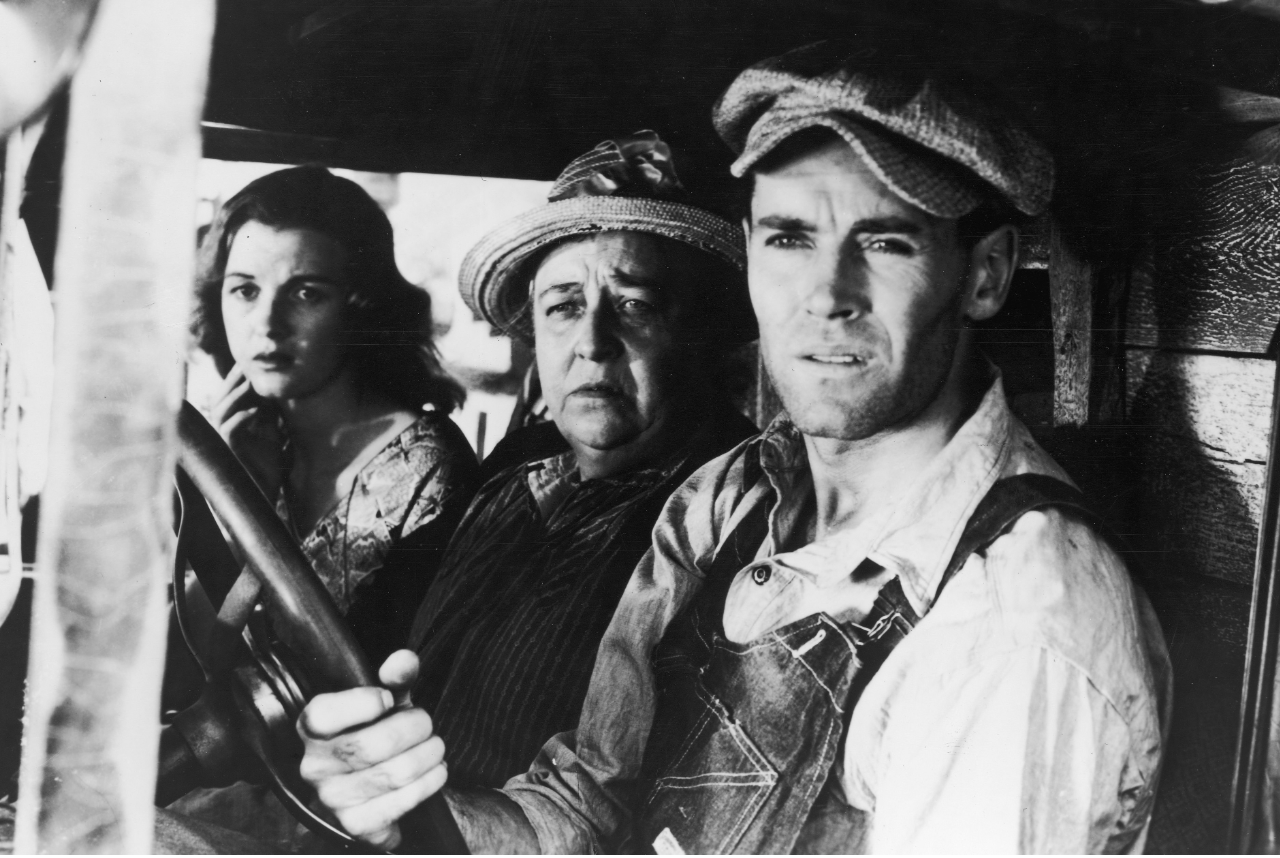
From The Grapes of Wrath movie. (20th Century Fox/Getty Images.)
After mentioning Daphne du Maurier’s great 1938 novel Rebecca in last week’s post about Gothic fiction, I thought of other books from that decade and how those years were a significant time in literature as well as quite relevant to the 2020s. After all, both decades had/have war, a rise in authoritarianism, major economic problems, and more.
So, I’m going to discuss a number of novels I’ve read, and a few I haven’t, that were published in the 1930s.
One that immediately came to mind is John Steinbeck’s 1939 classic The Grapes of Wrath, which focused on the Joad family but also took a wider look at the impact of The Great Depression bedeviling the U.S (and most of the world) that decade.
Steinbeck also wrote other notable 1930s novels — including Tortilla Flat (1935), In Dubious Battle (1936), and Of Mice and Men (1937) — that reflected social conditions. In Dubious Battle focused on a strike, fitting for a decade when labor flexed its muscles.
It Can’t Happen Here (1935) is a dystopian Sinclair Lewis novel imagining the rise of fascism in the U.S. — making it almost a primer for current dictator wannabe Donald Trump. (Although Trump is notoriously known for not reading books.)
War? Two of Erich Maria Remarque’s lesser-known novels: The Road Back (1931) and Three Comrades (1936) — have World War I elements. (The Road Back was a sequel of sorts to Remarque’s 1929-published All Quiet on the Western Front.) The American Civil War is a backdrop to Margaret Mitchell’s Gone with the Wind (1936). And Dalton Trumbo’s Johnny Got His Gun (1939) makes a powerful antiwar statement.
The 1930s were also significant writing years for William Faulkner: As I Lay Dying (1930), about a family and its journey to bury their matriarch; Light in August (1932), whose characters include a multiracial (?) drifter; and other works.
Then there was the 1934 publication of F. Scott Fitzgerald’s perhaps second-best novel, the semi-autobiographical Tender Is the Night.
Three years later, Zora Neale Hurston’s Their Eyes Were Watching God (1937) featured the memorable experiences of protagonist Janie Crawford.
That decade’s other notable book releases included — to name just a few — Mildred Benson’s The Secret of the Old Clock (1930), the first Nancy Drew mystery; Dashiell Hammett’s The Maltese Falcon (1930), featuring private investigator Sam Spade; Dorothy L. Sayers’ Strong Poison (1930), with mystery writer Harriet Vane and Lord Peter Wimsey; Pearl S. Buck’s China-set classic The Good Earth (1931); Aldous Huxley’s dystopian classic Brave New World (1932); and Erskine Caldwell’s Tobacco Road (1932).
Also: James Hilton’s Lost Horizon (1933), set in a mythical paradise; Daphne du Maurier’s Jamaica Inn (1936), which was also mentioned in last week’s blog post about Gothic fiction; Ernest Hemingway’s To Have and Have Not (1937), starring a fishing captain; J.R.R. Tolkien’s The Hobbit (1937), the fantasy novel that became the prequel to the 1950s-published The Lord of the Rings trilogy; Marjorie Kinnan Rawlings’ The Yearling (1938), about a boy and his fawn; Agatha Christie’s mystery And Then There Were None (1939); and Raymond Chandler’s The Big Sleep (1939), starring sleuth Philip Marlowe.
While writing this, I remembered that I had done a 2023 piece focusing on novels published in 1937. But the other years in that decade were not included in that post. 🙂
My list of 1930s novels is of course incomplete. Your favorites from that decade, whether mentioned by me or not?
Misty the cat says: “I own all this land, but where did I put the deed?”
My comedic 2024 book — the part-factual/part-fictional/not-a-children’s-work Misty the Cat…Unleashed — is described and can be purchased on Amazon in paperback or on Kindle. It’s feline-narrated! (And Amazon reviews are welcome. 🙂 )
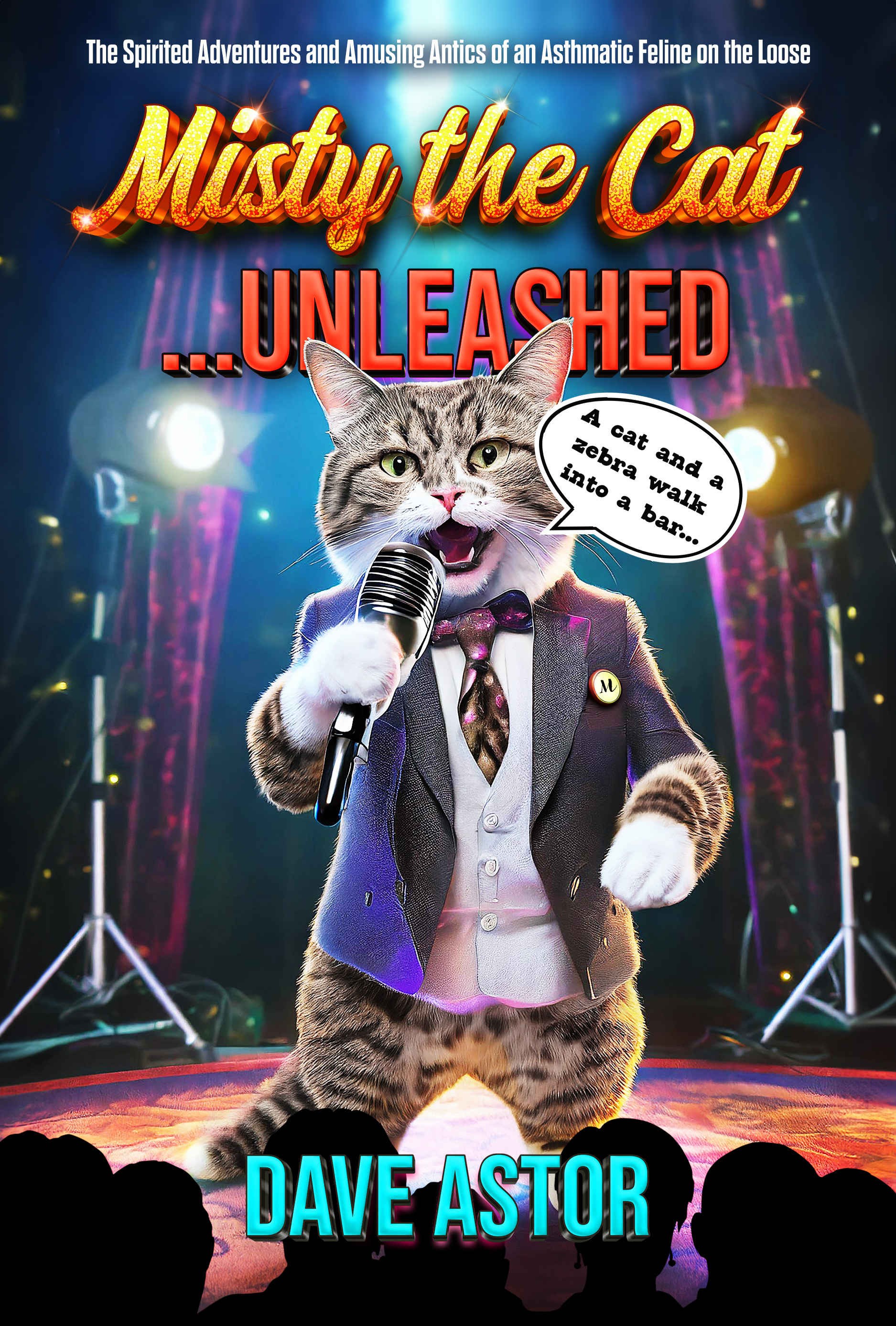
This 90-second promo video for the book features a talking cat: 🙂
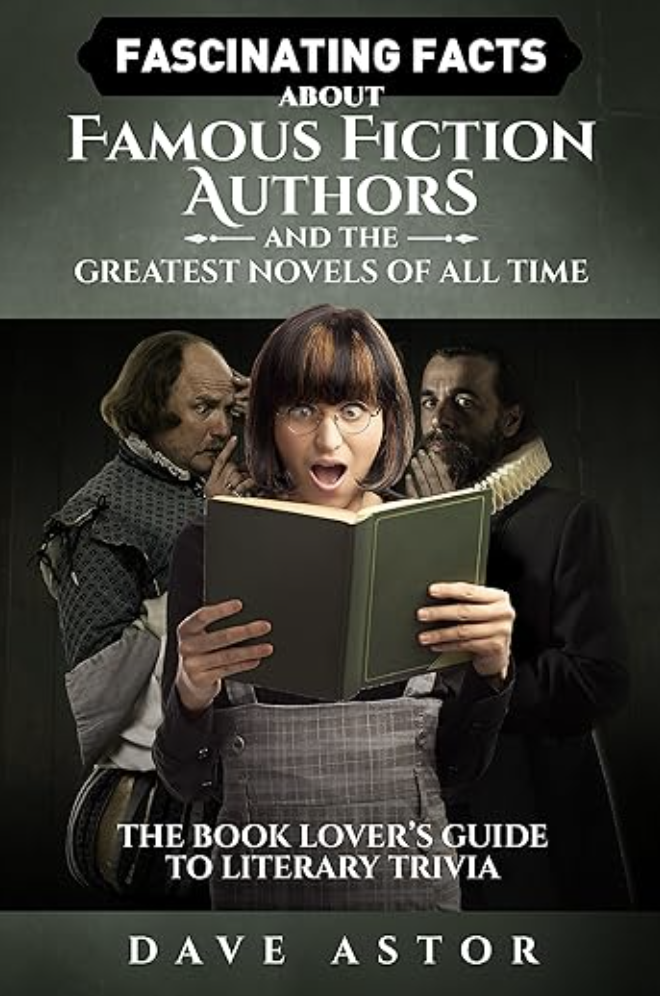
I’m also the author of a 2017 literary-trivia book…
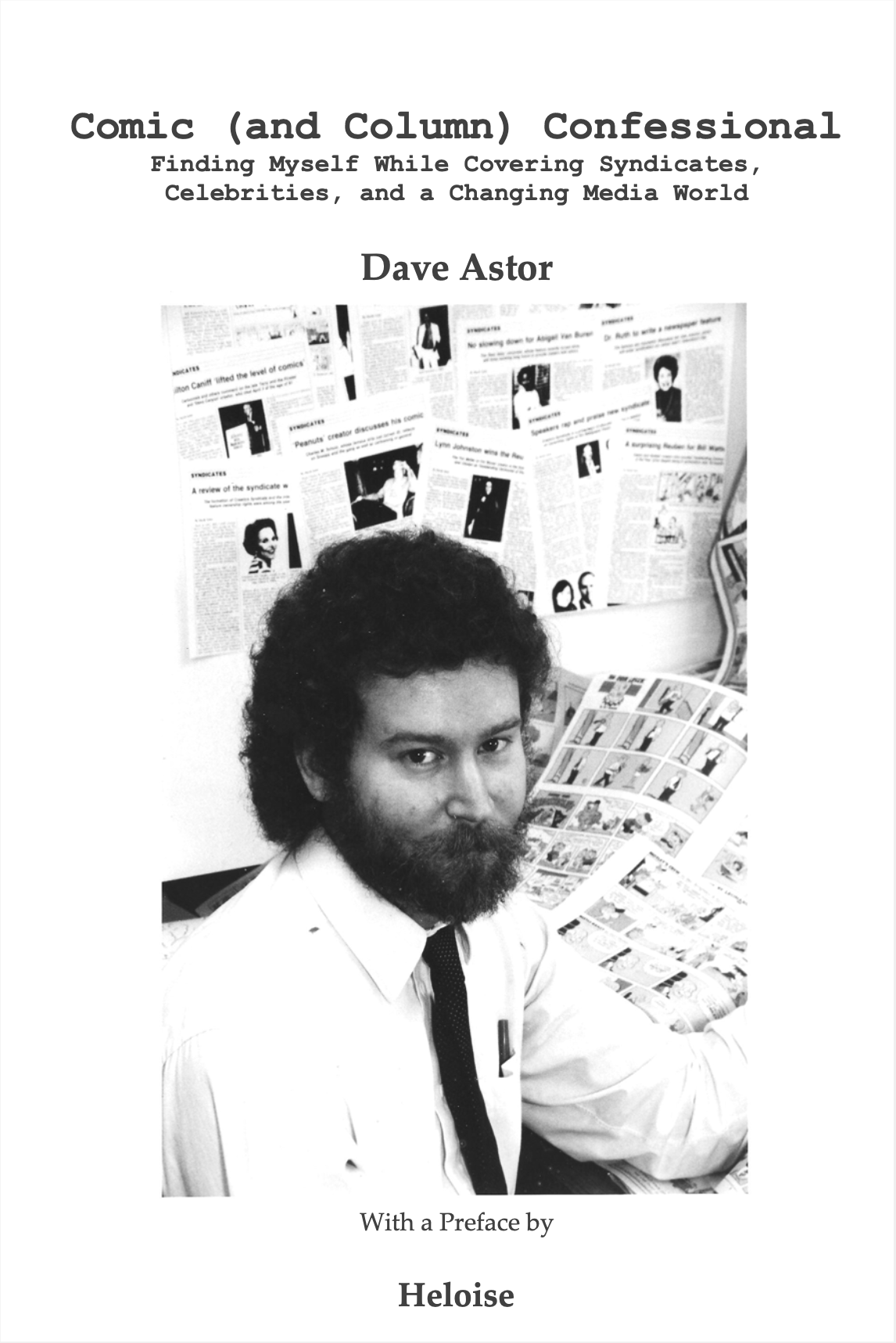
…and a 2012 memoir that focuses on cartooning and more, including many encounters with celebrities.
In addition to this weekly blog, I write the 2003-started/award-winning “Montclairvoyant” topical-humor column every Thursday for Montclair Local. The latest piece — which has a literature theme connected to local news in my town — is here.

