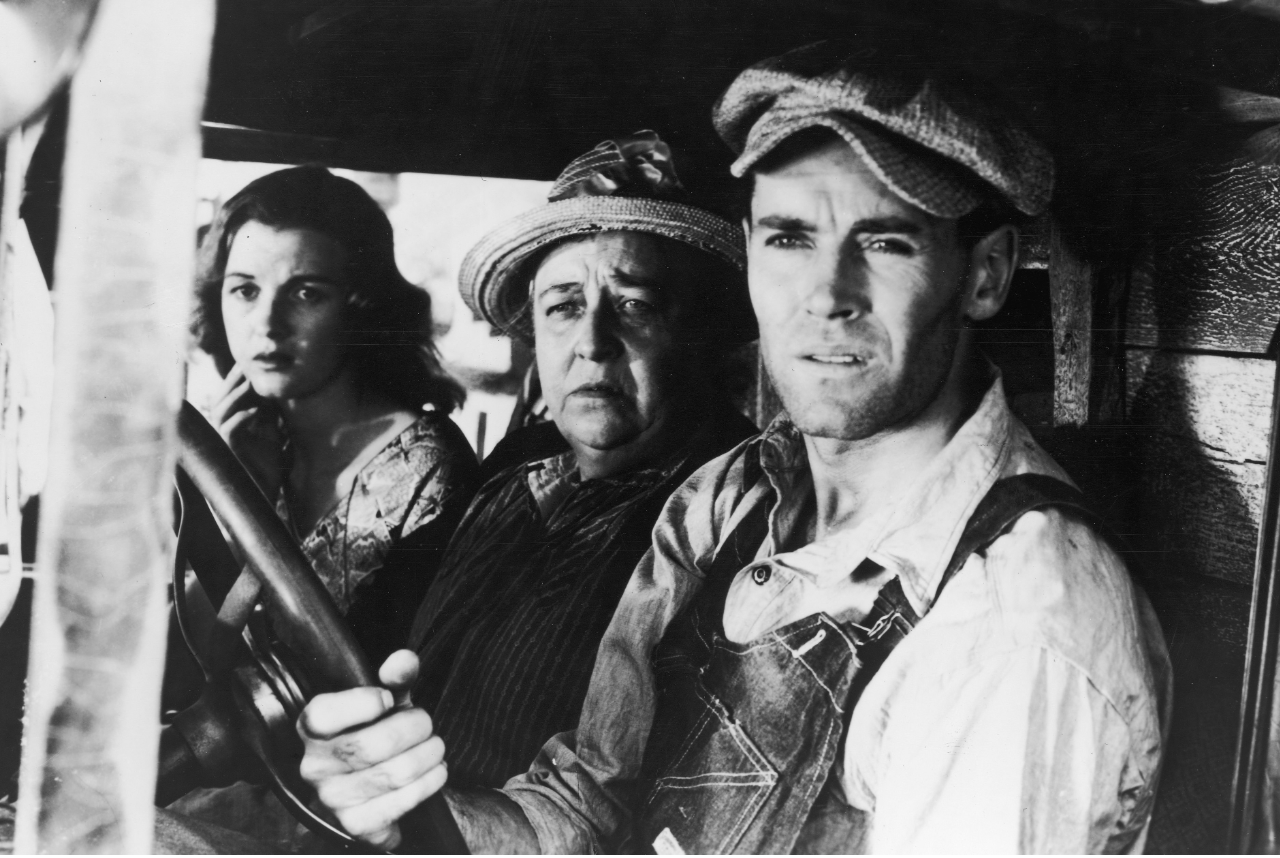
From The Grapes of Wrath movie. (20th Century Fox/Getty Images.)
After mentioning Daphne du Maurier’s great 1938 novel Rebecca in last week’s post about Gothic fiction, I thought of other books from that decade and how those years were a significant time in literature as well as quite relevant to the 2020s. After all, both decades had/have war, a rise in authoritarianism, major economic problems, and more.
So, I’m going to discuss a number of novels I’ve read, and a few I haven’t, that were published in the 1930s.
One that immediately came to mind is John Steinbeck’s 1939 classic The Grapes of Wrath, which focused on the Joad family but also took a wider look at the impact of The Great Depression bedeviling the U.S (and most of the world) that decade.
Steinbeck also wrote other notable 1930s novels — including Tortilla Flat (1935), In Dubious Battle (1936), and Of Mice and Men (1937) — that reflected social conditions. In Dubious Battle focused on a strike, fitting for a decade when labor flexed its muscles.
It Can’t Happen Here (1935) is a dystopian Sinclair Lewis novel imagining the rise of fascism in the U.S. — making it almost a primer for current dictator wannabe Donald Trump. (Although Trump is notoriously known for not reading books.)
War? Two of Erich Maria Remarque’s lesser-known novels: The Road Back (1931) and Three Comrades (1936) — have World War I elements. (The Road Back was a sequel of sorts to Remarque’s 1929-published All Quiet on the Western Front.) The American Civil War is a backdrop to Margaret Mitchell’s Gone with the Wind (1936). And Dalton Trumbo’s Johnny Got His Gun (1939) makes a powerful antiwar statement.
The 1930s were also significant writing years for William Faulkner: As I Lay Dying (1930), about a family and its journey to bury their matriarch; Light in August (1932), whose characters include a multiracial (?) drifter; and other works.
Then there was the 1934 publication of F. Scott Fitzgerald’s perhaps second-best novel, the semi-autobiographical Tender Is the Night.
Three years later, Zora Neale Hurston’s Their Eyes Were Watching God (1937) featured the memorable experiences of protagonist Janie Crawford.
That decade’s other notable book releases included — to name just a few — Mildred Benson’s The Secret of the Old Clock (1930), the first Nancy Drew mystery; Dashiell Hammett’s The Maltese Falcon (1930), featuring private investigator Sam Spade; Dorothy L. Sayers’ Strong Poison (1930), with mystery writer Harriet Vane and Lord Peter Wimsey; Pearl S. Buck’s China-set classic The Good Earth (1931); Aldous Huxley’s dystopian classic Brave New World (1932); and Erskine Caldwell’s Tobacco Road (1932).
Also: James Hilton’s Lost Horizon (1933), set in a mythical paradise; Daphne du Maurier’s Jamaica Inn (1936), which was also mentioned in last week’s blog post about Gothic fiction; Ernest Hemingway’s To Have and Have Not (1937), starring a fishing captain; J.R.R. Tolkien’s The Hobbit (1937), the fantasy novel that became the prequel to the 1950s-published The Lord of the Rings trilogy; Marjorie Kinnan Rawlings’ The Yearling (1938), about a boy and his fawn; Agatha Christie’s mystery And Then There Were None (1939); and Raymond Chandler’s The Big Sleep (1939), starring sleuth Philip Marlowe.
While writing this, I remembered that I had done a 2023 piece focusing on novels published in 1937. But the other years in that decade were not included in that post. 🙂
My list of 1930s novels is of course incomplete. Your favorites from that decade, whether mentioned by me or not?
Misty the cat says: “I own all this land, but where did I put the deed?”
My comedic 2024 book — the part-factual/part-fictional/not-a-children’s-work Misty the Cat…Unleashed — is described and can be purchased on Amazon in paperback or on Kindle. It’s feline-narrated! (And Amazon reviews are welcome. 🙂 )
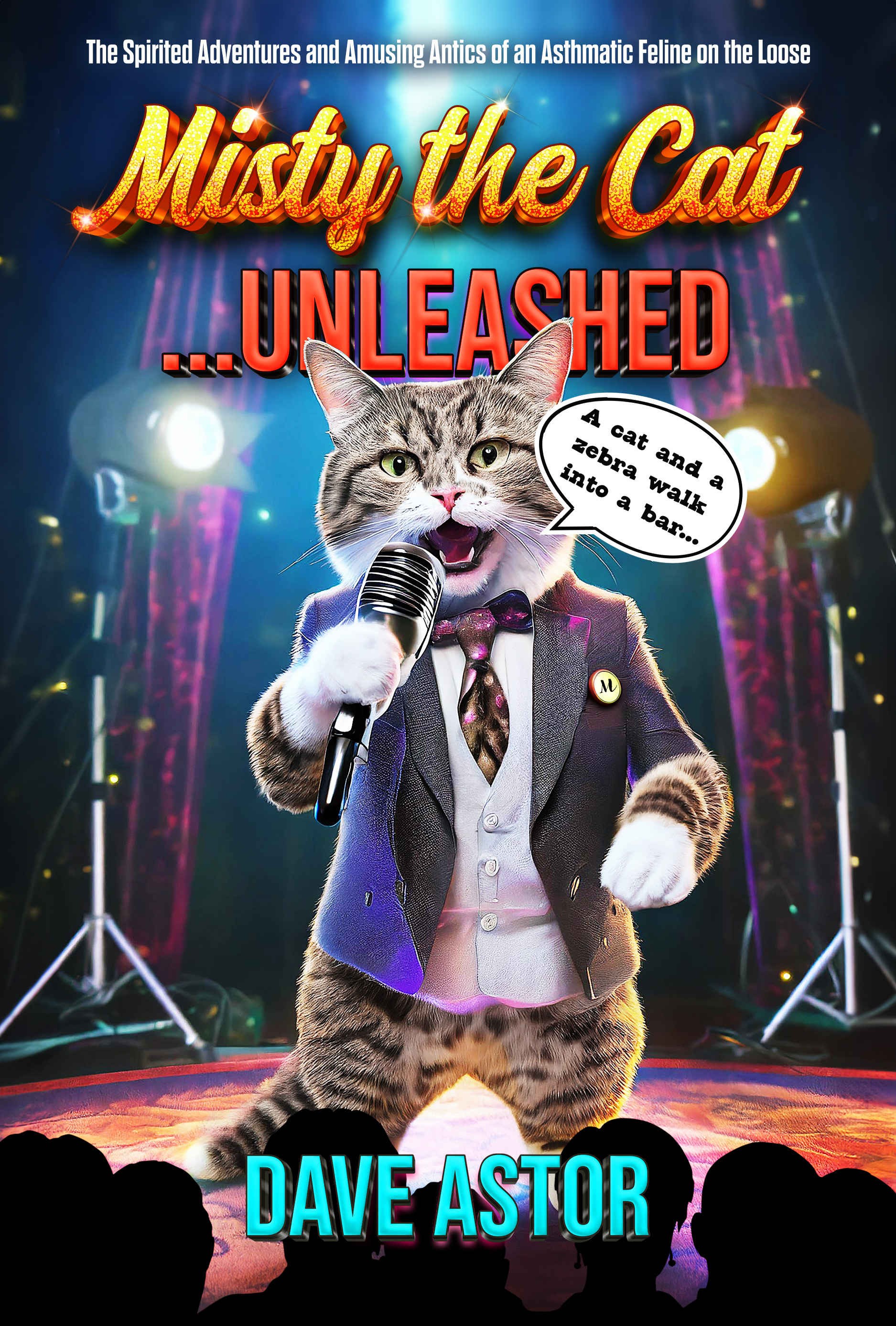
This 90-second promo video for the book features a talking cat: 🙂
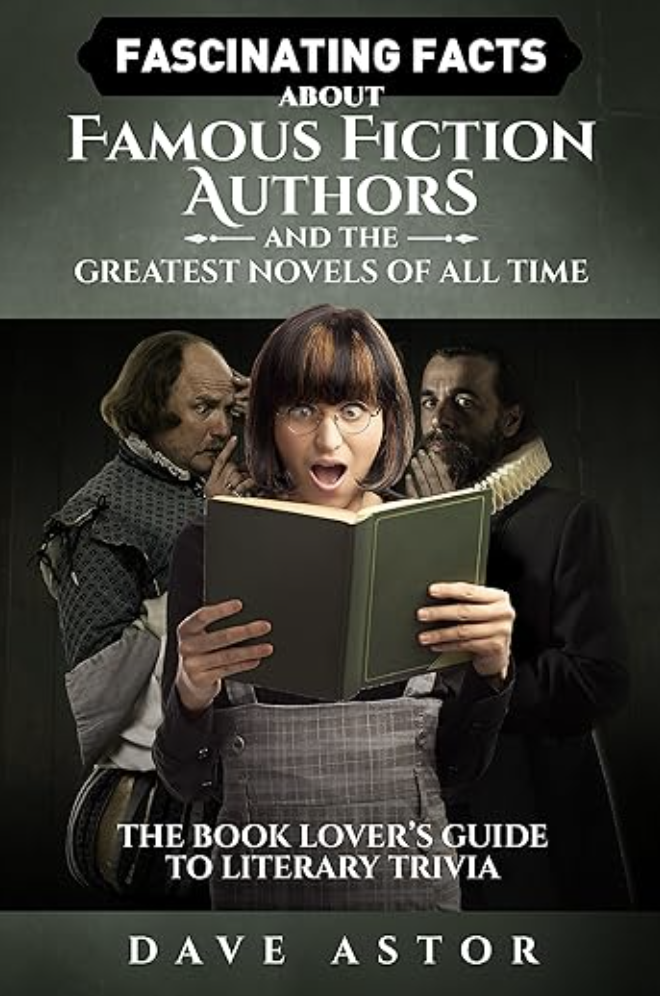
I’m also the author of a 2017 literary-trivia book…
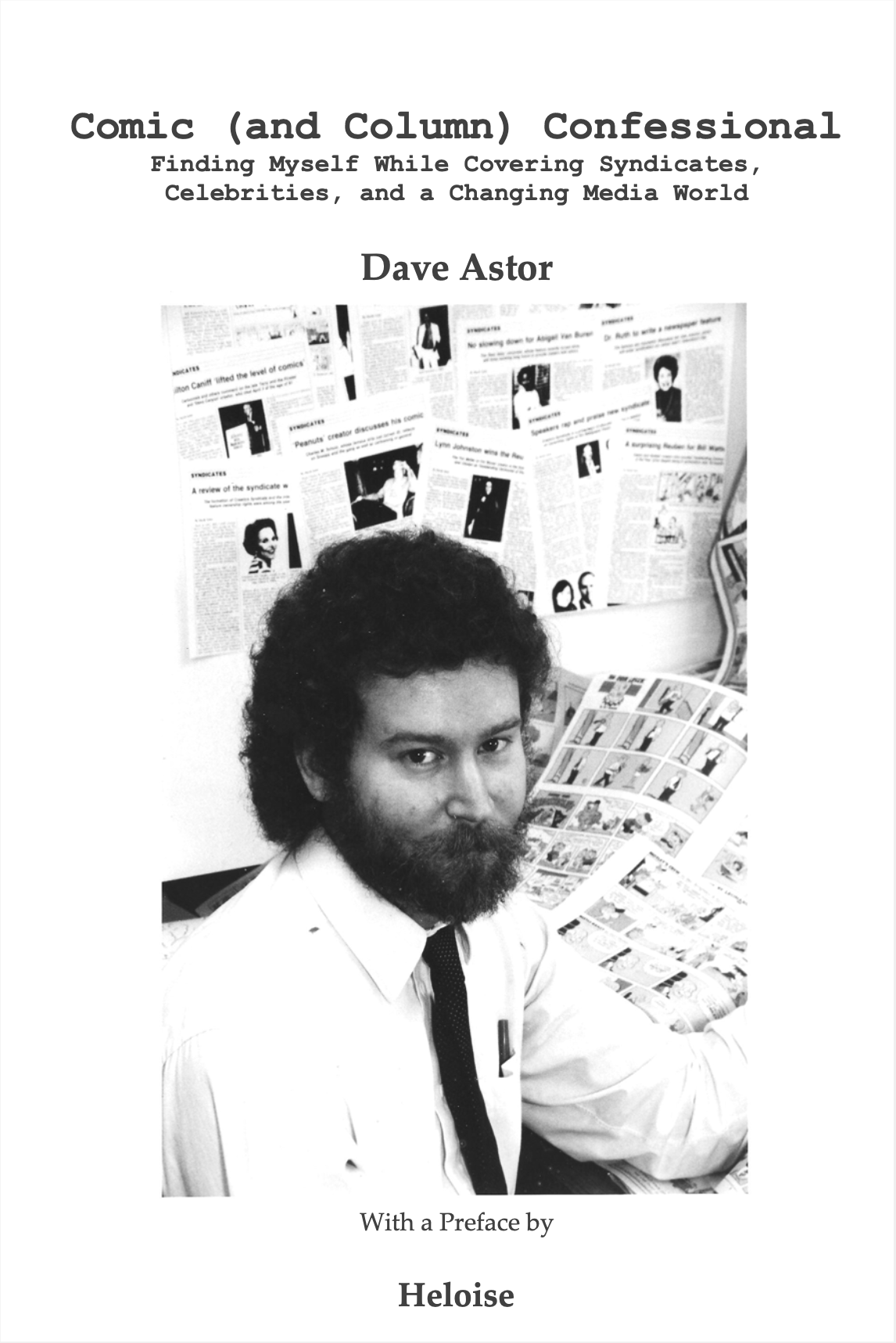
…and a 2012 memoir that focuses on cartooning and more, including many encounters with celebrities.
In addition to this weekly blog, I write the 2003-started/award-winning “Montclairvoyant” topical-humor column every Thursday for Montclair Local. The latest piece — which has a literature theme connected to local news in my town — is here.
 Dave Astor on Literature
This list certainly brought back memories of high school English! From what I understand, students no longer read these books which is a shame. I would add Nathaniel West–Day of the Locust and Miss Lonelyhearts.
It was also a classic decade for children’s books–the Little House series, Babar, Madeline, Swallow and Amazons, Dr Seuss. (K)
LikeLiked by 1 person
Thank you, Kerfe! Great mention of those Nathaniel West novels — both depressingly compelling. (I read them as a student.) And you make an excellent case for the 1930s being an amazing time for children’s books, whether one-offs or series.
LikeLike
What an interesting post, Dave! My favorite is Of Mice and Men. I remember reading it at school and having to sneak out to the girls’ bathroom at the end to have a cry, it made me so sad!
LikeLiked by 1 person
Thank you, Ada! Yes, “Of Mice and Men” was indeed tragic, and I can understand your reaction as a student. John Steinbeck didn’t mess around; except for his comedic works (“Tortilla Flat,” “Cannery Row,” “Sweet Thursday”…), he could be quite grim, amid maybe a bit of hope.
LikeLike
What a wonderful decade! For me I would say Ernest Hemingway – To Have and To Have Not, plus The Snows of Kilimanjaro and Green Hills of Africa. I also would say George Orwell – Homage to Catalonia, Down and Out in Paris and London, The Road to Wigan Pier, Keep the Aspidistra Flying and Coming Up for Air (I have read all of those). And for kids Arthur Ransome – Swallows and Amazons (and the others). And finally: The Adventures of Tintin by Herge (so many of those) – just lovely!
LikeLiked by 1 person
Thank you, Chris, for all the great mentions! George Orwell had quite a writing decade in the 1930s, didn’t he? Even as his most famous works — “Animal Farm” and “1984” — would publish during the 1940s.
LikeLiked by 1 person
The Postman Always Rings Twice, Serenade, Double Indemnity, The Beast of the City– very relevant here the way judges are letting folks off–They Shoot Horses Don’t They? I Should Have Stayed Home. ……Goodness I must read some of them again. (That’s not a title by the way.)
LikeLiked by 1 person
Thank you, Shehanne, for all those great mentions! I definitely have to read James M. Cain one of these days; my local library hasn’t stocked much of his work for some reason. 😦
“Goodness I Must Read Some of Them Again” would make an excellent book title. 😂
LikeLike
While reading your post with all these great novels, I felt like passing my life and its experiences through literature, Dave! Many thanks:) At the moment I am reading “There are rivers in the sky” By Elif Shafak, which is not from that period, but connects the whole world.
LikeLiked by 1 person
Thank you, Martina! It’s nice (and poignant?) to think of life partly in terms of the books we’ve read over the years. 🙂 And I appreciate the mention of “There Are Rivers in the Sky,” which sounds really good from your poetically concise description. (I also just read a description of it online.)
LikeLiked by 1 person
With much pleasure I have read your comment and I am already looking forward to one of your next posts:)
LikeLike
This is a great list, Dave and I am enjoying the comments.
I’m going to toss two children’s books into the mix. The first Madeline book and The Story of Ferdinand, which was a major favorite in this house when our daughter was growing up.
LikeLiked by 1 person
Thank you, Dan! Children’s books are welcome mentions, and it’s nice that you had a “Ferdinand” fan in the household. 🙂 My older daughter was a big fan of the first “Madeline” book — and TV series.
LikeLiked by 1 person
Those were regular reads around here. Our daughter also liked the TV series.
LikeLiked by 1 person
In my mind, I can still hear the “Madeline” TV song. 🙂
LikeLiked by 1 person
Dave, you’ve mentioned many of my favorite novels published in the 1930s. It’s interesting to note that these great novels were born during a period of social and economic upheaval. I wonder what novels are in the making during the current earthquake/tsunami that threatens to realign our world.
LikeLiked by 1 person
Thank you, Rosaliene! That’s a great question about what novels will be the like that are set during this current second Trump term — which IS a figurative earthquake/tsunami, as you note.
LikeLike
T. H. White’s THE SWORD AND THE STONE, about King Arthur’s childhood, a favorite book of mine even before I saw the Disney version, was published in 1938.
LikeLiked by 1 person
Thank you, Kim! Sounds like a great book! King Arthur has certainly inspired a lot of offerings in various mediums — “A Connecticut Yankee in King Arthur’s Court,” “Camelot,” “Monty Python and the Holy Grail”…
LikeLike
Another brain-teaser, Dave! I’ve read many of the books you have there, most of the Steinbeck, ‘Gone with the Wind’, the Tolkein books and ‘Brave New World’, which latter is one of my top-ten favourites. I started the Sinclair Lewis book late last year, but abandoned it because I had too much else going on; I need to geet back to it, given its current relevance. I also have ‘As I Lay Dying’ on my TBR pile, along with far too many other books! I really need to be sentenced to house arrest without internet so that I can make significant headway with them all. I recently read and reviewed George Orwell’s 1937 ‘The Road to Wigan Pier’, which looks at the difficult lives of workers in the North of England – a bit like the Joads in ‘The Grapes of Wrath’ – and before that he wrote ‘Down and out in Paris and London’, based on his experiences living rough to examine poverty in society. ‘I, Claudius’ was published by Robert Graves in 1934 (followed by ‘Claudius the God’ to complete the story) and is a take on the Roman Empire under Augustus, through Tiberius and Caligula up to Claudius, step-father to Nero: the madness shown by some of those rulers has to echo in current times, I think? Finally, I have yet to read Faulkner’s ‘Absalom, Absalom’ which, although not an exact match, relates the story of Thomas Sutpen, amoral, ruthless, self-centered and mired in ‘the belief that he would get what he wanted because he was big enough and strong enough’. I’ll thank you for a great topic and leave it there. Have a good week, Dave. 🙂
LikeLiked by 1 person
Thank you, Laura! “I really need to be sentenced to house arrest without internet so that I can make significant headway” in reading books — great/relatable line by you! 🙂
“Brave New World” IS an excellent novel. Really unexpected in its way, with its more “gentle” dystopia than “1984.” But not really gentle.
I’m not a huge Faulkner fan, though I did like “As I Lay Dying” and “Light in August.” Tried “Absalom, Absalom!” but gave up after a few dozen pages, as I also did with the impenetrable (to me) “The Sound and the Fury.”
I’ve read “I, Claudius” — forgot to mention it. 🙂
Hope you have a good week, too!
LikeLiked by 1 person
Thanks, Dave; maybe I should be careful what I wish for! I’ll let you know how I get on with Faulkner; I trust your judgement and will see how it pans out. NB: Caligula made his horse a senator in ‘I, Claudius’ – maybe did a better job than some you’ve got at present? 😂
LikeLiked by 1 person
Ha ha, Laura! 😂 😂 I’d take a horse over almost any Republican politician in the U.S. these days. 🙂
LikeLiked by 1 person
Oh, oh. “Of Mice and Men” is an all-time favorite and I think it’s about time for me to give it another read, for sentimentality purposes. So moving…and I feel the same way about “Grapes…”. Time to revisit old friends. Thanks for these nudges…headed to the bookcase to retrieve and rearrange my “stack”. Happy Sunday, Dave! (And give my best to Misty, btw!) 💝😊💝
LikeLiked by 1 person
Thank you, Vicki! John Steinbeck’s best work is indeed impressive. I’ve never reread “Of Mice and Men” myself, but have done so with “The Grapes of Wrath.”
Hope you’re having a good Sunday, too, and thanks for the Misty mention! He still hasn’t found the deed to HIS apartment complex, but it’s buried somewhere…
LikeLiked by 1 person
Happy Sunday back to you! Tell Misty I have faith in him! 🤪❤️🤪
LikeLiked by 1 person
Ha, Vicki! 😂 That faith combined with Misty’s phone GPS should work in locating the deed. 🙂
LikeLiked by 1 person
I believe, I believe! 🤪❤️🤪
LikeLiked by 1 person
😂
LikeLiked by 1 person
I only just recently read The Grapes of Wrath and was amazed at how similar things were to current state of affairs.
LikeLiked by 1 person
Thank you, Darlene! So true! Big companies getting bigger (such as when the Joads’ Oklahoma farm was taken over), the rich treating the poor badly (after the Joads get to California, law-enforcement violence, etc. 😦
LikeLike
Didn’t know The Hobbit was that old! Great series. You mentioned Nancy Drew…my brother bequeathed me all his Hardy Boy books and like many of the classic fiction works you cite, the Hardy Boys mirrored prevailing social conditions from that era (first one released in 1927). Frank and Joe were squeaky clean kids with squeaky clean friends and tee-hee malt-shop GFs 😂. Their cranky spinster aunt’s acid-tongue comments were received with sheepish looks, lol. I actually did learn a lot about detective work as their dad was a world famous sleuth and Franklin Dixon worked a lot of his techniques into the narratives. 😎
LikeLiked by 1 person
Thank you, Darryl!
Definitely quite a publishing gap between “The Hobbit” and “The Lord of the Rings.” Tolkien worked on the latter for many years.
I haven’t read any of The Hardy Boys books, but, yes, some of the various series aimed at younger readers reflect social conditions — at least to an extent. Also, The Boxcar Children books, The Baby-Sitters Club books, etc., from different decades.
LikeLiked by 1 person
Hi Dave, this is an interesting discussion. I’ve read several of these books. My additions are Mary Poppins by pL Travers and Little House in the Big Woods by Laura Ingalls Wilder ( this was the first in the series). Anthem by Ayn Rand was also written in the ‘30s.
LikeLiked by 1 person
Thank you, Robbie, for those three major additions to 1930s literature! The books by those authors certainly became a major part of world culture –becoming and/or influencing movies, TV shows, politics, music, etc.
LikeLiked by 1 person
They did. Many of the books you’ve mentioned in this post are very important pieces of literature
LikeLiked by 1 person
Yes, Robbie, the 1930s definitely had that (important pieces of literature) amid a lot of negative stuff and hardship. Partly because of that negative stuff and hardship.
LikeLike
Great list! I’ve read a few of these, including The Good Earth and Brave New World.
It’s also worth noting that in Italy we have major authors like Alberto Moravia (think of The Time of Indifference) and Ignazio Silone (with Fontamara), who wrote iconic novels in the 1930s just like Steinbeck did.
Also, I must say, the reference to Trump is deliciously ironic
LikeLiked by 1 person
Thank you, Luisa!
I appreciate the mentions of Alberto Moravia’s “The Time of Indifference” and Ignazio Silone’s “Fontamara.” I’m curious to see how good my local library’s representation of Italian authors is. (It has stocked writers I’ve read such as Umberto Eco, Elsa Morante, and Giuseppe Tomasi di Lampedusa.)
Glad you liked that Trump reference! Ironic indeed. And the books he “wrote” were of course completely ghostwritten.
LikeLiked by 1 person
You’re very welcome, dear Dave!
I’d be curious to hear if your library has those two.
… and yes, the ‘authorship’ of those books seems to be a whole other story
LikeLiked by 1 person
I’ll see, Luisa, when I visit the library in the next couple of weeks. 🙂 Plus looking for “Malombra.”
The extent of Trump’s writing abilities seems to be composing lying, nasty, incendiary messages on his “‘Truth’ Social” platform. 😦
LikeLike