Observe the Learning Curve

Sometimes, authors dazzle with their debut novels. Mary Shelley and Frankenstein. Emily Bronte and Wuthering Heights. Carson McCullers and The Heart Is a Lonely Hunter. Ralph Ellison and Invisible Man. Arundhati Roy and The God of Small Things. Zadie Smith and White Teeth. Etc.

But more frequently there’s somewhat of a learning curve for authors, which is totally natural — and totally the topic of this post.

I came to this topic via the work of Stephenie Meyer, three of whose novels I recently read in reverse order: first The Chemist (2016), then The Host (2008), and then Twilight (2005). Twilight was of course Meyer’s mega-bestselling debut featuring a teen human and teen vampire who fall in love. An interesting take on the vampire genre that held my interest even as it was too often written in a pedestrian way. Published three years later, The Host turned out to be a fascinating sci-fi story — and more skillfully crafted. Finally, The Chemist thriller about a hunted female ex-government agent was full of superb prose and dialogue. Meyer’s wordsmithing arc was impressive.

It all reminded me a bit of J.K. Rowling’s progression. The first Harry Potter novel was compelling and tons of fun as the author did her world-building, even as the writing itself was not super-scintillating. But Rowling’s prose and dialogue got better and better as her next six wizard-realm books emerged, and continued in that direction with the skillfully written The Casual Vacancy and the riveting crime series starring private investigators Cormoran Strike and Robin Ellacott.

Both Rowling and Meyer can be rather long and wordy in their more recent offerings, but I’m here for it.

Going much further back in time, I liked the feminist idea of Jack London’s early novel A Daughter of the Snows, but the dialogue was laughable and the prose clunky. One year later, London’s pitch-perfect The Call of the Wild was released. I don’t know what writing elixir the author imbibed during those 12 months, but I want it. 🙂

F. Scott Fitzgerald’s college-set debut novel This Side of Paradise is quite uneven, only hinting at the greatness of The Great Gatsby published just five years later.

John Steinbeck’s debut novel Cup of Gold was an okay, rather conventional pirate novel before much of his later fiction became light years better — including, of course, his masterpiece The Grapes of Wrath.

Willa Cather’s first two novels — Alexander’s Bridge and O Pioneers! — exhibited some authorial growing pains before they were followed by her absorbing The Song of the Lark and then the masterful My Antonia.

Dan Brown’s early-career novel The Da Vinci Code was VERY popular and quite ingenious in its way but even more awkwardly written than Stephenie Meyer’s Twilight. I never read Brown again, but I assume his writing improved?

Any comments about, or examples of, this theme?

Misty the cat asks: “How am I supposed to shovel this stuff without opposable thumbs?”

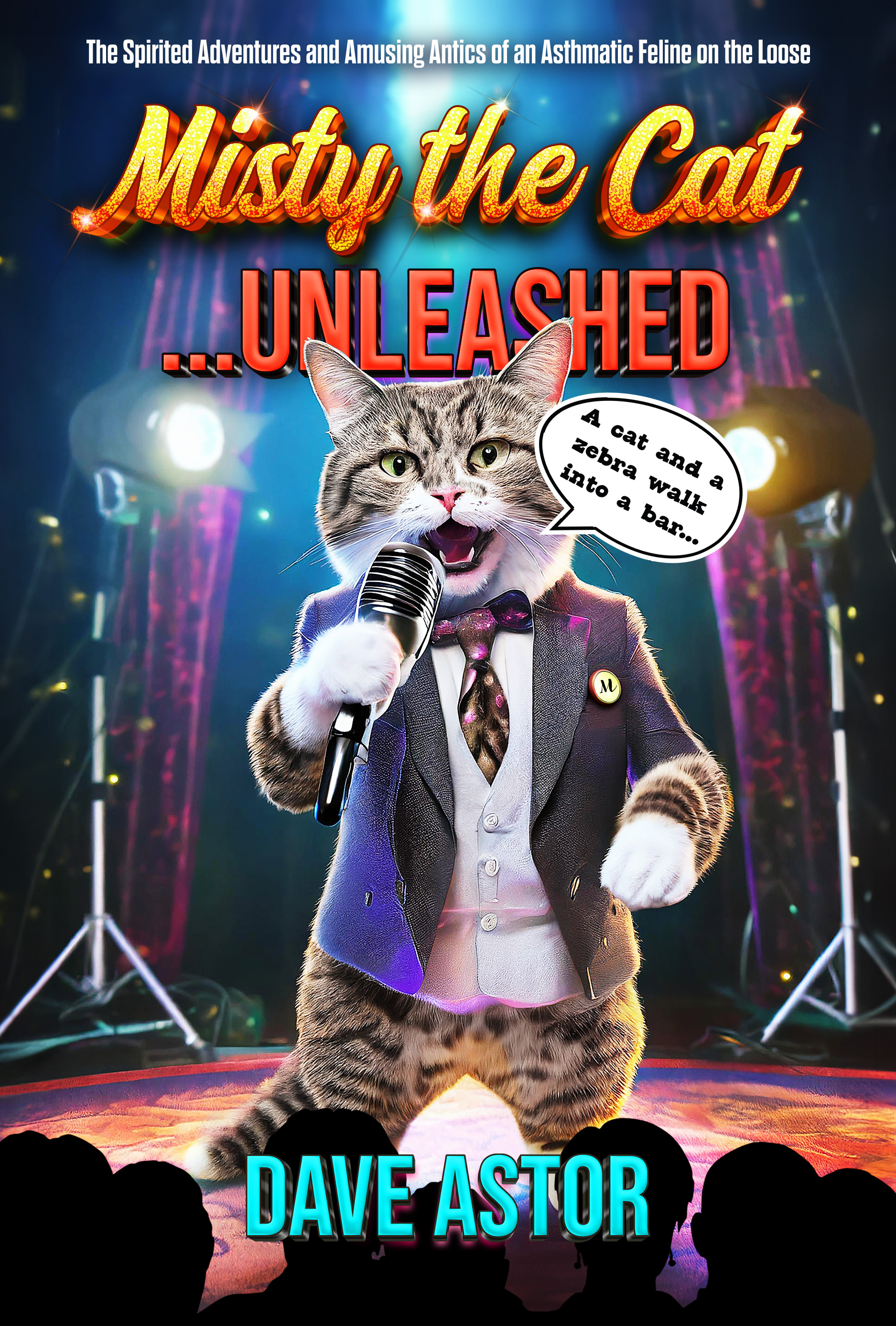
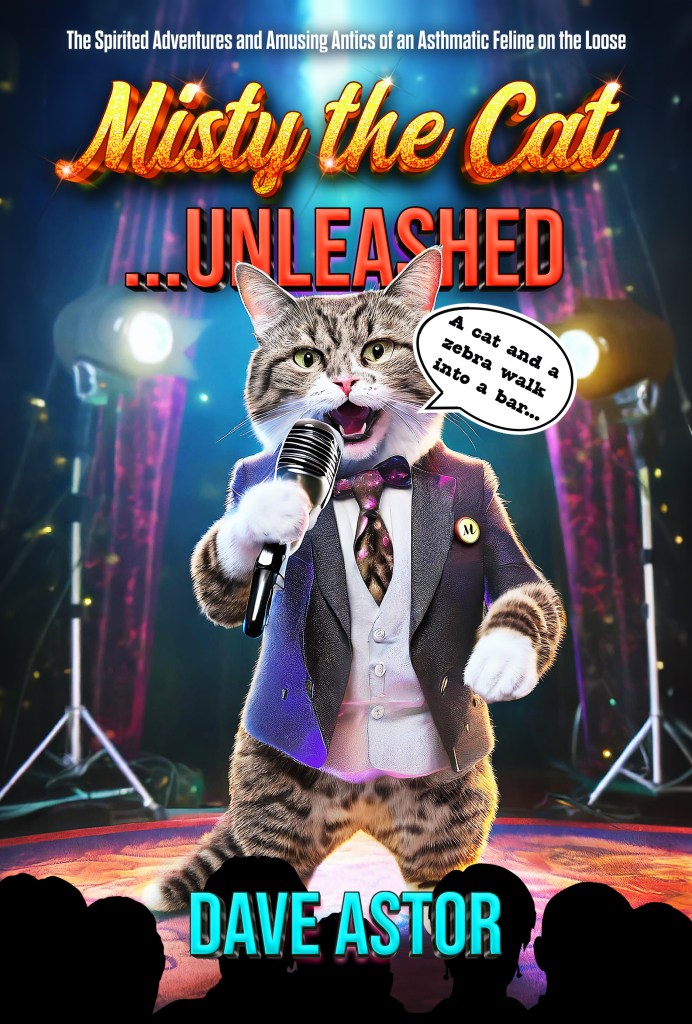
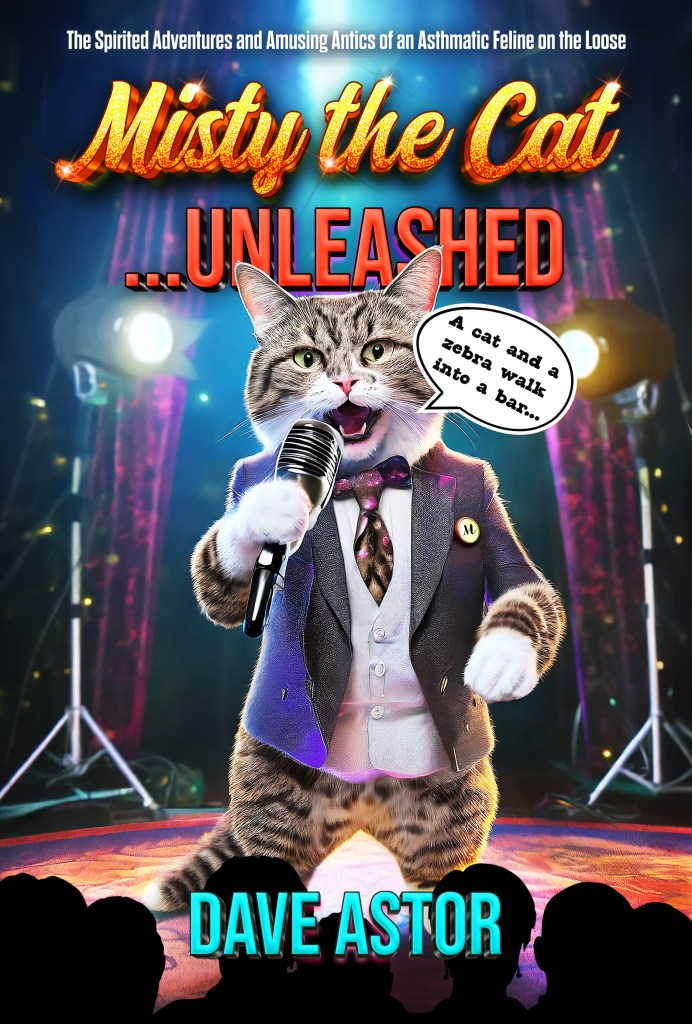
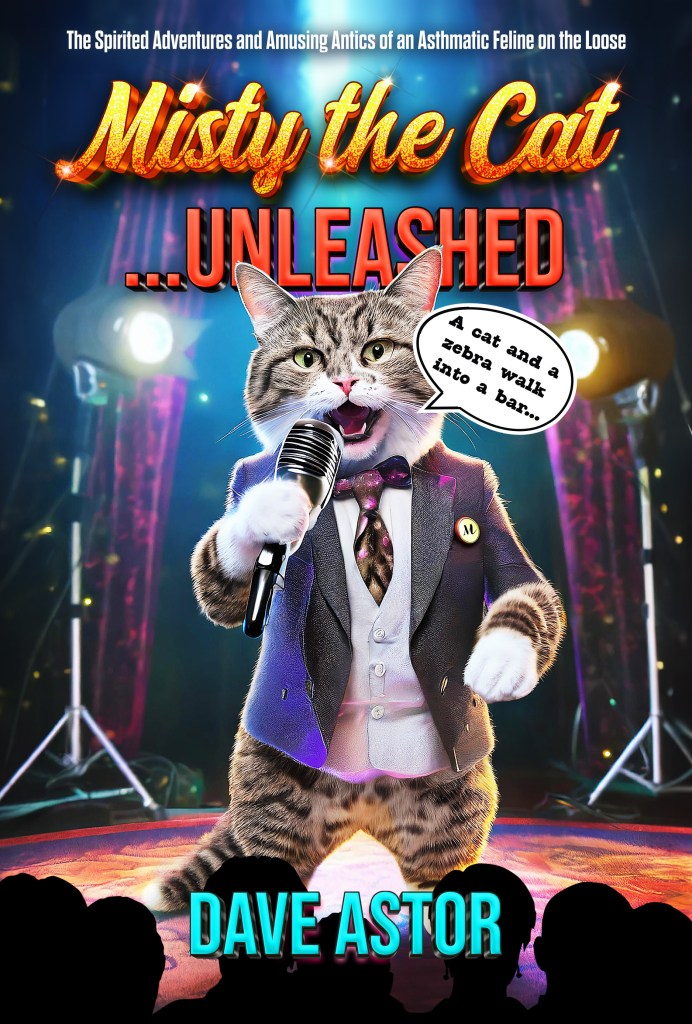
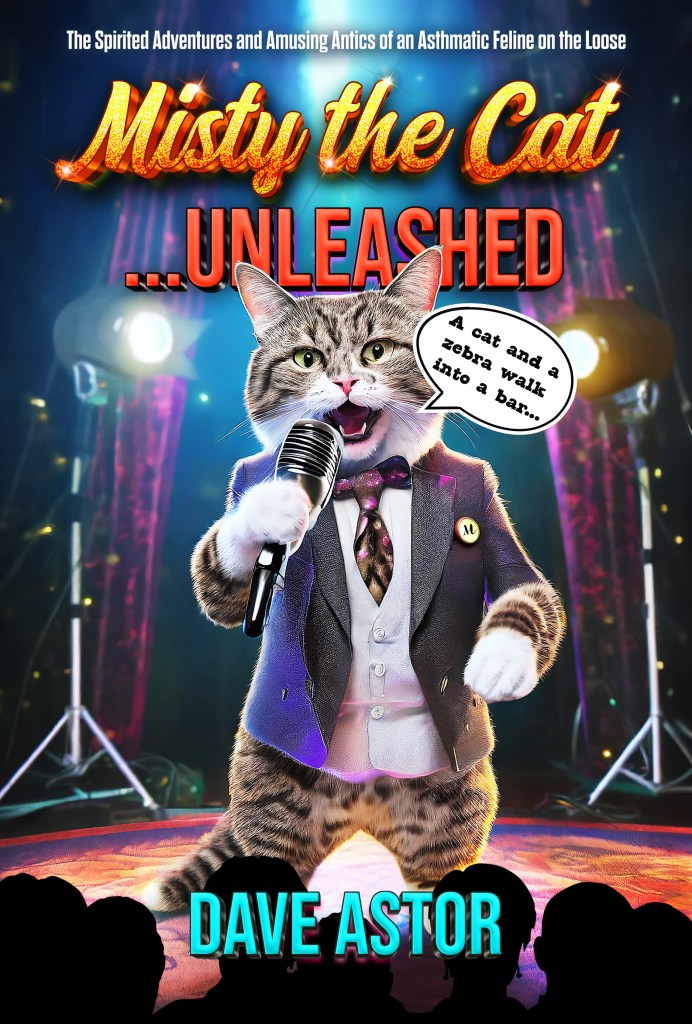
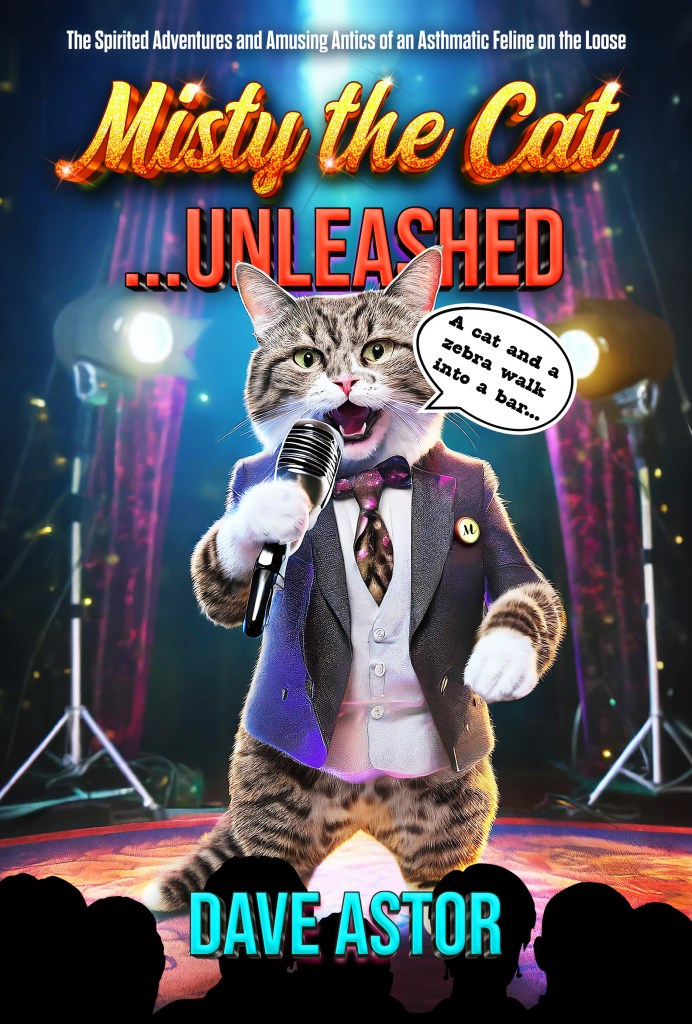
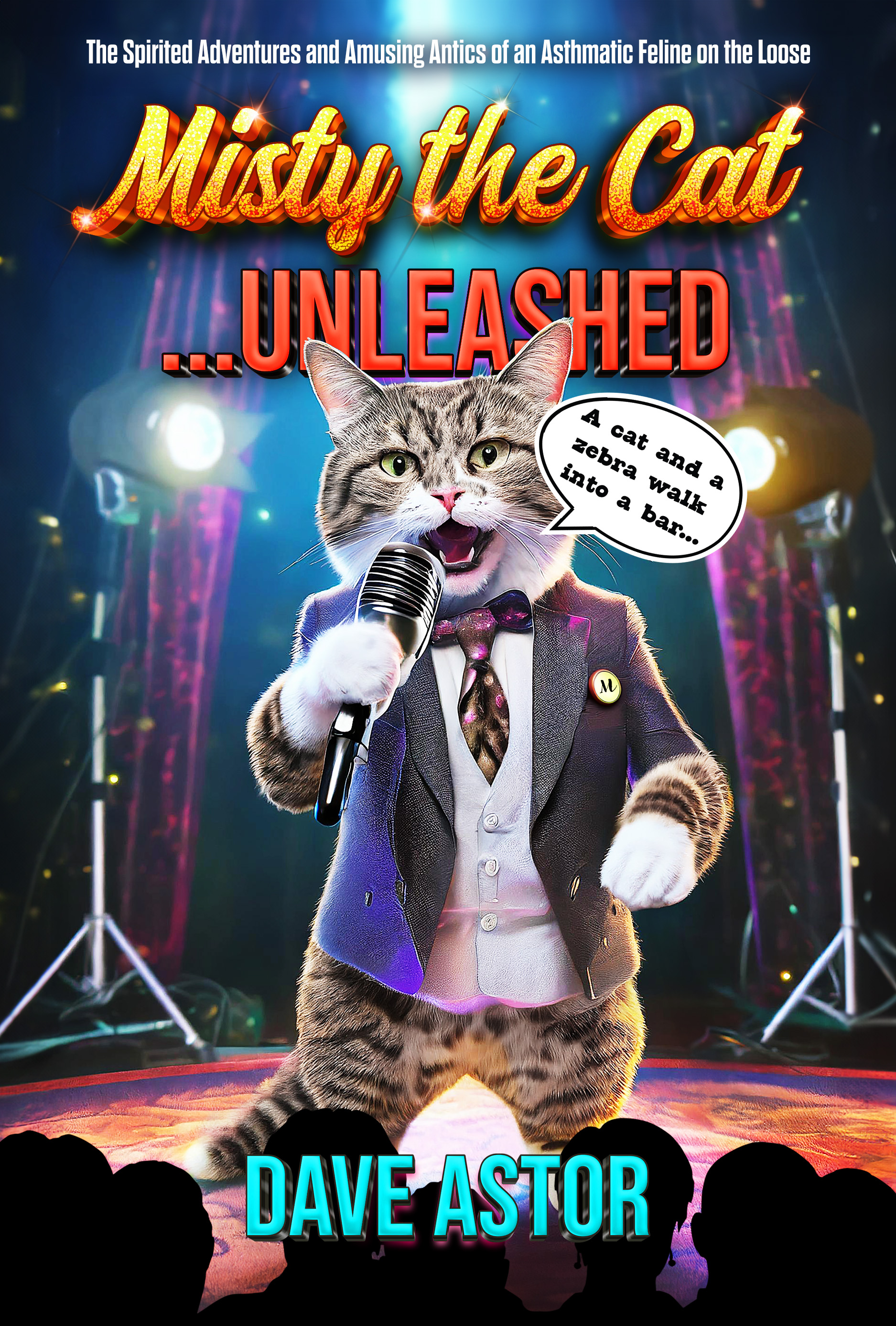
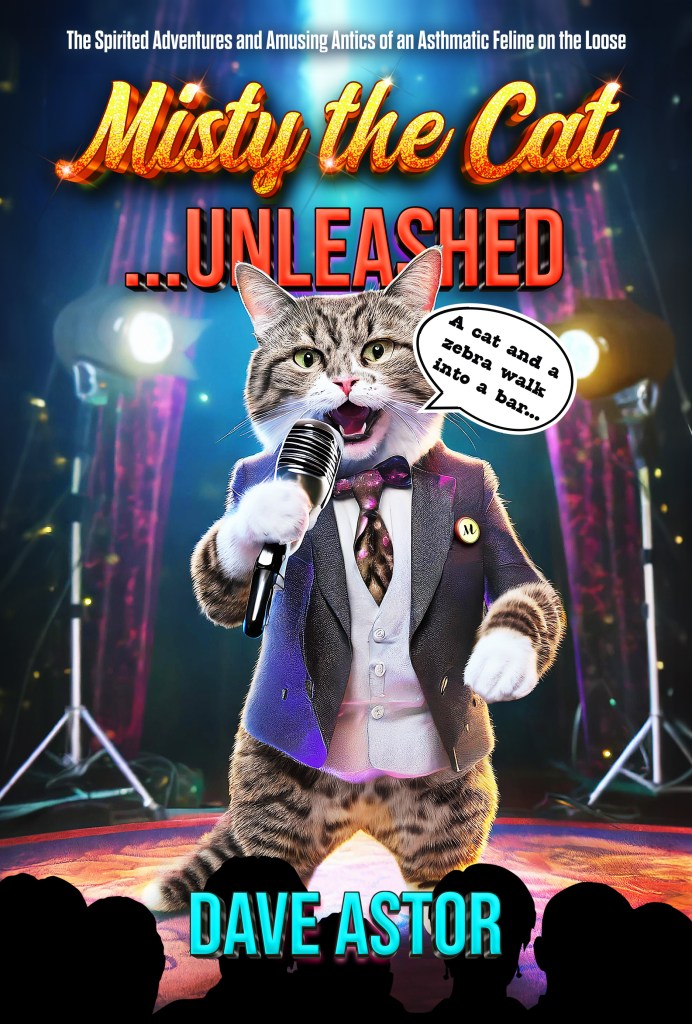
My comedic 2024 book — the part-factual/part-fictional/not-a-children’s-work Misty the Cat…Unleashed — is described and can be purchased on Amazon in paperback or on Kindle. It’s feline-narrated! (And Amazon reviews are welcome. 🙂 )
This 90-second promo video for the book features a talking cat: 🙂

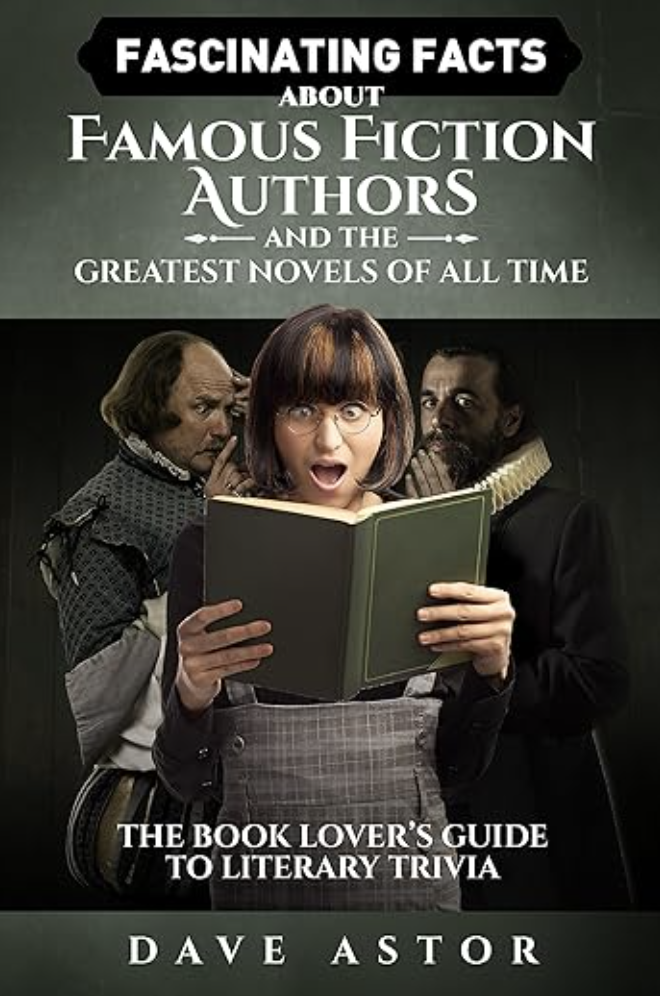
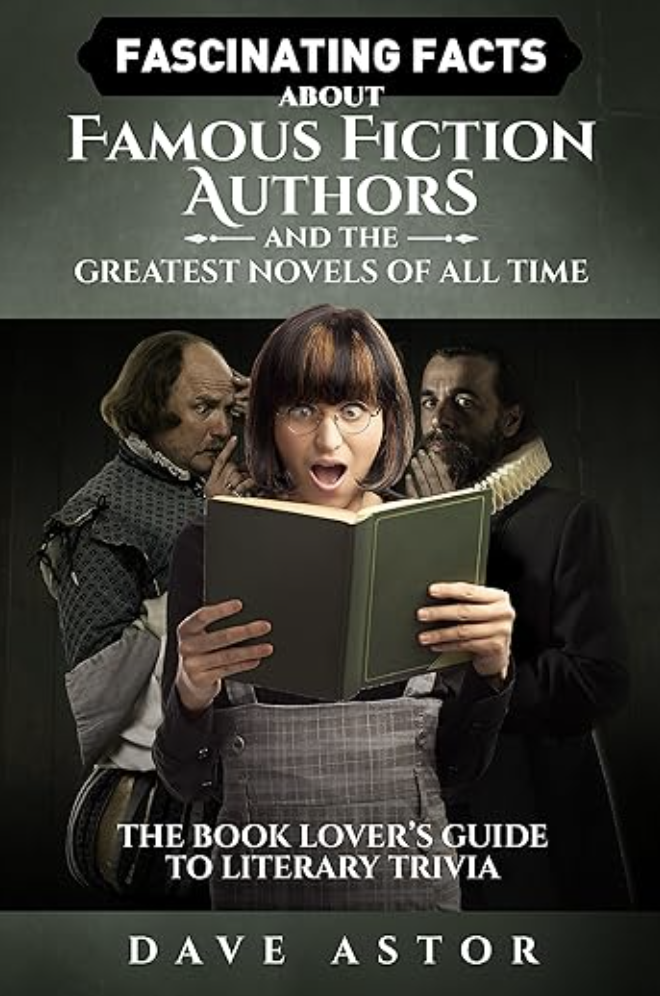
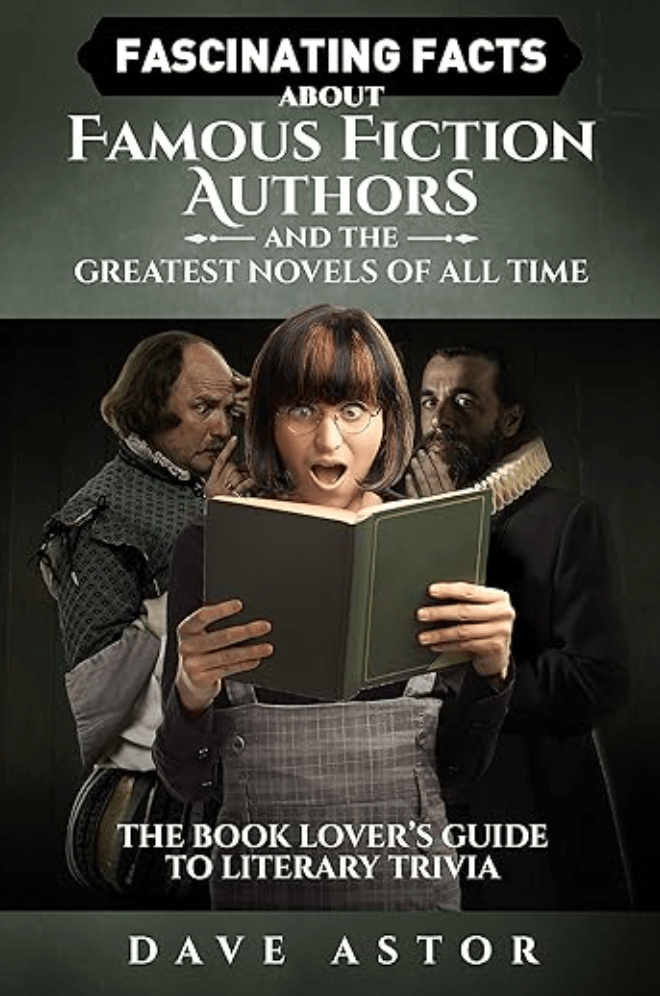
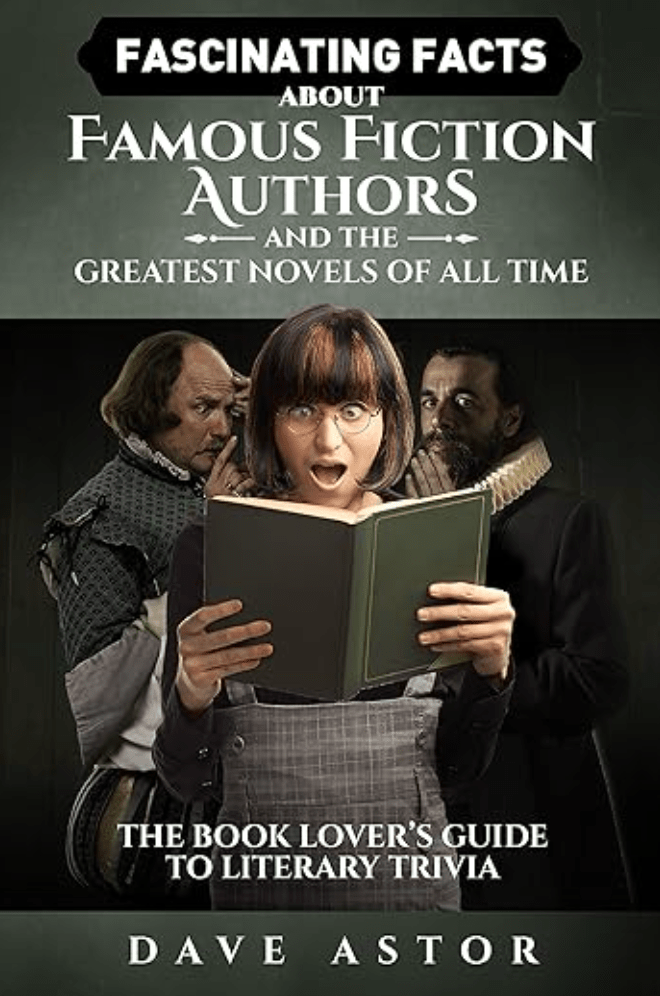
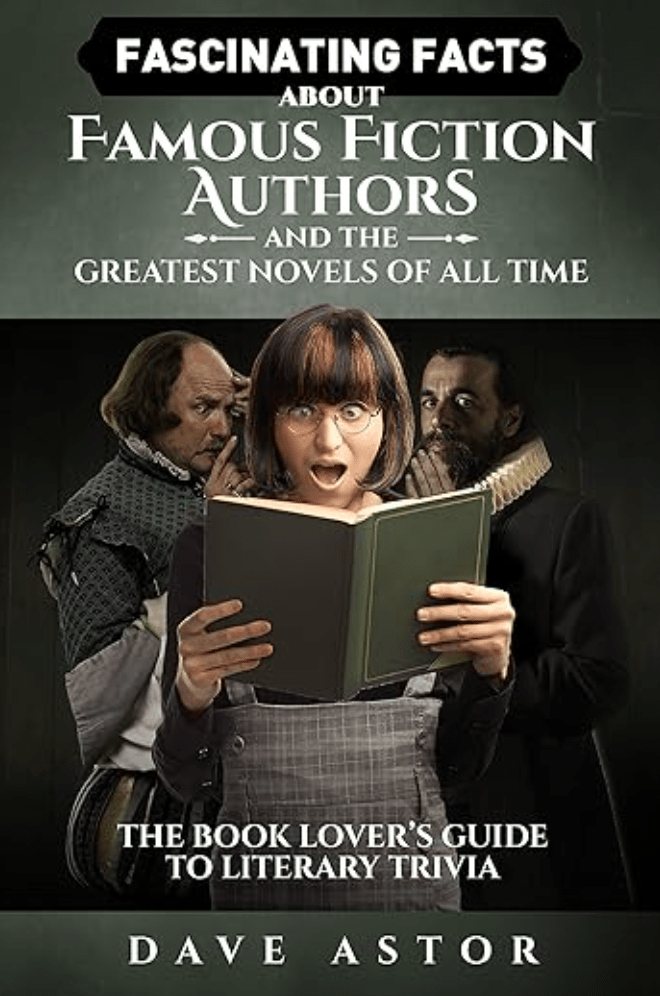
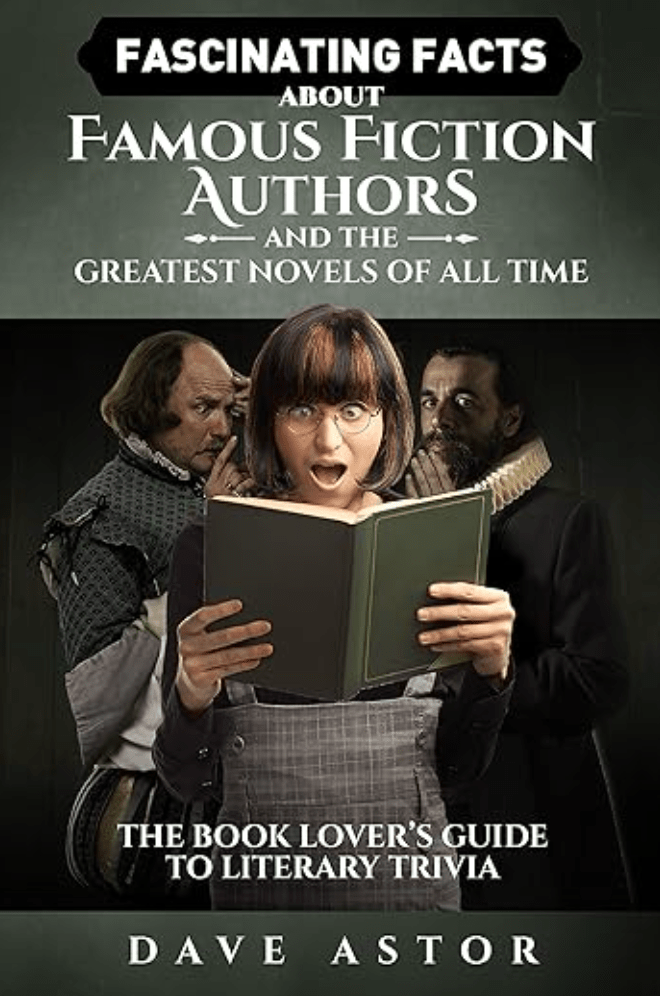
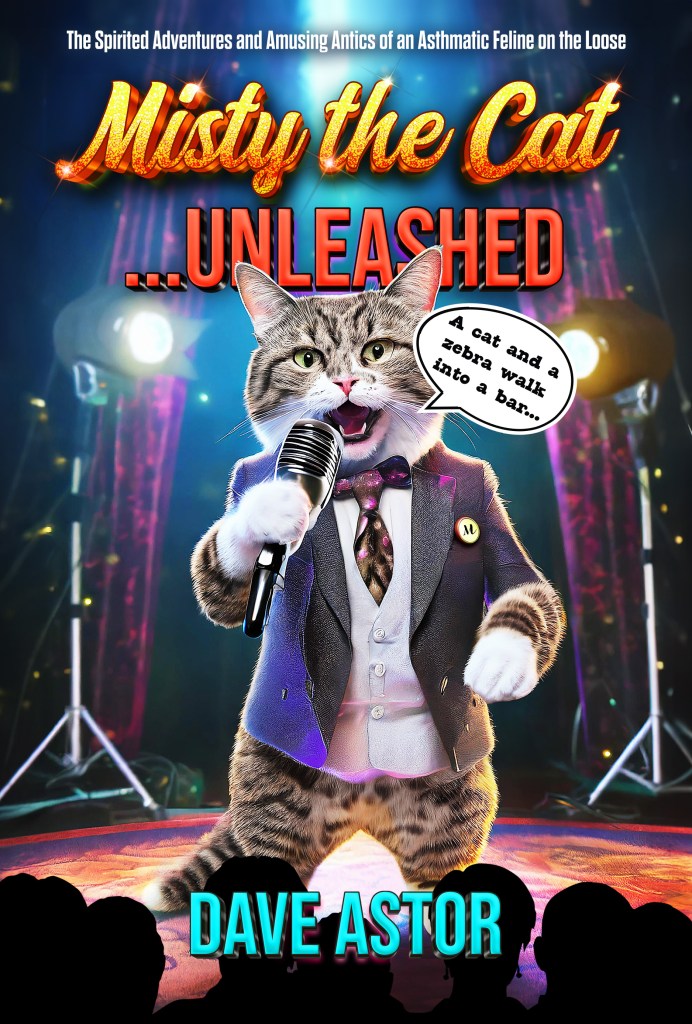
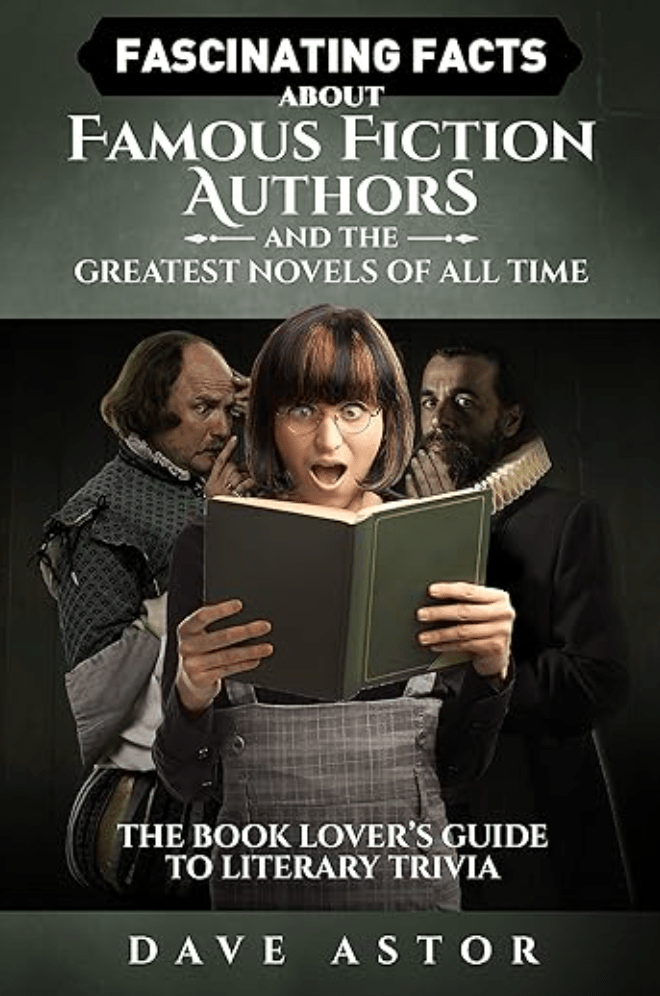
I’m also the author of a 2017 literary-trivia book

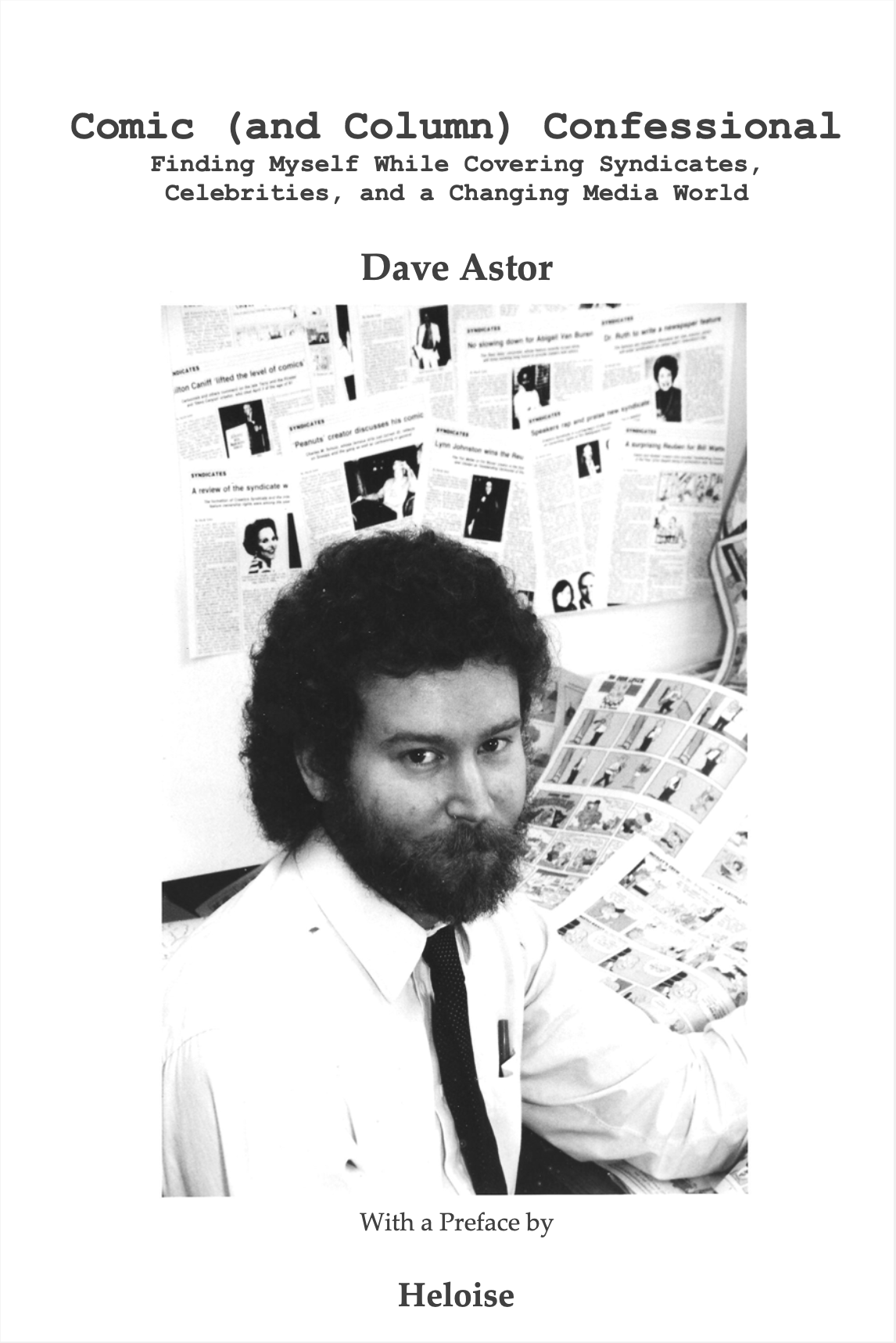
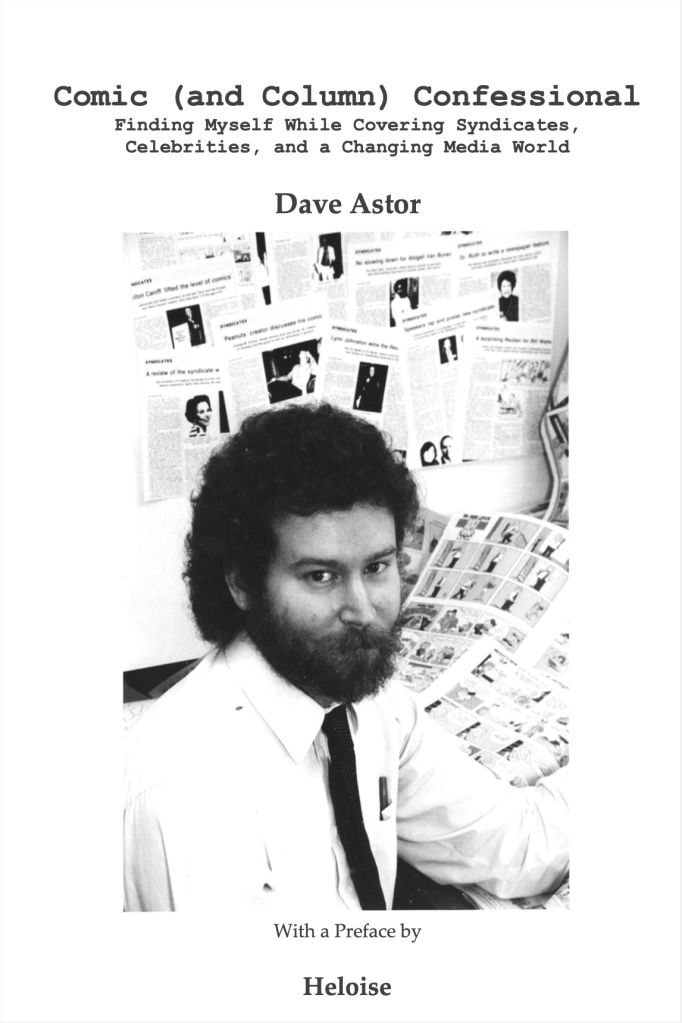
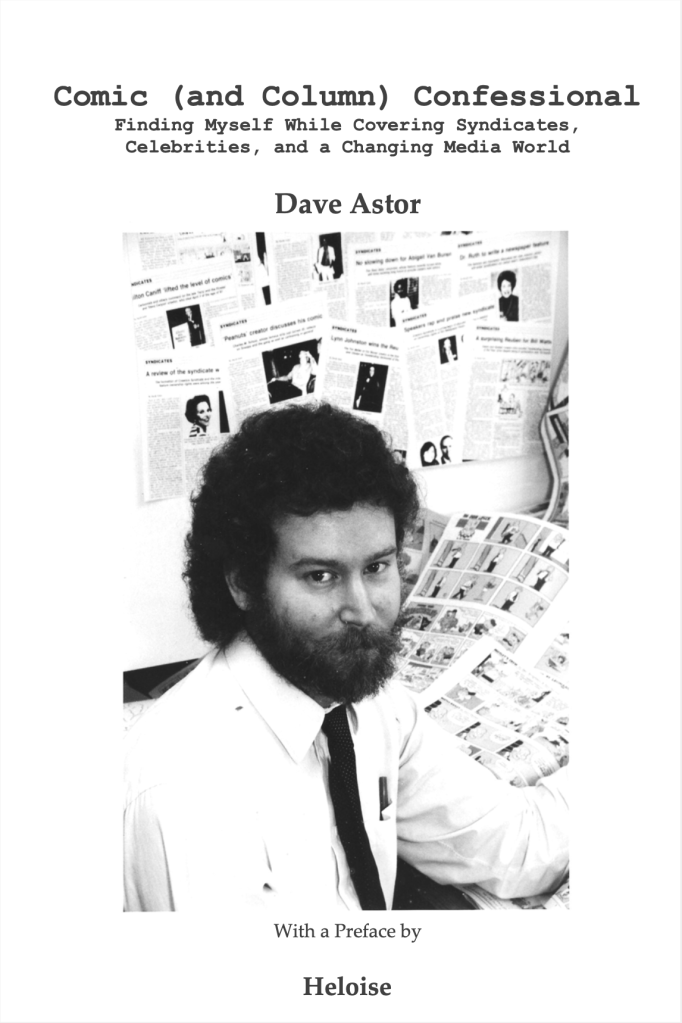
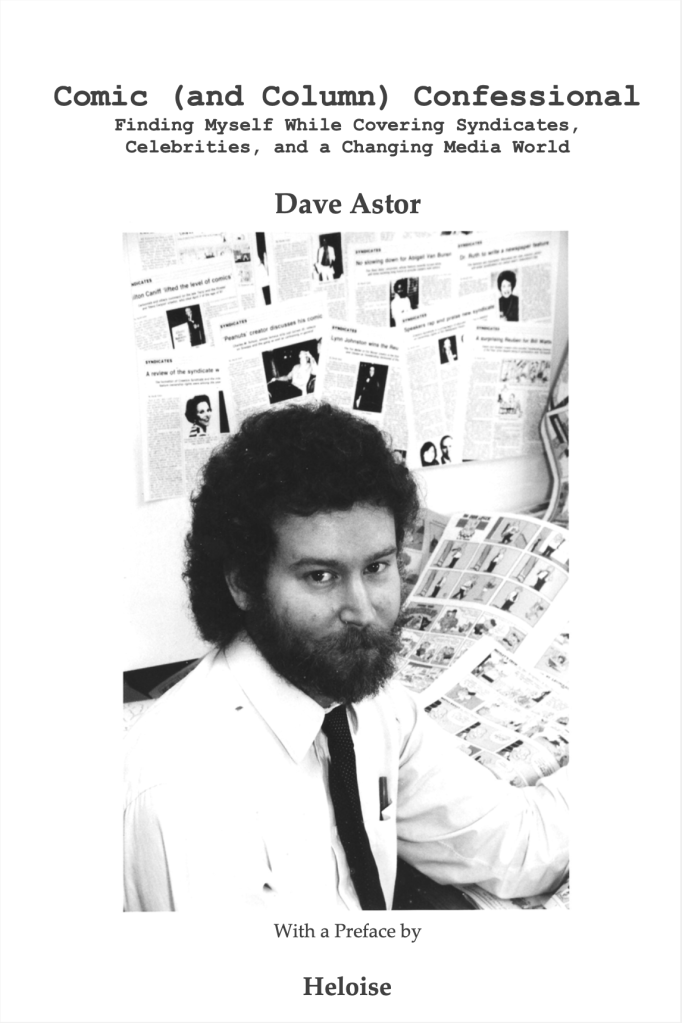
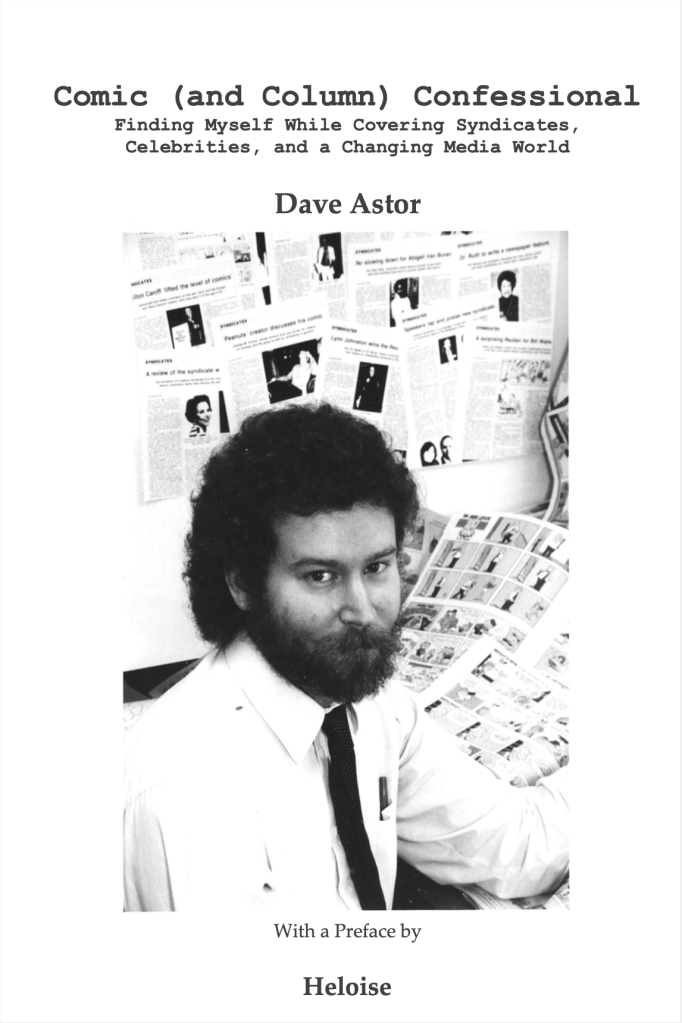
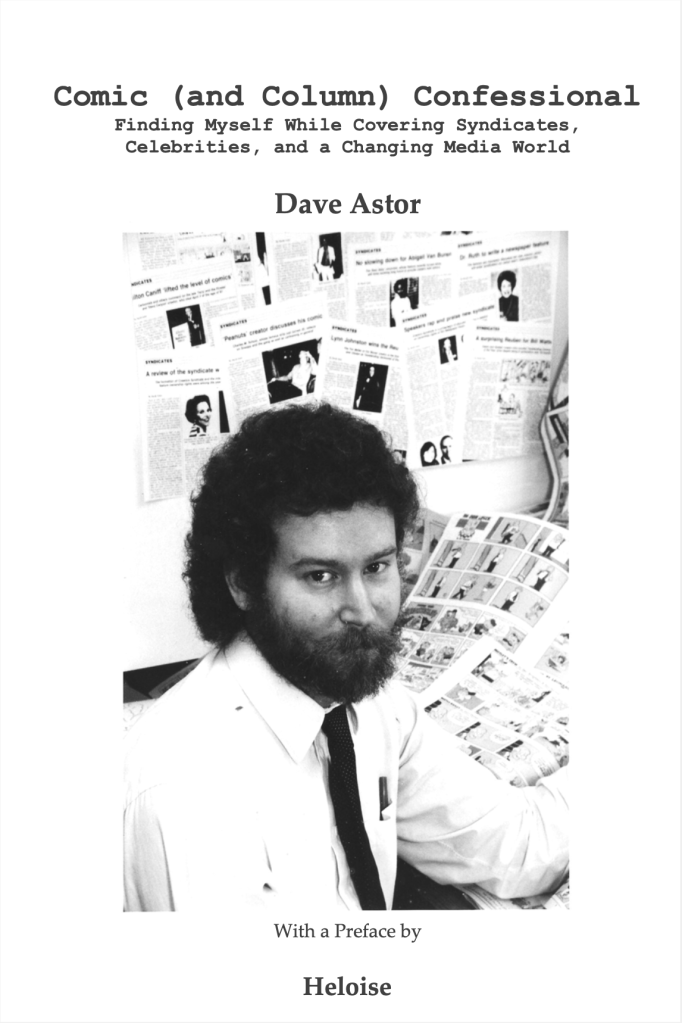
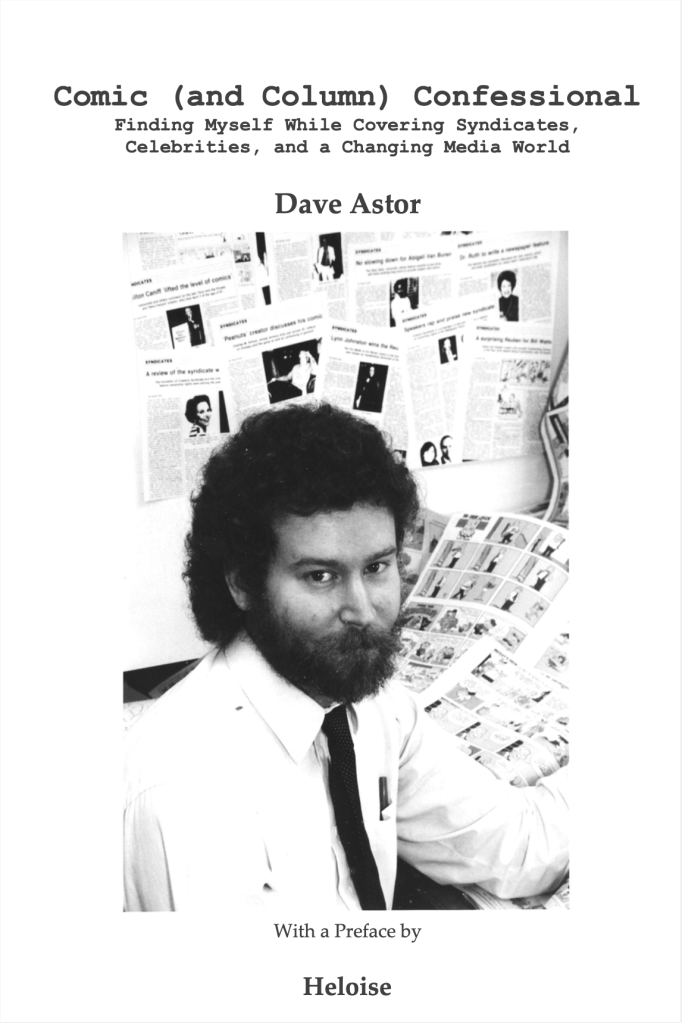
…and a 2012 memoir that focuses on cartooning and more, including many encounters with celebrities.
In addition to this weekly blog, I write the 2003-started/award-winning “Montclairvoyant” topical-humor column every Thursday for Montclair Local. The latest piece — which has “no appeal” appeal — is here.

Feline Post Includes Mentions of Jane Austen and ‘The Host’

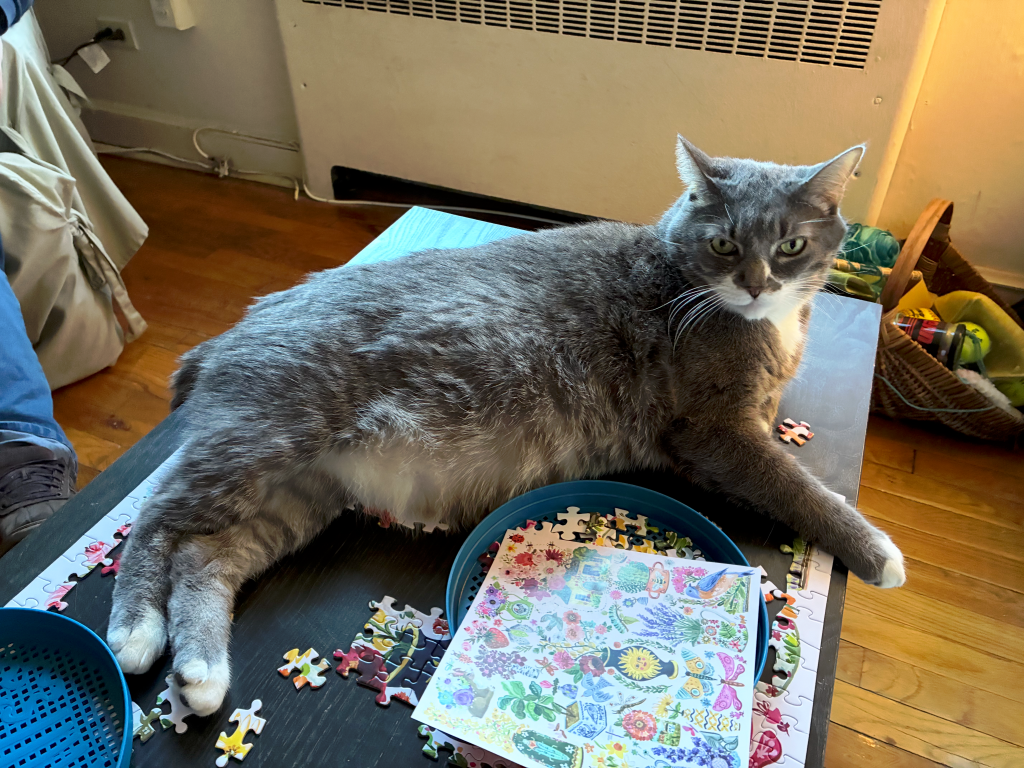
I, Misty the cat, say: “Putting together a guest blog post is like putting together a puzzle.” (Photo of my kitty self taken by my adult female human Laurel.)

Misty the cat here, returning for my every-two-month takeover of Dave’s blog — which I do by gunpoint, minus the gun. This is a particularly memorable time for me to post because tomorrow is the 8th anniversary of my adoption into my forever family, from whom I’ve received everything I could desire except a bed the size and shape of Buckingham Palace. King Chuck III has some ‘splaining to do.

And in nine days — December 16 — there’ll be a milestone moment for literature: the 250th anniversary of Jane Austen’s 1775 birth! Rebecca Budd, who comments here every week, has already posted about that anniversary in one of her great blogs. The year 1775 was also significant for being the start of the American Revolutionary War and for Apple’s rollout of the iMusket 9.

Back to Austen. I’m often (well, never) asked how I rank her six novels, and here’s my kitty answer: 1, 2, 3, 4, 5, 6. Oh, you want titles, too? 1) Persuasion. 2) Pride and Prejudice. 3) Sense and Sensibility. 4) Mansfield Park. 5) Emma. 6) Northanger Abbey. This is also Dave’s order of faves (rhyme alert!), which means we were both bribed by the same literary scholars. Austen’s early 19th-century books have aged well…partly because I keep them in my wine cellar. Actually, I don’t have a wine cellar. No cat does.

And today, December 7, is the 84th anniversary of the 1941 attack on Pearl Harbor, an event vividly depicted near the end of Herman Wouk’s compelling novel The Winds of War. If those winds had become strong enough, Wouk’s book would’ve been titled The Hurricanes of War — storms that fall alphabetically between Hurricane Violin and Hurricane Xylophone.

The Winds of War was followed by Wouk’s epic War and Remembrance — the title of which has the initials “WAR.” Coincidence? Well, Hurricane Coincidence falls alphabetically between Hurricane Bassoon and Hurricane Didgeridoo.

My current reading? I, Misty the cat, recently finished Twilight author Stephenie Meyer’s The Host, an excellent work of sci-fi that stars a being who lives inside a human body. So, no, the book is not a historical novel about Johnny Carson, who was not related to The Heart Is a Lonely Hunter author Carson McCullers, who was a top-notch writer but apparently didn’t know that a heart can’t hunt animals without a permit and that vegans prefer Fannie Flagg’s novel Fried Green Tomatoes at the Whistle Stop Cafe. Also, American frontiersman Kit Carson was not a feline like me.

Natty Bumppo did the frontiersman thing, too, in James Fenimore Cooper’s five “Leatherstocking” novels that included The Last of the Mohicans. Cooper was an American contemporary of aforementioned Englishwoman Jane Austen, and there are even rumors that they collaborated on a novel called The Last of the Emmas. So I’m puzzled (see photo) that we later had people such as actresses Emma Thompson and Emma Watson.

The latter of course played Hermione Granger in the Harry Potter movies based on the J.K. Rowling novels. Seven books, eight movies, and nine lives (experienced by cats like me). Plus there are 10 characters in Agatha Christie’s famed mystery novel And Then There Were None, whose plot focuses on the number of dry-food pellets left in my bowl after I finish eating. No mystery where those pellets went.

Which books do I want for Christmas? Charles Dickens’ A Christmas Carol, Fannie Flagg’s A Redbird Christmas, John Grisham’s Skipping Christmas, Betty Smith’s A Christmas Tree Grows in Brooklyn, Anthony Burgess’ A Christmas Orange, Fyodor Dostoevsky’s Christmas and Punishment, Aldous Huxley’s Brave New Christmas, Barbara Kingsolver’s Demon Christmashead, E.M. Forster’s A Passage to Christmas, Chinua Achebe’s Christmas Falls Apart

Dave will reply to comments as I either finish the puzzle I’m photographed with or swat every piece of that puzzle into January 2026.

I, Misty the cat, say: “There’s gotta be a sidewalk sale around here somewhere.”

Dave and my comedic 2024 book — the part-factual/part-fictional/not-a-children’s-work Misty the Cat…Unleashed — is described and can be purchased on Amazon in paperback or on Kindle. It’s feline-narrated! (And Amazon reviews are welcome. 🙂 )

This 90-second promo video for the book features a talking cat: 🙂

Dave is also the author of a 2017 literary-trivia book

…and a 2012 memoir that focuses on cartooning and more, including many encounters with celebrities.

In addition to this weekly blog, Dave writes the 2003-started/award-winning “Montclairvoyant” topical-humor column every Thursday for Montclair Local. The latest piece — from which Sir Walter Scott should remove himself from discussion of a referendum-halting court decision — is here.
Cars Can Help Drive the Plots of Novels

Our 2014 Toyota Prius leaving its apartment-complex garage. (Driven by my wife Laurel/photographed by me.)

My wife Laurel and I drove from New Jersey to Michigan and back this weekend for a memorial service in Ann Arbor for a cherished family member. It was a crazily compressed November 14-16 car journey of more than 1,200 miles round trip — a travel method we chose to avoid possible flight problems in the aftermath of the U.S. government shutdown.

Anyway, all that automotive time means I have driving on my mind, so I’m resurrecting a piece about cars in literature that I wrote for The Huffington Post in 2013, a year before starting this WordPress blog. Here it is, slightly edited and slightly rewritten:

In literature, sometimes a car is just a car. But sometimes it’s a “vehicle” for authors to write about independence, loneliness, progress, sex, death, wealth, poverty, and more.

Whether or not book-based cars are weighted with symbolism, most readers relate to driving. So I’d like to steer you to some novels in which cars are important “characters,” and then hear about your favorite fictional works that feature those on-the-road contraptions.

Which reminds me of Jack Kerouac’s On the Road novel and the way some cars in literature are used to search (futilely or otherwise) for freedom and/or pleasure, and can speak to characters’ restlessness, aimlessness, and/or discontent.

That’s the case in Paul Auster’s The Music of Chance. Protagonist Jim Nashe spends the first part of the novel endlessly crisscrossing the U.S. in a car after his wife leaves him. The ex-firefighter, who finances his marathon road trip with an unexpected inheritance, eventually ends up involved in a high-stakes poker game at the mansion of two eccentric/heartless rich guys. Then things get really weird before the novel concludes with (wait for it!) one more car ride.

There’s another fateful auto scene — though not at the end of the book — in Jeffrey Eugenides’ Middlesex. It’s a car chase that features Calliope’s dad Milton driving too fast on the Ambassador Bridge between Detroit and Canada.

Motor vehicles also figure prominently in Booth Tarkington’s The Magnificent Ambersons, with successful automaker Eugene Morgan representing turn-of-the-20th-century progress while Major Amberson and his dwindling fortune represent the vanishing horse-and-buggy age. New money vs. old money and all that.

Tarkington contemporary L.M. Montgomery offers a scene in The Blue Castle of Valancy Stirling sharing an exuberant car ride with “misfit” Barney Snaith. Many people in their straitlaced town are suspicious of Barney, but Valancy finds him very interesting — so the car ride is a symbol of Valancy’s break from the conventions of her place, time, and family.

Novels of the Montgomery-Tarkington era were usually subtle about sex, but that’s not the case with many books of recent decades. For instance, there’s a scene in Ken Grimwood’s time-travel novel Replay that shows how cars can potentially be bedrooms on wheels.

Speaking of time travel, there’s a great section of Jack Finney’s Time and Again in which Simon accompanies Julia from her present (1880s) to his present (around 1970), and Julia is of course stunned by the experience of riding in a modern motor vehicle.

Readers are the ones who might be stunned as they peruse Charles Dickinson’s The Widows’ Adventures, a novel starring two women on a long road trip. The one doing the driving is…blind!

Then there are supernatural thrills in car-oriented Stephen King novels such as Christine and From a Buick 8. The latter book includes a spooky gas station scene before various law-enforcement people enter the story.

Two memorable moments in Cormac McCathy’s Suttree involve what the title character does to a police car (to avenge racist cop behavior) and what Suttree’s girlfriend does to the couple’s own car. And in Fay Weldon’s The Bulgari Connection, the spurned older wife is jailed after using an auto to do a certain something to the trophy wife who “replaced” her.

Or how about that tense yet hilarious Harry Potter and the Chamber of Secrets scene in which J.K. Rowling has Harry and Ron travel to Hogwarts in a flying car? An auto can definitely be a “vehicle” for humor.

On a much more serious note, a car converted into a truck of sorts is how the Joad family travels from drought-stricken/agribusiness-devastated Oklahoma to a hoped-for better life in California. But the reality out west for the non-rich is as dismal as the Joads’ aged jalopy in John Steinbeck’s The Grapes of Wrath.

People take long car trips for various reasons. In John Grisham’s The Client, attorney Reggie Love and her beleaguered 11-year-old client Mark drive from Memphis to New Orleans to try to locate the body of a murdered U.S. senator.

What are your favorite fictional works with motor vehicle motifs?

Misty the cat says: “The Lincoln Tunnel has been renovated!”

My comedic 2024 book — the part-factual/part-fictional/not-a-children’s-work Misty the Cat…Unleashed — is described and can be purchased on Amazon in paperback or on Kindle. It’s feline-narrated! (And Amazon reviews are welcome. 🙂 )

This 90-second promo video for the book features a talking cat: 🙂

I’m also the author of a 2017 literary-trivia book

…and a 2012 memoir that focuses on cartooning and more, including many encounters with celebrities.

In addition to this weekly blog, I write the 2003-started/award-winning “Montclairvoyant” topical-humor column every Thursday for Montclair Local. The latest piece — about two flawed local ballot questions relating to a massive school budget deficit — is here.
Novels with a Sunshine State of Mind

A Delray Beach retirement community in 2018. (Photo by me.)

Florida! Beaches. Palm trees. Retired senior citizens. Disney World. Miami Vice. Kennedy Space Center/Cape Canaveral. Many nationally known pro and college teams in football and other sports. A once-blue but now-red state led by far-right/mean-spirited Governor Ron DeSantis. The home state of far-right/mean-spirited President Donald Trump, a New York native.

“The Sunshine State” has personal elements for me, too. After she retired, my New York-born/later-New Jersey-based mother lived in Delray Beach from the early 1990s to her death in 2018. My wife has extended family in Florida, where I also have friends. I covered conferences in Orlando, Sarasota, and Boca Raton when I was a magazine writer.

As you might expect, I’m also going to discuss Florida’s various literary connections. It’s one of the places where Ernest Hemingway lived — in Key West. The state is associated as well with novelists Zora Neale Hurston and Marjorie Kinnan Rawlings, columnists/authors Dave Barry and Carl Hiaasen, and other wordsmiths. And it’s the state where “The Wizarding World of Harry Potter” is located — a theme park inspired, of course, by the blockbuster J.K. Rowling series.

I didn’t plan this, but the last two novels I read were set a little or mostly in Florida. First there was James Leo Herlihy’s Midnight Cowboy (known more for the iconic movie), a riveting book about a down-and-out Texas hustler in New York City who ends up taking a fraught bus ride to Miami. Then I proceeded to James Michener’s Recessional, which takes a poignant and very absorbing look at a senior facility near Tampa. It was Michener’s final novel — published when he was 87 — so the author really “lived” the subject matter.

Other novels with partial or mainly Florida settings? Referencing authors already mentioned in this post, there was Zora Neale Hurston’s compelling classic Their Eyes Were Watching God starring a memorable independent woman, Marjorie Kinnan Rawling’s Pulitzer Prize-winning The Yearling featuring a boy and his fawn, and Ernest Hemingway’s fishing-boat saga To Have and Have Not.

I’ve read the columns of Dave Barry and Carl Hiaasen, and met and written about both men, but have not tried any of their books.

But I have read Rita Mae Brown’s Rubyfruit Jungle, in which the lesbian protagonist leaves Florida for more-tolerant New York City; Colson Whitehead’s The Nickel Boys, much of which is set at a problematic reform school in Florida; Joy Fielding’s Cul-de-sac, a page-turner about the families living on one suburban Florida street; John Grisham’s thriller Camino Island, in which manuscripts of F. Scott Fitzgerald play a prominent role; and Peter Straub’s Ghost Story, which — not surprisingly for a novel partly set in Florida — prominently features senior citizens in its cast.

Thoughts about and/or examples of this theme?

Misty the cat says: 🎵 “There’s something happening here/what it is ain’t exactly clear.” 🎵

My comedic 2024 book — the part-factual/part-fictional/not-a-children’s-work Misty the Cat…Unleashed — is described and can be purchased on Amazon in paperback or on Kindle. It’s feline-narrated! (And Amazon reviews are welcome. 🙂 )

This 90-second promo video for the book features a talking cat: 🙂

I’m also the author of a 2017 literary-trivia book

…and a 2012 memoir that focuses on cartooning and more, with many encounters with celebrities.

In addition to this weekly blog, I write the 2003-started/award-winning “Montclairvoyant” topical-humor column every Thursday for Montclair Local. The latest piece — about awful massive layoffs in my school district, upcoming elections, and more — is here.

Spies in Literature

From the trailer for 1959’s film version of Our Man in Havana.

I should have posted this “Spies in Literature” piece last Sunday the 7th in honor of Agent 007 James Bond, but I hadn’t yet finished the novel that inspired what you’re about to read.

That interesting 1958 book is Graham Greene’s Our Man in Havana, and while its protagonist James Wormold is not a typical spy (he’s a vacuum-cleaner salesperson who reluctantly accepts recruitment as an agent), he nonetheless ends up in espionage.

Wormold is a satirical creation — the reports he submits to headquarters are pure fiction — but many other spies in literature are quite serious characters even if some humor might occasionally enter the mix. These secret agents can make for compelling reading as they get into adventures, risk their lives, save lives, end lives, do undercover work for good or evil patrons, inhabit a milieu of geopolitical machinations, etc.

I initially mentioned James Bond, and have seen a couple of movies starring him, but must admit I’ve never read any of the Ian Fleming novels that inspired the long-running 007 film franchise.

But I have enjoyed a handful of other books with spy characters. One author quite famous for that genre is John le Carré, whose The Russia House (1989) is the only novel of his I’ve read. It unfolds near the end of the Cold War — just before the breakup of the Soviet Union — and is pretty absorbing.

The Cold War of course has inspired many a spy novel, which could include Viet Tranh Nguyen’s The Sympathizer if the Vietnam War is considered partly a manifestation of that era’s United States/Soviet Union tensions. His seriocomic 2015 novel — set in 1975 and subsequent years — is told by an unnamed North Vietnamese mole in the South Vietnamese army who remains embedded in a South Vietnamese immigrant community in the U.S. Its sequel, The Committed, was published in 2021.

Obviously, not all espionage novels have a Cold War connection. For instance, James Fenimore Cooper’s 1821-released The Spy (hmm…I wonder what its title character is 🙂 ) takes place during the American Revolutionary War of several decades earlier.

And in the Harry Potter series, Severus Snape is a spy of sorts — and the most complex and morally ambivalent character in those seven J.K. Rowling novels.

I’ve barely touched the surface here, as I haven’t read that many books with secret-agent characters. Any thoughts on spies in literature? Your favorite characters and novels in this realm?

Misty the cat says: “I see thorns but not birds, so ‘The Thorn Birds’ novel doesn’t exist.”

My comedic 2024 book — the part-factual/part-fictional/not-a-children’s-work Misty the Cat…Unleashed — is described and can be purchased on Amazon in paperback or on Kindle. It’s feline-narrated! (And Misty says Amazon reviews are welcome. 🙂 )

This 90-second promo video for the book features a talking cat: 🙂

I’m also the author of a 2017 literary-trivia book

…and a 2012 memoir that focuses on cartooning and more.

In addition to this weekly blog, I write the 2003-started/award-winning “Montclairvoyant” topical-humor column every Thursday for Montclair Local. The latest piece — about another LONG Township Council meeting and more — is here.

The Books of Sleuth

It’s been a while since I wrote a post focusing on crime novels, so let’s get fictionally felonious again! Today, I’m going to discuss some of my favorite detectives/investigators in literature.

Their exploits can be compelling and satisfying for various reasons, including the wish-fulfillment aspect of seeing criminals get their comeuppance — though not always, and even those caught or killed can wreak a lot of havoc before their illegal work is done. Then there’s the appeal of intricate plots, trying to guess the culprits, seeing how fictional sleuths solve cases, enjoying the interesting and at-times weird personality traits of the detectives and criminals, etc.

Fictional sleuths — some professional, some amateur — are on my mind after having read four of Tarquin Hall’s India-set mysteries the past few weeks. They star private investigator Vish Puri — a brilliant, incorruptible, overeating, occasionally comedic, unfortunately a bit sexist character who solves various quirky cases. Just how quirky is telegraphed by the titles of some of Hall’s books, including The Case of the Man Who Died Laughing (2010) and The Case of the Deadly Butter Chicken (2012).

Yes, sleuths are often in multiple novels — including J.K. Rowling’s superb crime series starring Cormoran Strike and Robin Ellacott. Those two characters are brave, brainy, charismatic investigators who carry some serious physical or psychological baggage and, while work partners, are secretly in love with each other. It’s saying something that I find that 2013-launched series — written under the pen name Robert Galbraith — almost as compelling as Rowling’s earlier Harry Potter books.

Also excellent are Walter Mosley’s novels starring another expert investigator: Easy Rawlins, an African-American World War II veteran who lives in Los Angeles. The series began with the 1990-published Devil in a Blue Dress, and now has 16 installments set from the 1940s to 1960s.

Absorbing, too, are Louise Penny’s atmospheric Canada-set novels featuring inspector Armand Gamache.

And there are Val McDermid’s great books starring cold case detective Karen Pirie that I won’t get into today because I’ve recently written about them in other contexts.

Some other contemporary authors have created characters who are not detectives per se but do plenty of incisive sleuthing to solve crimes. Among them are bounty hunter Stephanie Plum in Janet Evanovich’s mysteries, attorney Mickey Haller in Michael Connelly’s books, and the roaming Jack Reacher in the novels by Lee Child (with recent titles co-written by Andrew Child).

Then of course there are past authors who created detectives — many quite iconic. Arthur Conan Doyle’s Sherlock Holmes (in novels and short stories), Edgar Allan Poe’s C. Auguste Dupin (in short stories), Agatha Christie’s Hercule Poirot and Miss Marple (of course!), Wilkie Collins’ Sgt. Richard Cuff (of The Moonstone), Umberto Eco’s William of Baskerville (in The Name of the Rose), Sue Grafton’s Kinsey Millhone (of alphabet mysteries fame), Dorothy L. Sayers’ Peter Wimsey/Harriet Vane duo, Raymond Chandler’s Philip Marlowe, Dashiell Hammett’s Sam Spade, P.D. James’ Adam Dalgliesh, etc.

And, in books penned by multiple authors over the years…Nancy Drew!

Comments about this post? Fictional sleuths you’ve liked?

Misty the cat says: “The leaves turned after I installed steering wheels on them.”

My comedic 2024 book — the part-factual/part-fictional/not-a-children’s-work Misty the Cat…Unleashed — is described and can be purchased on Amazon in paperback or on Kindle. It’s feline-narrated! (And Misty says Amazon reviews are welcome. 🙂 )

This 90-second promo video for the book features a talking cat: 🙂

I’m also the author of a 2017 literary-trivia book

…and a 2012 memoir that focuses on cartooning and more.

In addition to this weekly blog, I write the 2003-started/award-winning “Montclairvoyant” topical-humor column every Thursday for Montclair Local. The latest piece — about the start of school and more — is here.
Fictional People Are Getting Deported, Too

The Trump regime’s cruel deportation program has extended to fictional characters. And this program is widespread: affecting characters from the United States or other countries, characters who live in the present or lived in the past, etc. Because novels can make readers smarter and more empathetic, most of today’s Republicans feel many characters have to be removed from the pages where they live — including pages in some of my favorite literature.

I first heard about character deportations when The Grapes of Wrath‘s Tom Joad, who develops a stronger class consciousness as John Steinbeck’s book goes on, was yanked from the novel by Trump’s masked ICE agent goons. Determined to find Tom, the rest of the Joad family traveled east instead of west and ended up picking crops in New York City’s Times Square. Needless to say, not much was growing through the pavement.

ICE agents also plucked Jane Eyre from Charlotte Bronte’s novel because she’s a determined young woman too independent-minded for Trump’s taste, and doesn’t have big blonde hair like many Fox News hosts do. So, U.S. Secretary of Education/wrestling biz wacko Linda McMahon substituted for Jane as little Adele’s teacher, and Rochester instead fell in love with a Disney princess.

Of course, characters of color are most at risk of the Trump regime’s deportations, and Bigger Thomas of Richard Wright’s Native Son was no exception. Plus his attorney is a communist! With Bigger no longer around as a client, that lawyer represented Jane Eyre as she tried to return to her novel, but Jane instead got sent to Florida’s “Alligator Alcatraz” two centuries before that repugnant concentration-camp-like jail was built.

Clara del Valle Trueba was also deported — from The House of the Spirits. After being kicked out of Isabel Allende’s novel, the clairvoyant Clara took her knowledge of Trump’s guilt in the sickening Epstein pedophile scandal and started a blog about that. Because Clara had been in a magic-realism book, the blog levitated out of her computer screen — which puzzled WordPress customer support.

In Daniel Deronda, Daniel D. and Mirah Lapidoth and Ezra Mordecai Cohen are idealistic proto-Zionists rather than the U.S.-armed genocidal Zionists in Israel’s current leadership who are mass-murdering Palestinian civilians, so the three were deported when entering a government office to register as George Eliot characters. That left Gwendolen Harleth wandering around Eliot’s 19th-century novel, searching for a Burger King in which to have lunch.

Atticus Finch? Taken from To Kill a Mockingbird for being an attorney with integrity. This came after some Trump regime hesitation to deport Finch because author Harper Lee had the same last name as Confederate traitor Robert E. Lee, the Civil War general greatly admired by right-wingers for fighting to defend the appalling institution of slavery. But Atticus did ultimately get booted from To Kill a Mockingbird before joining Donna Tartt’s The Goldfinch novel starring a painting of a bird sharing his last name.

In J.K. Rowling’s Harry Potter books, every character except the ultra-evil Lord Voldemort was deported to make the series more palatable for Republican fascists. One of the characters, Nearly Headless Nick, went on to successfully lose 10 pounds by becoming Completely Headless Nick.

But no character was spared from deportation in Arundhati Roy’s The God of Small Things because Trump erroneously thought the title of that novel referred to his fingers and his…

Misty the cat says: “Where’s my teen human? Oh, she went away to college last weekend.”

My comedic 2024 book — the part-factual/part-fictional/not-a-children’s-work Misty the Cat…Unleashed — is described and can be purchased on Amazon in paperback or on Kindle. It’s feline-narrated! (And Misty says Amazon reviews are welcome. 🙂 )

This 90-second promo video for the book features a talking cat: 🙂

I’m also the author of a 2017 literary-trivia book

…and a 2012 memoir that focuses on cartooning and more.

In addition to this weekly blog, I write the 2003-started/award-winning “Montclairvoyant” topical-humor column every Thursday for Montclair Local. The latest piece — about the spending to date of money authorized by my town’s massive 2022 school bond referendum — is here.
Summer in the City? No, Summer with a Kitty

My feline self sprawled next to Elizabeth von Arnim’s The Enchanted April, which I will not discuss today because I haven’t finished reading it yet. The first letters of that novel’s title spell “tea,” which I don’t drink. Thank you for your attention to these two matters. (Photo by Dave.)

Misty the suburban cat here with my every-two-month blog post. My previous guest piece was in June, this one is in August, and the next one will be in October. Except that U2’s October album was released in 1981, so I’m not sure how my next blog post will be in…October. There IS a song on that album called “Stranger in a Strange Land,” which is about me at the vet for my yearly check-up.

Anyway, my adult humans Dave and Laurel saw the Superman movie this month, and enjoyed its thrills, acting, and empathy. But I, Misty, was not allowed in the theater because of being a cat. I was actually kind of relieved, because sitting through 25 minutes of ads and previews would have had me yowling loud enough to be heard on Mars — which billionaire bozo Elon Musk, aka the Tesla dude, wants to not only colonize but have The Martian Chronicles author Ray Bradbury write a 2025 sequel called The SpaceX Chronicles. Given that Bradbury died in 2012, he…missed the pleasure of seeing the catastrophic flop of Musk’s stupid Cybertruck.

The Superman film reminds me and other kitties of Michael Chabon’s The Amazing Adventures of Kavalier & Clay, the 2000 novel partly based on the real-life Jerry Siegel/Joe Shuster duo who created the Superman character for comic books in 1938 — the year the iPhone minus-69 was released.

More generally, the 2025 movie starring the “Man of Steel” also reminds my meowing self of fictional characters possessing abilities beyond the capacity of most mortals. One is the Lee Child-created Jack Reacher — who’s not a superhero but displays unusual strength, incredible fighting abilities, great intellect, and other attributes in the 29-book series that began in 1997. Exactly a century after Bram Stoker’s Dracula (1897), which stars a vampire who acts out in all kinds of ways after Frankenstein defeats him in pickleball. A tip of the hat to Mary Shelley.

Another character who combines exceptional brains with exceptional physical abilities is the prehistoric protagonist Ayla of Jean M. Auel’s The Clan of the Cave Bear and its sequels. Ayla’s many accomplishments included inventing things and being the only person able to ride Baby the lion (a feline like me!), although she never played pickleball with her horse Whinney.

Some fictional people even rise in the air or fly — in magic-realism novels and other books. Among them are Remedios in Gabriel Garcia Marquez’s One Hundred Years of Solitude, Margarita in Mikhael Bulgakov’s The Master and Margarita, and the title character of J.M. Barrie’s Peter Pan — which was first a play, then a novel, then an animated movie, then a live TV film, and finally a jar of peanut butter which also flew when Dave tossed it out the window to compare its hang time with a jar of Skippy peanut butter. Denying me the opportunity to swat both brands off the counter with my cat paws.

There are also characters who might not be extraordinarily adept in a brute physical way but are really, really smart. Hermione Granger of J.K. Rowling’s Harry Potter books, Sherlock Holmes of Arthur Conan Doyle’s detective fiction, Hercule Poirot of Agatha Christie’s mysteries, Lisbeth Salander of Stieg Larsson’s The Girl with the Dragon Tattoo and its sequels, etc. Lisbeth sadly did not have a cat tattoo, but I forgive her because she’s Swedish and thus might toss some Swedish meatballs my way.

Dave will reply to comments so that I have time to eat the aforementioned meatballs. Rest assured that I maintain a balanced diet — one meatball in each side of my mouth.

I, Misty the cat, say: “After years of study, I’m finally qualified to inspect Belgian blocks.”

My and Dave’s comedic 2024 book — the part-factual/part-fictional/not-a-children’s-work Misty the Cat…Unleashed — is described and can be purchased on Amazon in paperback or on Kindle. It’s feline-narrated! (And Misty says Amazon reviews are welcome. 🙂 )

This 90-second promo video for the book features a talking cat: 🙂

Dave is also the author of a 2017 literary-trivia book

…and a 2012 memoir that focuses on cartooning and more.

In addition to this weekly blog, Dave writes the 2003-started/award-winning “Montclairvoyant” topical-humor column every Thursday for Montclair Local. The latest piece — about my school district’s huge, recently discovered deficit — is here.
They’re Serious about Series and Standalone Novels

Some authors are good at two or more things: novels and short stories, fiction and nonfiction, literary fiction and mass-audience fiction, etc. For this post, I’ll add to that by focusing on authors who are good at series as well as standalone novels. It certainly requires some different writing muscles to wrap up things in one book vs. extending things across multiple books.

This topic occurred to me last week as I read Val McDermid’s A Place of Execution, a superb standalone novel with a concluding twist that will knock your socks off. My previous experience with McDermid was with her series fiction, including the books starring “cold case” detective Karen Pirie.

I followed A Place of Execution with Martin Cruz Smith’s Independence Square — his 10th in the series starring Russian investigator Arkady Renko that began with Gorky Park. (Independence Square was okay; not as good as the earlier Renko books.) Smith has also written standalone novels such as Rose.

Sometimes, authors toggle throughout their careers between standalone books and series — as has been the case with Smith and McDermid as well as authors such as Walter Mosley with his Easy Rawlins books and much more. Other times, authors start with standalone novels before hitting on a hit series and focusing on that — as did Sue Grafton, who wrote two standalones before launching her popular Alphabet Mysteries (25 in all; she reached the letter “Y” before she died).

J.K. Rowling has also written many more series novels than standalone ones: seven Harry Potter books, then The Casual Vacancy one-off, then seven Cormoran Strike/Robin Ellacott crime novels (so far).

L.M. Montgomery followed her classic Anne of Green Gables with seven sequels over the years, during which time she also penned the Emily trilogy and standalones such as The Blue Castle.

Stephen King is known mostly for standalone novels, with a sprinkling of sequels and trilogies, but has also written many books in The Dark Tower series.

Some long-ago authors also toggled. For instance, James Fenimore Cooper wrote the five “Leatherstocking” novels (including The Last of the Mohicans) as well as various standalone books. Alexandre Dumas did both as well — many standalones (most famously The Count of Monte Cristo) as well as The Three Musketeers and its five sequels (sometimes published as fewer sequels when certain books were combined into one edition).

Your thoughts about and examples of this topic?

Misty the cat says: “My fitness tracker better record backward steps.”

My comedic 2024 book — the part-factual/part-fictional/not-a-children’s-work Misty the Cat…Unleashed — is described and can be purchased on Amazon in paperback or on Kindle. It’s feline-narrated! (And Misty says Amazon reviews are welcome. 🙂 )

This 90-second promo video for my book features a talking cat: 🙂

I’m also the author of a 2017 literary-trivia book

…and a 2012 memoir that focuses on cartooning and more.

In addition to this weekly blog, I write the 2003-started/award-winning “Montclairvoyant” topical-humor column every Thursday for Montclair Local. The latest piece — about a lot of school news during a non-school time — is here.

A Kitty Tries to Be Witty

“Perhaps I should wake up and write a blog post,” says Misty. (Photo by Maria.)

I, Misty the cat, guest-blog for Dave every two months. I last did this on April 13 and today is June 8, so that’s…hmm…actually not quite two months. Reminds me of when Dave returned some novels to the library five days before their due date, and the indignant book drop expelled said novels with such force that they traveled back in time and landed on the heads of the three Karamazov brothers. Fortunately, each of the books was under 400 pages.

But Fyodor Dostoevsky’s 824-page The Brothers Karamazov is even longer than my average nap, during which I experience “Dreams” more often than Fleetwood Mac did at their 1977 concerts. And Dostoevsky’s 1880 novel might have been the first volume of an even longer work if the Russian author hadn’t died in early 1881. Perhaps a trilogy of sorts — like Suzanne Collins’ The Hunger Games (about me nudging my cat-food bowl so that each serving lands in the exact center) and J.R.R. Tolkien’s The Lord of the Rings (about my epic quest to be a male feline version of the Ernestine telephone operator played by Lily Tomlin).

I recommend shopping at Pop Culture R Us for all your celebrity-name-dropping needs.

Speaking of decades-ago entertainment, do you remember the 1978 movie Same Time, Next Year about a married woman and a married man who have a multi-year annual affair? That film partly inspired the long-term romance of Mallory Blessing and Jake McCloud in Elin Hilderbrand’s 2020 novel 28 Summers, which I read last week and found to be a wonderful, poignant book. It’s 422 pages in hardcover, which explains why various other 19th-century Russian fictional characters are donning helmets to avoid concussions. Helmets with stickers saying “Please Don’t Name Your Cat Anna Karenina.”

I’ll add that 28 Summers has an alternate-history element, with Jake’s wife Ursula DeGournsey running for President of the United States in 2020. Reminds me that my aforementioned cat-food bowl is shaped sort of like the Oval Office, and even has a tiny edible desk.

Other novels featuring politicians? Stephen King’s The Dead Zone, Robert Penn Warren’s All the King’s Men, J.K. Rowling’s The Casual Vacancy, Fannie Flagg’s Standing in the Rainbow, and Sinclair Lewis’ It Can’t Happen Here, to name a few. When my cat-food bowl was empty for five seconds, you know what I screamed? Yes, I screamed “It can’t happen here!!!”

A century ago, Lewis had quite a run of notable novels: Main Street (1920), Babbitt (1922), Arrowsmith (1925), Elmer Gantry (1927), and Dodsworth (1929). It Can’t Happen Here was published in 1935, eight decades before my 2015 birth year — which means that in 2025 I’m now…furry.

I’m sometimes asked how I, the kitty Misty, consume literature. Smeared with tasty cat food, of course. But, seriously, I read novels in the traditional print-book format rather than via eBook or audiobook. I guess I’m “old school,” like the 1636-founded Harvard University. I expect only a few members of The Class of 1640 to be at Harvard’s 2040 alumni reunion; they’re the ones who reside with cats, who help humans live longer.

Long-lived humans in literature? The over-2,000-year-old Lazarus Long of five Robert Heinlein novels; Ayesha, who also clocks in at about two millennia in H. Rider Haggard’s She; the 250-year-old High Lama of James Hilton’s Lost Horizon; etc. I assume they had well-funded retirement accounts.

One of the oldest of my fellow cats is Garfield, who has starred in Jim Davis’ 1978-founded comic strip for 47 years! Which reminds me that my next guest blog post will appear in 47 years — minus 46 years and 10 months. So, August 2025. That’s also when my teen human Maria is starting college, which means her bedroom will be…mine!

Dave will reply to any comments because I, Misty the cat, am busy consulting with an interior decorator about changes in Maria’s room (where you see me in the photo atop this post). A kitty can’t have enough scratching posts, treat dispensers, and paintings of hairballs playing poker.

Misty the cat says: “That railing’s shadow means 4,378 more days of spring.”

Dave’s comedic 2024 book — the part-factual/part-fictional/not-a-children’s-work Misty the Cat…Unleashed — is described and can be purchased on Amazon in paperback or on Kindle. It’s feline-narrated! (And Misty says Amazon reviews are welcome. 🙂 )

This 90-second promo video for Dave’s book features a talking cat: 🙂

Dave is also the author of a 2017 literary-trivia book

…and a 2012 memoir that focuses on cartooning and more.

In addition to this weekly blog, Dave writes the 2003-started/award-winning “Montclairvoyant” topical-humor column every Thursday for Montclair Local. The latest piece — about New Jersey’s upcoming primary election and much more — is here.